NOTE: This post is part of Me-TV's Summer of Classic TV
Blogathon hosted by the Classic
TV Blog Association. Go to http://classic-tv-blog-assoc.blogspot.com to view more posts in this blogathon. You can also go to http://metvnetwork.com to learn more about Me-TV and view its summer line-up of classic TV shows.
Authority figures –
particularly police officers – make a lot of us nervous. We may not be doing
anything wrong but the moment we spot a police cruiser in our rear view mirror,
it’s hard not to tense up.
I have always had a
contentious relationship with authority, so it might seem surprising that I
love Dragnet so much. But I
think if all police officers were more like Sgt. Joe Friday (Jack Webb) and
Officer Bill Gannon (Harry Morgan), only criminals would shun the police. The
rest of us would want to buy them a cup of coffee and thank them for their
service.
Dragnet is not a show about the cool renegade cops who
“play by their own rules.” It’s not an action-packed series with
tire-screeching car chases and guns blazing. It’s a meticulous, dialogue-driven
series about two middle-aged LA police officers (played by actors whose faces
will never grace a poster on a teenage girl’s wall) who show up for work every
day and do their best to serve the city that pays their salary.
From 1967 to 1970, viewers
tuned in to watch Friday and Gannon solve the most routine cases, while wearing
the same drab suits in almost every episode. They ran down leads that didn’t
pan out. They sat at their desks filling out reports. They made awkward small
talk until the boss called them into his office.
Why was this so compelling?
I think it starts with the authenticity and attention to detail that Jack Webb
insisted on in his depiction of cops at work. Dragnet humanized the men who wear the badge, and made them
admirable not because of super-heroic deeds, but through their decency,
compassion and dedication.
This was also a series that
sounded like nothing else on television. The unique staccato rhythm of the
dialogue was often parodied in its day – some readers might remember a famous
skit on The Tonight Show
featuring Webb and Johnny Carson, and some missing copper clappers.
But it was
a technique that worked, and when Friday would launch into one of his speeches
about the importance of respecting the law, or the privilege of being a police
officer, you feel like getting up from the couch and applauding.
One of the show’s best
moments occurred in an episode called “The Big Interrogation,” when a rookie
cop (played by future Adam-12
star Kent McCord) is wrongfully accused of robbing a liquor store. Friday’s
moving monologue on the policeman’s life should be required viewing at every
police academy graduation.
It’s no wonder that real cops
felt tremendous respect for Jack Webb, and the honor he brought to their
profession. The Los Angeles Police Department actually retired Friday’s badge number –
714 – to acknowledge his contribution to the law enforcement community.
Viewers, too, wished more
cops were like Friday. During the show’s original runthe LAPD frequently received calls asking
to speak to Sgt. Friday. The response was always the same: “Sorry, it’s Joe’s
day off.”
Here’s another
under-appreciated pleasure of classic television from the Comfort TV age: it
makes places you’d never want to visit seem less terrible.
I was in the hospital
recently and found nothing pleasurable about it. You’re away from your home and
your bed, in a big building full of monotonous hallways and colorless rooms.
You try to rest but are disturbed by the buzzes and beeps of strange machinery.
And the food is worse than what they serve on Delta’s red-eye from Minneapolis
to New Jersey.
But watch any popular
situation comedy from the 1950s to the 1970s, and there was probably an episode
featuring one of the main characters logging some hospital time. And for them,
it didn’t seem so bad.
What’s the difference?
Classic TV hospital stays typically begin with the patient safely ensconced in
their room, skipping past the multiple blood tests, book-length insurance
forms, questionnaires that ask male patients if they’ve ever been pregnant, and
being asked one’s height and weight by every doctor, nurse and administrator,
all of whom write down the responses but none of whom apparently share this
paperwork with anyone else in the building.
Of course, the best of part
of visiting a classic TV hospital is that everyone gets to leave. Healthy.
Do you have a favorite
hospital episode from a classic series? Here are some of mine.
“Lucy Plays Florence
Nightingale”
The Lucy Show
Lucy is a volunteer nurse
at the hospital where Mr. Mooney is recovering from a broken leg. From the
moment you see Mooney in his hospital bed, his injured leg suspended above him,
you know he’s about to be subjected to every form of comedic torture the
writers can devise. There’s also an inventively choreographed wheelchair chase
that plays like something out of a classic silent movie.
“Hi!”
The Mary Tyler Moore
Show
Mary has her tonsils out
and gets saddled with the roommate from hell, played by the wonderful Pat
Carroll. The episode is probably best remembered, at least among the show’s
male viewers, for the sexy nightgown Rhoda slips into Mary’s overnight bag
before she leaves for the hospital.
“That’s My Boy?”
The Dick Van Dyke Show
A flashback episode in
which Rob recalls how, after Ritchie was born, he became certain that the
hospital gave them the wrong baby. The final scene received the longest laugh
in the history of The Dick Van Dyke Show.
“The Candy Striper”
Family Affair
Cissy gets a candy striper
job and the head nurse provides only one warning – never give a patient food or
drink without consulting with a doctor. And just like Gremlins, you start counting the minutes until she forgets the rule. On the verge of quitting, she returns to the hospital after a pep
talk from Uncle Bill and finds a way to balance her compassion with
responsibility.
“Bob Has to Have His
Tonsils Out, So He Spends Christmas Eve in the Hospital”
The Bob Newhart Show
The title says it all. Bob
is subjected to the indignities of peekaboo hospital gowns, Howard’s hospital
horror stories, and an ancient nurse played by the veteran character actress
Merie Earle, who gets a laugh with every line she utters.
“Operation: Tonsils”
The Patty Duke Show
Classic sitcom
misunderstanding- Patty overhears her handsome doctor praising the trim lines
and beauty of his new boat, and thinks the compliments are all for her.The doctor is played by one-time
matinee idol Troy Donahue.
“And Then There Were Three”
Bewitched
Tabitha is born in this
milestone second season episode, that also features the first appearance of
Serena, the ever-acerbic Eve Arden as a confused nurse, and a rare moment in
which Darrin and Endora are actually kind to each other.
Longevity isn’t always a
measure of quality when it comes to television (see: Step by Step). That’s especially true over the past 5-10 years
when shows like Wonderfalls and Freaks
and Geeks and Firefly were pulled before their time. I thought Pan Am had its moments, too.
That was not the case in
the classic TV era. Back then if a series was canceled after one season it was
usually for good reason. Networks were slower to go to the hook, allowing shows
like The Dick Van Dyke Show and Cheers to find their audience despite low-rated first
seasons.
Unfortunately, not every
show was so lucky. Here are seven Comfort TV series that disappeared too
quickly, but still have their fans.
My World and Welcome To
It (1969)
Maybe its blend of
live-action and animation was ahead of its time. Maybe its basis in the writing
of James Thurber made it sound too highbrow – or maybe it was just scheduled
against Gunsmoke and never had a
chance. Whatever prompted its early cancellation, My World and Welcome To It is one of television’s buried treasures. Sample the
clips on YouTube and see if you don’t fall under its whimsical spell.
Ellery Queen (1975)
After creating one of TV’s
greatest detectives in Columbo, Richard Levinson and William Link introduced
Ellery Queen to television, in the genial presence of star Jim Hutton. Set in
the 1940s, the series revolved around Queen assisting his police detective
father (David Wayne) on baffling murder mysteries. The high point of each
episode had Hutton turning to the camera and addressing the audience at home,
just before he cracked the case. “Have you figured it out?” he’d ask, before
reminding us of the suspects and the most important clues. Rarely has it been
more fun to match wits with the characters on screen.
Gidget (1965)
Gidget made Sally Field famous but didn’t find an audience
until it was rerun over the summer, not surprising for a show about surfing
under the California sun. By then the show had already been canceled, and ABC
scrambled to find another vehicle for its breakout star. The best they could do
was The Flying Nun, which lasted
three seasons but doesn’t hold up nearly as well. For all its carefree sand and
surf fun, what really made Gidget memorable
was the heartfelt connection between Field and costar Don Porter, who created
one of TV’s most appealing father-daughter relationships.
The Green Hornet (1966)
This Batman spin-off was played with similar visual style but
less camp, and is best remembered now for Bruce Lee, who appeared opposite Van
Williams as the Green Hornet’s high-kicking chauffeur, Kato. It was the first
time many Americans had seen martial arts performed by a master, and the charismatic Lee
insisted on authenticity in the fight choreography. Given the shortness of his subsequent film career, it would be wonderful to have more Green
Hornet episodes to enjoy.
The Magician (1973)
Two magic-themed films
recently opened to mixed reviews (The Incredible Burt Wonderstone and Now You See Me), and neither was one-tenth as entertaining as The
Magician, starring Bill Bixby as a
magic man who helps those in trouble with his powers of prestidigitation. Bixby
is one of TV’s most appealing leading men, as well as a talented amateur
magician. Every illusion in the series was performed with no camera tricks or
special effects.
Jennifer Slept Here
(1983)
Ann Jillian deserved a more
substantive TV career. She got close with It’s a Living, but with all its title changes and timeslot
changes and personnel changes the series never really found its footing.
Jennifer Slept Here was her second
shot. The high-concept premise has a family moving into a Beverly Hills mansion
once owned by glamorous movie star Jennifer Farrell, now deceased.As a ghost, she appears to the family’s
14 year-old son, and helps him adjust to high school, meeting girls and life in
California. Jillian elevated her material as she always did, but the show could
not compete against Webster and The
Dukes of Hazzard.
Tenspeed and Brown Shoe
(1980)
Can too much promotion kill
a TV show? I think so. I never watched Malcolm in the Middle because of the obnoxious nonstop promos that FOX
aired leading up to its debut. ABC tried that same desperate strategy for Tenspeed
and Brown Shoe, which teamed Ben Vereen
and Jeff Goldbum as unlikely detectives. Result? Big numbers for the first
episode followed by rapidly diminishing returns. Perhaps if the network had
merely promised a good show rather than the landmark television event of the
season, viewers would have been more patient.
There’s something
remarkable about Father Knows Best.
You can watch any dozen episodes and be entertained by the wholesome charms
with which this 1950s sitcom is identified. And then you’ll discover a story
that is so compelling in its content that you could write a term paper about
it.
To some extent this is true
of many shows from an era we now group into a collective memory of innocent
nostalgia. To some these situation comedies are nothing more than
idealized portrayals of a traditional family that may provide a few simple
pleasures, but are no longer relevant to the way we live today. Some actually
find them offensive – a reactionary fantasy of a Middle America that never
really existed, where Dad brings home the bacon, Mom is happily chained to her
stove, and together they raise unfailingly polite kids.
Those who hold such
opinions have either never watched shows like Father Knows Best or The Donna Reed Show, or they just weren’t paying attention when they
did. There was far too much talent involved, both in front of and behind the
camera, to create something so bland.
If certain formulas tended
to repeat themselves – first dates, first jobs, eccentric neighbors and
relatives, keep in mind that these are moments and rites of passage that many
families experience in the non-scripted world as well.
You won’t find challenging
content in most of these vintage series, but that is not a creative flaw. Consistency and predictability is an important part of their
enduring appeal. I for one would never want to watch an episode of Father
Knows Best in which Margaret gets
cancer, or Bud is critically injured in an auto accident. I don’t want Jim to
lose his job at the insurance company, and wonder how he’s going to keep up the
mortgage payments. That was not why these shows were made.
But that doesn’t mean Father
Knows Best can’t surprise you. Here
are three remarkable episodes that skirt the comfort zone of classic
television.
“Woman in the House”
Often shows like Father
Knows Best seem to be set within a
secure suburban bubble, immune to the confusion of the outside
world. In this season two episode from 1955, some of that less settled world
invades Springfield in the form of Jill Carlson, the younger and free-spirited
wife of one of Jim’s oldest friends. She smokes, she talks a little too loud
for the heartland, and at one point she asks Margaret if she’s ever read Kafka.
Margaret, played with quiet dignity by Jane Wyatt, can barely hide her discomfort,
which only deepens after Jill becomes their houseguest for a few days. At one
point she breaks down, ashamed by how provincial her life seems to this strange
outsider, and by her own intolerance. This being Father Knows Best, both Margaret and Jill are changed for the better
through the experience, but it’s the culture clash that makes “Woman in the
House” so unsettling.
“Mister Beal Meets His Match”
Betty, writing a story for
college, casts her family in a new version of the Faust tale.Mysterious stranger Harry Beal sells Bud a set of books that seem to
grant wishes, but you don’t get something for nothing (or at least, that was a
lesson still taught in the 1950s). Jim discovers to his horror that the gifts
in the books were received at the forfeiture of his children's souls. A panicked Jim
offers Beal his own soul in exchange for theirs. The harrowing parts of the
tale are played straighter than you might expect.
“The Bus to Nowhere”
Whatever joys and sorrows
are felt by fifties sitcom characters, they still maintain a basic contentment
with their lives and their place in the universe. They hold on to certain
bedrock values formed by their faith and Midwestern common sense. And then
there’s “The Bus to Nowhere,” in which Betty Anderson experiences full-tilt existential
angst that shakes her to her core. Nothing matters to her, not even dances and
dates and hayrides (man, they loved their hayrides in the ‘50s). Her family
dismisses her anguish as “just a mood” and “rubbish,” but Betty is disconsolate
– “I don’t know anything anymore,” she confesses. In the climax she’s at the
bus station ready to go wherever her savings will take her. I won’t spoil the
ending and how she finds her way back, but “The Bus to Nowhere” is worthy of
study and debate in college classes devoted to philosophy and theology. It’s
one of the most profound and extraordinary episodes in 1950s television.
The 1980s was the last true
classic TV decade. Which is not to say that television hasn’t introduced many
brilliant shows in the 20 years since – only that the medium, and our
relationship to it – has drastically changed.
Cable and satellite
television added hundreds of viewing options to our TV menu. As a result,
viewership for even the most celebrated shows has been greatly
diminished. Series such as Mad Men, Game of Thrones, Girls
and Breaking Bad are watched by
about 10% of the people that watched the lowest-rated network shows in the
1960s, ‘70s and ‘80s.
The introduction of the
VCR, followed by TiVo, the DVR and programs streaming on Netflix and mobile
apps, allow viewers to view programs whenever they like. So even if 10 million
people watch The Walking Dead,
they’re not all watching at the same time.
For better or worse, new
channels and new technology have abolished the communal pop culture experience
that television once provided.That experience, to me, is what separates the classic TV era from our
current TV age.
The times were already
changing by the 1980s, but if you can't find your Betamax tapes here's a reminder of
the best television of the decade.
Hill Street Blues
Though it was preceded by
30 years of cop shows, Hill Street Blues immediately looked and felt different from anything that had come
before. The large, multiracial cast, the frank portrayals of sex and violence,
the handheld camerawork that put viewers inside the Hill Street station,
sometimes uncomfortably so, all seemed to represent a sea change in dramatic
television.
Cheers
The last great workplace
comedy of the classic TV era (though Taxi would also get some votes) Cheers was lucky to survive a first season where it ranked at the bottom of
the ratings. Once it found an audience the series lasted more than 10 years,
gracefully adapting to multiple cast changes like no other show since M*A*S*H.
Moonlighting
Sardonic and
self-referential, Moonlighting
was a one-hour detective show that generated more laughs than a situation
comedy. The easily-confused Television Academy steered all its Emmy nominations
into the Drama category, though the series’ only real drama was whether costars
Bruce Willis and Cybill Shepherd could coexist long enough to keep the magic
fresh. They couldn’t, and it didn’t. But for three seasons Moonlighting
was a masterpiece.
Roseanne
Many of the best shows of
the 1980s were created by the first generation to grow up with television.
Roseanne Barr, raised on sitcoms like Leave it to Beaver and The Donna Reed Show, believed it was time for a less idealized take on
family life. And that’s what she delivered, though her self-titled series lost
its way in later seasons.
Miami Vice
“MTV cops” was the two-word
pitch that allegedly sold this sun-drenched, pastel-colored series to NBC.
Parts of Miami Vice are now as
badly dated as Valley girl talk and Members Only jackets, but the slick visual
style of executive producer Michael Mann and Jan Hammer’s scoring both left
their imprint on the crime drama genre – you can see echoes of them in shows
airing today.
The Cosby Show
It’s surprising that it
took this long for a family like the Huxtables to achieve mainstream
acceptance. And it’s also regrettable that, without Bill Cosby’s
cross-generational, cross-cultural appeal, we’ve seen no comparable heir to
their success.
Star Trek: The Next
Generation
Most of us who remember the
build-up to this sequel were pretty sure it wasn’t going to work. Even many of
the hardcore Star Trek fans were
ambiguous, concerned it might soil the legacy of Gene Roddenberry’s original
classic. Instead, Star Trek: The Next Generation expanded and deepened the Trek universe, paving the
way for three more series.
Newhart
The inspired final episode
was one of TV’s most talked-about moments, but Newhart also earns a place on this list for updating the
absurdist rural archetype established by Green Acres. Just like Eddie Albert’s Oliver Douglas, Newhart’s Dick Loudon was a sane man set adrift among
lunatics.
Thirtysomething
A love-it-or-hate-it show
that divided generations almost as much as The Smothers Brothers, Thirtysomething was a series about baby boomer disillusionment. It
struck a chord with viewers coping with the same family and career issues, but
others were turned off by what they saw as self-absorbed navel-gazing.
The Golden Girls
Building a show around four
senior citizens was distinctive, but in every other way The Golden Girls was as traditional as comedies get. It holds up
thanks to the steadfast expertise of three TV sitcom vets, and an unknown stage
actress (Estelle Getty) who consistently trumped their punch lines.
The Wonder Years
The music and the fashions
and the Vietnam references set this coming-of-age series in a very specific
time and place, but there was also something universal about the struggles of
Kevin Arnold. One hundred years from now, adolescent boys will still identify
with his sibling issues, school issues, and the agony and ecstasy of falling in
love with the exquisite Winnie Cooper.
St. Elsewhere
Before St. Elsewhere, hospital shows tended toward idealized depictions
of doctors and nurses. The staff of St. Eligius would make Marcus Welby cringe,
and the show itself never attracted much of an audience. Fortunately, this was
a time in television when quality still counted, and NBC gutted out six
low-rated but magnificent seasons. The last episode, unfortunately, was a
self-indulgent misstep.
Night Court
No gimmicks, no
breakthroughs, no landmark episodes – just superb comedy. Stay with it through
an inconsistent first season – after that it’s all good, especially in the
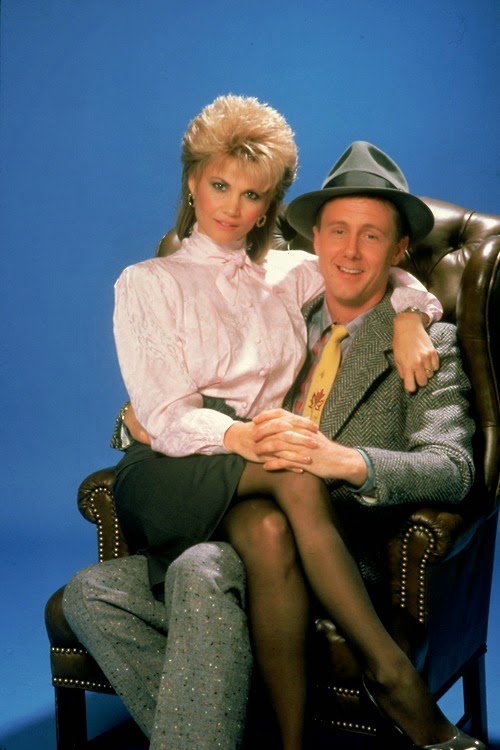
Markie Post years.
Designing Women
Both politically charged
and politically incorrect, Designing Women was a showcase for Dixie Carter’s supercharged sermonizing, Delta
Burke’s entitled cluelessness, and Jean Smart’s downhome charms. But when Burke
and Smart leave, you should too.
Married With Children
In the 1970s it was Soap that heralded the collapse of culture and
civilization; in the 1980s that title passed to this series, one of the first
on the then-new FOX network. It was comedy wielded like a blunt instrument, but
it lasted ten years.
Extra Credit
For more ‘80s goodness,
check out these shows as well:
Whenever necessary I will
own up to my own personal biases. So in the interest of full disclosure I acknowledge
that the 1970s is my favorite TV era. It’s certainly not the best or the
most groundbreaking but it’s the one I grew up on. And I have always believed
that the television shows you bond with in childhood are the ones that always stay closest to your heart.
Escapism reigned for much
of the decade, with a profusion of forget-your-troubles-and-just-get-happy
shows that helped viewers cope with gas lines, presidential scandals and
leisure suits as fashion statements. Those seeking more serious fare embraced a
new programming genre – the miniseries – that adapted great books and retold
great moments in history with all-star casts.
How I wish I could justify
the addition of The Magician, Harry-O, Switch,
Eight is Enough and ElectraWoman
and DynaGirl to the list of
must-see 70s shows. But here’s a more objective list of the decade’s finest
offerings.
The Mary Tyler Moore
Show
One of the best comedic
ensembles ever assembled for a situation comedy, choreographed into consistent
excellence by two masters of the form, James L. Brooks and Allan Burns. The
show is as fresh and funny today as it was 40 years ago.
Columbo
Peter Falk’s
trenchcoat-clad police lieutenant, who annoyed suspects into confessions, was
one of several characters featured in NBC’s Sunday Mystery Movie series. But while McCloud, McMillan and Wife and Hec Ramsey all had their moments, Columbo was the only one that earns a place alongside the creations of Poe and
Conan Doyle in the annals of classic detective fiction.
Saturday Night Live
While each generation
grumbles about how SNL is not as
funny as it used to be, the show itself continues to introduce at least 2-3
major comedy talents every few years. The original cast may still be
untouchable, though inconsistency has always been part of the mix. But no other
series has been as influential on American comedy – from John Belushi to Eddie
Murphy to Phil Hartman (and from Gilda Radner to Tina Fey to Kristen Wiig).
Dallas
In the seventies there were
several prime-time soap operas depicting the shady lifestyles of the rich and
glamorous. Dallas was the most
successful and the most entertaining. J.R. Ewing, played with grinning
malevolence by Larry Hagman, was a villain for the ages – as demonstrated by
his charismatic return in the series’ 2012 revival.
M*A*S*H
M*A*S*H lasted so long – ten years and nearly 250 episodes
– that fans debate which series era was better. Do you prefer the early
years, which mimicked the impertinent tone of Robert Altman’s film, or the
later, less outrageous seasons that reflected the input of star Alan Alda (who
wrote and directed several episodes)? The final show still holds the record for
most viewers, at more than 125 million.
All In the Family
The first of several Norman
Lear-produced comedies that broke genre taboos, frankly discussed controversial
issues and represented (for some) a bold step forward from the more innocent
family sitcoms of an earlier age.
The Love Boat
Carefree escapism was a
seventies TV staple, and no one delivered more of it than producer Aaron
Spelling. The Love Boat was one
of his most shallow and most successful concepts. It’s also worth another look
for the golden age movie stars who staved off retirement with
appearances on shows like this one, Fantasy Island and Hotel. Where else can you see Don Ameche and Douglas Fairbanks, Jr. sailing
alongside Jimmie Walker and Roz Kelly?
The Bob Newhart Show
No situation comedy
explored the comic possibilities of the telephone and the elevator more than The
Bob Newhart Show. Newhart’s dry
delivery and Suzanne Pleshette’s sass anchored one of the decade’s top sitcoms. Plus, “Home to Emily” may be the era’s best instrumental TV theme.
Roots
The ABC network was so
nervous about how viewers would greet the ‘miniseries’ format, especially
one that dealt with the harsh realities of slavery, that they aired
all eight episodes on consecutive nights. The idea was to just get it over with
quickly. Instead, America became enthralled with Roots. It drew 100 million viewers and became for a time
the most watched and most honored dramatic show in television history.
Little House on the
Prairie
Michael Landon was one of
TV’s most beloved stars. While he also enjoyed long-running success in Bonanza and Highway to Heaven, Little House is his best TV work. Based on the classic books by Laura Ingalls
Wilder, the series also introduced adorable half-pint Melissa Gilbert, and the
delightfully wicked Nellie Oleson.
General Hospital
Soap operas were successful
before and after the seventies, but General Hospital achieved the kind of pop culture prominence
reserved for prime-time shows after introducing super-couple Luke and Laura,
played by Tony Geary and Genie Francis. Their wedding was the most-watched
daytime drama moment ever.
Happy Days
Truth be told I don’t think
this show holds up as well as other comedies from its era, but you can’t talk
seventies television without paying due homage to The Fonz. For a few seasons,
before he literally jumped the shark (introducing that phrase),
Henry Winkler could stop the show with every entrance, every line reading and
every thumbs-up. His leather jacket now hangs in the Smithsonian.
The Rockford Files
Beneath the glittering
disco balls and superficial fads that flitted through 70s pop culture, there
lingered a more sobering cynicism, spurred on by two events that served as decade
bookends - Watergate and the Iran hostage crisis. Few shows tapped into that
cynicism as entertainingly as The Rockford Files. No other TV detective ever received as little
personal satisfaction or financial compensation for his work, suggesting that
no matter how hard you try, you’re bound to fail in a system that’s rigged.
WKRP in Cincinnati
I’m not sure why this show
seems to bubble just under confirmed “classic TV” status. Maybe it wasn’t on
long enough. But I still can’t get through Thanksgiving without one reference
to flying turkeys.
Charlie’s Angels
The first “jiggle TV”
series, and the launching pad for the decade’s most famous and flawless face,
Farrah Fawcett-Majors. The first three seasons offered pleasures besides
cheesecake – Kate Jackson earned two Emmy nominations and almost made the
Angels credible as investigators.
Barney Miller
Barney Miller gets better with age. It’s been called TV’s only
optimistic cop series, and that’s as good a description as any. Depicting real
crime and real victims with humor requires a delicate balance, but at the 12th
Precinct it was all in a day’s work.
The Six Million Dollar
Man
Though cell phones and
iPads were still years away, technology began to play a larger role in our
lives in the 1970s, and this was a series that suggested advancements once
relegated to science fiction were coming closer to reality. Plus, more Farrah
Fawcett, an illustrious spin-off series in The Bionic Woman, and Bigfoot!
Soap
This was one of the first
shows that some took as the beginning of the end for western civilization.
Watchdog groups protested and some ABC affiliates refused to carry the series,
but Soap was never as decadent
as its detractors claimed. Much of the controversy focused on Billy Crystal as
Jodie Dallas, one of TV’s first gay characters.
Extra Credit
For more groovy Seventies
classics, check out these shows:
The 1960s was a watershed
decade for popular culture, particularly in music. But there were also signs of
the changing times reflected in the television of the era.
Contrast the programming
choices at the start of the decade, many of them holdovers from the more
traditional 1950s, with the iconoclastic shows of 1968 and 1969. The disparity
is much deeper than the change from black-and-white to color.
Sometimes it’s possible to
notice the medium’s evolution within just one show – observe how Samantha
Stephens’ outfits change from the first season of Bewitched (1964) to the last (1972). To paraphrase a popular
advertising slogan from that era, she’s come a long way, baby.
These are the shows you
should know from the 1960s.
The Andy Griffith Show
Sixties TV is evenly
divided between shows that look back, and shows that look forward. The Andy
Griffith Show is one of
television’s most delightful backward glances – more than 40 years later and we
still can’t get enough of the tranquil Mayberry lifestyle.
Mission: Impossible
Television’s finest
espionage series, particularly in its first three seasons when Martin Landau
and Barbara Bain were part of the team. The propulsive Lalo Schifrin theme and
Mr. Phelps’ self-destructing tape recorders left a permanent mark on popular
culture.
Peyton Place
A groundbreaking prime time
soap opera (based on a once scandalous novel) that launched the careers of Ryan
O’Neal and Mia Farrow. New shows were aired as often as three times a week, and
fans still hope that all 500+ episodes will be released on DVD.
That Girl
This story of a young
single girl in the big city reflected the changing times and the rise of
feminism. Marlo Thomas’s character of struggling actress Ann Marie was a TV
trailblazer that begat Mary Richards and Carrie Bradshaw.
The Dick Van Dyke Show
Mixing sophisticated
wordplay with inspired moments of slapstick silliness, The Dick Van Dyke
Show was a near-perfect situation
comedy that remains strikingly modern more than 50 years after its debut.
Star Trek
Star Trek, and it’s many subsequent TV and film incarnations,
represents a vision of our future that might be achievable if we don’t screw it
up. The Enterprise’s original five-year mission barely lasted three seasons but
introduced a profusion of iconic characters, concepts and expressions. The
series also inspired a then-unprecedented level of television series fandom,
that didn’t truly kick in until after the show was canceled.
Bewitched
There were many sitcoms
with fantasy elements in the Sixties (I Dream of Jeannie, My Favorite Martian, Mr. Ed).
Bewitched was the best and the
classiest of the bunch, and the only one with a subtext beyond its supernatural
set-up. Was it really about TV’s first mixed marriage?
My Mother the Car
On the other end of the
fantasy sitcom spectrum was this infamous disaster starring Jerry Van Dyke as a
man whose mother is reincarnated as a 1928 Porter automobile. Treasure it the
way bad movie fans love Plan 9 From Outer Space, as one of the medium’s preeminent punch lines.
The Smothers Brothers
Comedy Hour
This youth-oriented variety
series was on the front line of the cultural and generational conflicts of the
Vietnam era. Tom and Dick Smothers and their writers (including Steve Martin)
constantly pushed the envelope on provocative political humor, so much so that
the series was pulled by conservative CBS executives despite respectable
ratings.
Scooby Doo, Where Are
You?
This Saturday morning
staple was the first in a seemingly endless series of Hanna-Barbera cartoons
pitting teenage friends against phony monsters and would-be world conquerors.
It wasn’t brilliant television, but the premise was certainly durable – they’re
still making new Scooby Doo adventures.
The Fugitive
As Dr. Richard Kimble, a
pediatrician wrongly accused of killing his wife, David Janssen delivers one of
the most poignant and nuanced performances on any program from any decade (so
of course he never won an Emmy). The series’ final episode held the record for
largest viewing audience until the resolution of Dallas’s “Who shot J.R.”
cliffhanger.
The Brady Bunch
If there is an official
family sitcom of the Baby Boomer era, this is it. It’s far from the best
written or performed representation of its genre, but its characters have been
lovingly embraced by two generations of TV fans. This is one of the ultimate
“Comfort TV” series.
Candid Camera
Technically, Candid
Camera debuted in 1948, and
appeared sporadically on local stations and as a segment of network series
throughout the 1950s. But it is mostly remembered for a 1960-1967 run, so it is
listed here with the best of the sixties. The gags staged by host Allen Funt
were remarkably inventive, without the streak of cruelty apparent in latter-day
updates like Punk’d.
The Avengers
London had its own swinging
sixties vibe, which provided the backdrop for this tongue-in-cheek secret agent
series, one of the few British programs to crack a US prime time schedule. The
chemistry and witty reparteebetween Patrick Macnee (John Steed) and Diana Rigg (Emma Peel) has yet
to rivaled, much less surpassed.
The Carol Burnett Show
Though it’s now more
closely associated with the 1970s, Carol Burnett’s classic variety series
debuted in 1967. So many of the comedy sketches have passed into TV legend, but
the show’s musical moments, now largely forgotten, were just as impressive.
Batman
Even with new superhero
movies opening almost every month, there hasn’t been anything comparable to
this inspired, deranged and altogether unique rendering ofthe Caped Crusader and Boy Wonder.
Rowan & Martin’s
Laugh-In
A phenomenon in its day,
and a peerless launching pad for future stars (Goldie Hawn, Arte Johnson, Lily
Tomlin), Laugh-In introduced
more memorable comedic characters and catchphrases than any other 1960s series.
The Beverly Hillbillies
Paul Henning created three
rural-themed sitcoms for CBS in the Sixties – The Beverly Hillbillies, Green Acres and Petticoat Junction.
All of them are worth revisiting. Hillbillies was the most popular and the most polarizing. Some
find it lowbrow humor at its worst, but others (like me) find the Clampetts
irresistible.
The Outer Limits
Television’s first truly exceptional
science-fiction series was hindered only by primitive special effects. But with
scripts by Harlan Ellison and Joseph Stefano, and actors like Martin Sheen,
Robert Culp, Leonard Nimoy, Martin Landau and Cliff Robertson, it was easier to
imagine the show’s rubber-suited creatures as convincing metaphors for social
injustice and the military-industrial complex.
The Monkees
American TV’s answer to A
Hard Day’s Night proved far more
successful, both artistically and musically, than anyone had a right to expect.
The series was fresh and funny and made a pioneering contribution to music video.
The Monkees’ music, once derided by some critics as corporate-driven and
manufactured, has aged even more gracefully than the series.
Dark Shadows
A gothic daytime drama that
added vampires, witches, werewolves, time travel and reanimated corpses into the
usual mix of soapy afternoon romance and betrayal. Echoes of reluctant vampire
Barnabas Collins, masterfully played by Jonathan Frid, can be perceived in
nearly all of the vampire shows and movies of the past decade.
Get Smart
An obvious gimmick – sending
up James Bond – with a distinguished pedigree (Mel Brooks and Buck Henry served
as creators) Get Smart was a giddy
mix of dumb jokes and smart jokes, anchored by Don Adams’ matchless portrayal
of Maxwell Smart. You can’t be a classic TV lover if you don’t cherish every
appearance of the Cone of Silence.
Julia
In Julia, Diahann Carroll became the first African-American
woman to play a (non-domestic) lead role in a prime time series. With Greg
Morris already on Mission: Impossible and Nichelle Nichols on Star Trek this wasn’t color-barrier breaking at the Jackie Robinson level, but
it’s a progression of which TV fans should be aware.