Showing posts with label The Partridge Family. Show all posts

Thursday, April 20, 2023

There Goes the Neighborhood


It’s not a real street. You won’t find it indexed on Google Maps, or on any postal carrier’s route.


The houses too aren’t real. They look charming from the outside, with their freshly mowed lawns and white picket fences, but if you opened the front door on any of them, you’d be stepping into an empty shell – no furniture, no carpet, no appliances. Houses, not homes – no one ever really lived in any of them.


But for the first generations of Americans that came of age with television, this was a street as familiar as the one where they grew up. It was a place they visited regularly for years, even decades, often several times a week. It was warm, and welcoming, and special. 


It was the place where Bud Anderson worked on his jalopy, while his father offered advice on life that was sometimes heeded, sometimes not. 


It was where the Partridge Family rehearsed for their next club date.


It was where Dennis the Menace gave Mr. Wilson one headache after another.


It’s where Major Nelson returned home, wondering what chaos Jeannie was about to conjure when he stepped inside. 


It’s where Mary Stone’s boyfriends paused on the front porch after a date, hoping for a kiss goodnight.


It’s where Gidget grabbed her surfboard before heading to the beach.


It’s where Mrs. Kravitz spotted so many strange goings-on at the Stephens residence, across the street at Morning Glory Circle. 


All of those things happened there. Maybe the moments were no more real than the houses themselves, but they still exist in our collective memories, in a place that blended fantasy and reality. If classic television – if Comfort TV – had a dwelling place, this street was it.


And soon it will be gone. This week, the process of tearing down the homes began.


On the Warner Bros. Ranch in Burbank, it was designated as Blondie St., after a series of popular films that were filmed there. It was never part of the studio’s tours, so most of us never had the chance to have their pictures taken in front of these homes or just stroll down the sidewalk and soak in the nostalgic rush. A few lucky fans with a connection managed to get there – I know quite a few of them. I was not as fortunate. I had an invitation extended to me back in 2014, but before I could schedule a visit the WB employee who contacted me was laid off, and no one else filled her position.


Why is this happening? If we are to believe the few sources even bothering to report on this, it’s about money. The land where these structures sit can be repurposed for soundstages that will contribute more to the studio’s bottom line.


That is probably the motivation. I have no reason to think otherwise. But given so many other events that have happened around the nation over the past ten years or so, I can’t not see this as something else as well – the destruction of what these places represent.


What values were promoted by the shows set in these homes? What types of families lived there? What did they look like, and how did they live? What lessons did their kids learn at school? Did they understand the difference between right and wrong? Between men and women? Were they patriotic? Were they religious? Did they value work? Did they live in a place with dances, and socials, local ball leagues, community singing, and parades? 


If you grew up with these shows as I did, and if you still watch them as I do, you know the answer. And I doubt that those responsible for producing the television shows now emerging from that studio will give a second thought to eradicating any reminders of that time.


I wrote this back in 2014:


There’s a reason we bestow landmark status on exceptional places. It elevates them above mere property controlled by a corporation, and protects them against the whims of the bureaucrat, the robber baron and the unenlightened. Blondie Street is a place to walk in the footsteps of television’s most beloved characters. It has the ability to reconnect adults with the blissful days of their childhoods.


Perhaps that’s not sufficient for the kind of safekeeping afforded to the Ryman Auditorium or the Old North Church. But if the home of Millard Fillmore can make the cut, so can the home of Samantha Stephens. 


That’s what I thought then. I still think so now. But now it’s too late, or soon will be. Empty facades on a sham street, some will say – who will miss them?


I will. Very much.


Friday, April 22, 2022

The Ten Best Baseball-Themed Classic TV Episodes


Another baseball season is underway, and it doesn’t figure to be a memorable one for my Chicago Cubbies (though hope springs eternal as it always does in April). Every year around this time I like to pull out some baseball-themed episodes to get into the spirit, but I’ve never put together a list of my favorites – until now. 


Here, as Casey Kasem might say, is the Comfort TV countdown of the top ten baseball episodes from the classic television era.


10. “No Runs, No Hits, No Oysters” (1970)

The Ghost & Mrs. Muir

Young Jonathan wants to play shortstop for the Schooner Bay Oysters, but he can’t hit and he can’t field. The Captain offers supernatural assistance, but Mrs. Muir tells him her son should sink or swim on his own. I suppose there’s nothing that special about this episode, but I always welcome a chance to check in with a series I don’t revisit as often as I should. 


9. “Superstar” (1978)

Fantasy Island

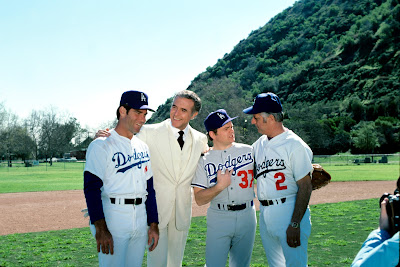
The fantasy of office drone Walter Delaney (Gary Burghoff) is to strike out three of baseball’s greatest stars. Mr. Roarke obliges, thanks to guest appearances from Steve Garvey, Fred Lynn, George Brett, Ken Brett, and Ellis Valentine, plus Dodgers manager Tommy Lasorda. It is interesting how professional sports, and baseball in particular, were incorporated more frequently and memorably into the TV shows of the Comfort TV era, as we’ll also see in other entries on this list. I’m not sure why that has changed; perhaps back them athletes recognized that sports should be viewed as entertainment nstead of just a business, and were more open to promoting that brand to the public. 


8. “The Strikeout King” (1973)

The Partridge Family

Danny has no interest in baseball but joins the local team because his mother thinks he should make more friends his own age. 


To his surprise he quickly becomes the team’s star pitcher – and starts to care more about winning the pennant than rehearsing in the garage. Also in this episode, Ricky Segall bleats out a song about Willie Mays – so have the mute button handy. 


7. “The National Pastime” (1961)

My Three Sons

Chip quits his little league team after striking out four times in the first game. He reconsiders later, a decision his father supports – but only to a point.


Chip:  “Will you talk to the coach?”

Dad: “No.”

Chip: “Will you come with me?”

Dad: “No.”

Chip: “Will you write him a note?”

Dad: “No.”


Chip’s coach doesn’t make it any easier – he asks Chip if he wants to be back on the team and Chip replies “I guess so,” “Well,” the coach replies, “when you’re done guessing and you’re sure, let me know.” By encouraging him to take full responsibility for his actions, the adults in Chip’s life are building character traits that will serve him well in the future.


6. “The Sound of a Different Drummer” (1976)

Shazam!

Curtis could be the star shortstop at Reseda High, but he quits the team because he’d rather play the violin and audition for the Inter-City Orchestra. 


His teammates don’t take kindly to that decision, and give him an ultimatum – either play baseball or they’ll grind his fiddle into toothpicks. Clearly this is the kind of serious dilemma that can only be solved by one of earth’s mightiest heroes. Thankfully, his RV just happened to be in the neighborhood at that time. Also pitching in – Maury Wills, one of baseball’s greatest base-stealers.


5. “Lucy and the Little League” (1963)

The Lucy Show

Just about every sitcom story about kids playing Little League will inevitably feature scenes of overzealous parents. Both Lucy and Viv fit that description here, harassing the team’s manager (William Schallert, always a welcome presence) and umpire until they are ordered to leave. Lucy devises a series of schemes to see her son play, in one of the series’ best first-season episodes.


4. “Jason and Big Mo”

Room 222 (1974)

Elmo (not the Muppet) is playing baseball at such a high level for Walt Whitman High that he already has offers from three Major League teams. With a big signing bonus on the table he’s ready to skip college and not even bother with a high school diploma, despite one of Pete Dixon’s typically eloquent lectures on the importance of education. Then Elmo wipes out on a motorbike and wrecks his knee, and the big league scouts stop calling. Elmo is well played by a pre-Hill Street Blues Michael Warren. This was the last episode of Room 222, ending the series just as it began, by telling important stories with intelligence and class.


3. “Leo Durocher Meets Mr. Ed” (1963)

Mr. Ed

Leo Durocher seemed to enjoy playing up his cantankerous image, as he does here and in episodes of The Beverly Hillbillies and The Munsters


But what makes this episode special is the appearance by Sandy Koufax, arguably one of the five best pitchers in baseball history. Vin Scully, who also appears in this episode, called him “the greatest pitcher (I’ve) ever seen.” But Ed wasn’t intimidated when he stepped into the box, bat in mouth, and drives a pitch off Koufax into deep left field, rounds the bases, and slides into home plate. 


Leo Durocher: “That’s the smartest horse I ever saw!”

Wilbur: “He’s not so smart. He forgot to touch second base.”


2. “The Dropout” (1970)

The Brady Bunch

There’s something about baseball that, more than any other sport, lends itself to stories of disappointment. As in the Ghost and Mrs. Muir episode, boys in the Comfort TV era felt a deeper sense of shame if they are less than proficient at our national pastime. Baseball has since lost viewers and youth interest to football, basketball and soccer, so that is likely no longer the case.


Here, Dodger great Don Drysdale compliments Greg’s slider, and from that moment nothing else matters to him but baseball. That life-plan proves short-lived after he gets clobbered in a Pony League game, leading to a final scene with Barry Williams and Robert Reed that is one of the more touching father-son moments on the series. 


Like Leo Durocher, Don Drysdale must have enjoyed doing guest spots. He also appeared in four episodes of The Donna Reed Show, as well as Leave it to Beaver and The Greatest American Hero.


1. “Baseball” (1979)

WKRP in Cincinnati

It’s always fun when a studio-bound series heads outside for a story, and that’s what happens in this episode written and directed by series creator Hugh Wilson. The softball game between rival radio stations WKRP and WPIG comprises most of the episode’s running time, and we get to see the entire cast hitting, pitching, and fielding. 


The climax hinges on whether nerdy newsman Les Nessman, who never played baseball growing up, can come through for his team in the ninth inning. I like his chances, but then I’m a Cubs fan – I always root for the underdog.

Wednesday, February 2, 2022

One Night, Two Dates: The Classic TV Teen Dilemma


When I was in high school, having two dates scheduled for the same night was the kind of dilemma with which I never had to contend. Just trying to get one date was challenge enough. But the kids on Comfort TV shows were better looking and more popular, so it’s not surprising that this situation occurs in more than one classic show. 


How do they get themselves into these messes, and how did they handle it? Let’s find out. For each show, our double-date protagonist has been given a rating of 1-10 on the two-timer scale: a one means they’re relatively blameless; a 10 means they definitely need a stern talking-to from mom and dad.


“The Rivals”

Father Knows Best

Poor Betty Anderson has fallen into a rut in her relationship with reliable old Ralph. Her flirty friend Marge (played by Barbara Eden!) is always flitting between a half dozen steady boyfriends and telling Betty how lucky she is that no other boys are interested in her. 


She probably meant that as a compliment.


But when they’re doubling at a diner one Saturday night Betty runs into Doyle Hobbs, who she met last summer while briefly working as an engineer on a survey crew (in an episode aired the previous season - a rare bit on continuity for this series). 


So to prove to Marge she can land another guy she accepts a date to a concert in the park – even though she already agreed to go with Ralph.


What makes “The Rivals” such a fun episode is how Betty’s parents react to her dilemma. Jim is disappointed that his daughter would be so devious, while Margaret thinks every girl should occasionally get to enjoy that kind of adoring attention. But while Betty decides how to resolve the situation, Doyle stops for gas where Ralph works and they get to talking about Saturday. The final scene is as unexpected as it is delightful.


Lots of star power in this episode: In addition to Barbara Eden, Doyle is played by Roger Smith, later of 77 Sunset Strip.


Two-Timer Ranking: 8


The impulse to impress Marge is understandable, but not resolving the situation, even on the day of the date, cannot be excused.


“Mary’s Double Date”

The Donna Reed Show

The day before the Junior Prom, Mary Stone has a decision to make: “Whether to let Phil take me or Ernie.” She plays them off each other like a symphony conductor, while simultaneously avoiding a third suitor, Charlie, whom she affectionately describes as her “door mat.”


She gets asked by both her choices, as expected, and doesn’t plan to let the loser know until 5pm on the day of the dance. But her comeuppance arrives before then, swift and severe and well deserved. “You played a dangerous game, and you lost,” Donna tells her, gently, “so no tears.” 


Two-Timer Ranking: 9


This episode is pure magic. Wonderfully written and endlessly quotable: “It’s wonderful to be attractive and popular, but you have to learn to use that power gently, and with kindness.” Its been nearly 40 years since I was in high school, and I still recall the names and faces of a couple of queen bees who failed to heed that advice. And some of those moments still sting.


“The Subject Was Noses”

The Brady Bunch

Marcia gets starry-eyed when big man on campus Doug Simpson asks for a date on Saturday night – then remembers she already has a date for Saturday with “plain, sweet, ordinary” Charlie. 


Predictably, like Molly Ringwald in Pretty in Pink she decides to stick with the handsome popular boy over his undersized rival. But unlike Betty Anderson and Mary Stone she at least has the good sense to not let the situation linger until the weekend. Greg offers sage advice – break the date with Charlie by using the lame but surprisingly effective excuse of “Something suddenly came up.” And it works, until karma arrives in the shape of a football that hits her in the face.


“The Subject Was Noses” certainly ranks as one of the most memorable series episodes, especially in how the tables are turned against Marcia when her same date-breaking excuse is used against her.


Two-Timer Ranking: 4


Marcia not only lets Charlie down easy, she apologizes for her deception and learns her lesson.


“Double Trouble”

The Partridge Family

Keith tries to get a date with gorgeous Joanna Hauser, aka “Miss Everything,” but she’s already going to the big beach party with her steady, who goes by the name “Spider.” Laurie offers to set him up with bookish Sally Winkler from the Shakespeare club. Keith reluctantly agrees, and then Spider’s plans change so Joanna is available again. Now he has two dates, but only wants one of them. “So what’s the problem?” Reuben asks. “Dump the nice one and go with the knockout!” No wonder he’s still single.


Instead, Keith fakes a cold to let Sally down easy – but fate has other plans.


Two-Timer Ranking: 2


Technically, Joanna became available before Laurie told Sally about the party, so he never should have been stuck with two dates in the first place. And while pretending to be sick is a pretty gutless solution, Joanna Hauser is played by Cheryl Ladd, so desperate measures in this case are more admissible. 


“Who’s Crazy Here?”

Eight is Enough


Tommy likes both Gretchen and Sherry, so he dates them both at the same time. “Don’t say I didn’t warn you,” cautions older brother David.


This is the B-story of the episode, so it doesn’t get as much screen time as Tom’s bout with insomnia and the misunderstandings it triggers.


Two-Timer Ranking: 6


Tommy avoids direct conflict by scheduling one date for 8pm and the other for 10pm, so here we have a case of breaking the spirit of the law more than the letter. But to expect two girls that attend the same high school to never figure out what’s happening explains why Tommy was never considered Honor Society material.


“Double Date”

Family Ties


Like Keith Partridge, Alex Keaton is turned down when he asks his dream girl to the senior prom, and then asks another girl instead. But then the first girl becomes available, and he decides to keep both dates. He devises a plan with the help of his friend Skippy:


Alex: “Okay, let's go over the plan once more. Now, the north end of the gym is now called...”


Skippy:  “Area "A".”


Alex: “Okay. At no point is Rachel to enter area "A" - prior to 8:57. Now - areas "B" and "D" are free zones which means... Either girl may enter provided the band is not on a break at the time. Now remember, when I'm with Rachel, I'm gonna be wearing the blue boutonniere. When I'm with Jocelyn - the red one. There are emergency exits at either end of the gymnasium. The master switch box is behind the blue wrestling mat. This will allow you to switch off the lights, lower the backboards, and in case of an emergency, open the floor over the swimming pool. Let's hope it doesn't come to that. 


Two-Timer Ranking: 10


“We’re going to make history,” Alex tells Skippy, but of course his arrogance proves his undoing. The dates in question were played by Jami Gertz and Daphne Zuniga, making this episode about as classic 1980s as you can get.


Wednesday, April 15, 2020

Comfort TV Goes Grocery Shopping


A few years ago I scribbled a note to myself to write a piece about grocery stores in classic TV episodes. It never seemed the right time, and it felt like a pretty strange idea anyway.


But if there was ever a moment to delve into this topic, it’s when we now realize how long we’ve taken these establishments for granted. Unless you are well into your senior years, this is likely the first time you went into the neighborhood supermarket wondering if they’ll have everything you need.

Me, I’ve always liked grocery stores, and I’m always amazed by all the options they provide us. So when one of my favorite shows visits a supermarket, my attention naturally perks up.

There are two kinds of supermarket TV episodes; those that shoot on location in an actual store, and those that build a scaled-down version on a soundstage, and fill it with fake products.

Real Stores
These moments are more fun, because I love freeze-framing on the shelves to see which brands from 30-50 years ago are still available, and which have disappeared.

Some are easy to spot right away, because the packaging has barely changed from then to now – the brown and yellow Bayer Aspirin box; green 7-Up bottles (do they still make it in glass bottles?); Heinz Ketchup.

There’s a supermarket scene in the Partridge Family episode “Why Did the Music Stop?” that I love, because on the shelf behind Shirley are displayed large tin cans of Hi-C fruit juice. I used to get those all the time, especially the Citrus Cooler.


Those are long gone, along with a lot of other products that used to be packaged in heavy glass and metal containers. In an episode of The Donna Reed Show called “Just a Housewife,” Donna is surrounded by shelf after shelf of large metal cans – imagine having to lug paper sacks full of those from the car to the kitchen.

And if you know something of the history of that series, it won’t surprise you that the two most prominent brands in that supermarket scene are Campbell’s Soup and Franco American Spaghetti – both sponsors of The Donna Reed Show. Product placement works, even back in 1960.


Overall, however, it’s surprising how little these places have changed over the decades. The debut episode of Police Story, “Slow Boy,” aired in 1973, and features a stakeout and shoot-out between cops and crooks inside a supermarket. Almost 50 years later that store wouldn’t look out of place now, except for the much lower prices and a few products lost to the ages, like Dixie Riddle Cups.  


An episode of Honey West called “Pop Goes the Easel” opens with an overhead shot of a massive supermarket, shelves stacked to the point of near overflowing. I’d have enjoyed a longer look around, but after thieves steal a can of chicken gumbo soup purchased by Honey’s aunt, the plot heads elsewhere. Turns out that can had a hand-painted label by a pop artist patterned after Andy Warhol.

And in the Eight is Enough episode “Quarantine” I referenced a few weeks ago, David Bradford walks the aisles of a large store where the directory signs are identified by a very ‘70s font of lower-case letters.

Fake Stores
The most familiar fake store from the Comfort TV era is the one owned by Herbert T. Gillis on The Many Loves of Dobie Gillis. But that’s more of a small neighborhood market. 


The store set built for “Supermarket Sweep” on Laverne & Shirley has shorter aisles, to accommodate the frenzied action as contest-winners Laverne and Shirley have three minutes to grab as much stuff as they can for free.  They load up a cart and stuff more goodies down their clothes, yet somehow only wind up with a box of fish sticks and scooter pies.

Next time you catch this one notice how the items on the shelves were not as vintage as they should have been. There are boxes of Frosted Flakes and Corn Flakes that reflect when the episode was shot, and not the era in which it was set.


Over on Bewitched, in “Samantha’s Lost Weekend” Esmerelda accidentally casts a spell on Sam that puts her in a permanent state of hunger, so it’s off to the market where she starts eating everything right of the shelves, and stealing apples from little old ladies. There’s a mix of real and fake items on display, and because they wanted to condense an entire market into a smaller space you’ll see product arrangements you’d never see in a real store. In one scene there are two shelves of alcoholic beverages stocked directly over the bottles of ketchup. 


It's rare when nearly an entire episode is set in a supermarket, but that’s what happens on Here’s Lucy in “Lucy, the Shopping Expert.” Lucy’s son Craig gets a job at a grocery store, where he is told to help keep the store looking neat and organized…and then Lucy shows up. You can guess the rest. 


This is one of those topics for which there are dozens, if not hundreds more examples. But I think a second grocery store piece might be pushing it. Let’s just hope that the era of grocery shopping that requires masks, social distancing and Soviet-style waiting lists for cleaning supplies and paper products will soon be the kind of memory we’d all rather forget.

Wednesday, April 10, 2019

My Three Favorite Commentary Tracks – and One That Should Have Been


As the DVD market continues to contract, it takes with it not just the pleasure many of us feel in owning the shows we love, but the bonus content packaged on many television season sets that adds to our appreciation of each series. 


Among the most enjoyable of these features are commentary tracks, featuring series creators, writers, directors and cast members.

They’re not always done well, but when they are they give the viewer the experience of watching an episode alongside some of the talented people who made it special.

What makes for a good commentary track? It might seem obvious, but it starts with actually watching the episode. My favorite tracks are those in which you hear the participants reacting to what is happening – laughing at the jokes, sharing behind-the-scenes stories, and describing locations where scenes were shot. I don’t mind the moments where they get so caught up in the story that they stop talking – it’s a testament to the enduring quality of the show.

Here’s how you know you’re hearing a bad commentary track: After long stretches of silence, the commentator will start talking about how they were cast on the series, or why they believe the show is still popular decades later. They’re being prompted by someone supplying topics to discuss, because they can’t think of anything to say.

I’m always disappointed when that happens. And it happens more than you might expect.

But let’s focus on the positive first. Here are three of my favorite commentary tracks.

“What? And Get Out of Show Business?”

The Partridge Family

Commentary by Danny Bonaduce

“There’s something you almost never see – Susan Dey eating.”

Part tribute and part roast, Danny Bonaduce watches the first Partridge episode more than 20 years after it debuted, and can still quote most of his lines from memory. 


He mocks his own fake bass playing, asserts his certainty that David Cassidy could beat up Bobby Sherman, and expresses great admiration for costar Dave Madden (“Every muscle in that man’s face acts”). “This is so fun,” he says while he watches the moment his life changed. His observations, appreciations and wisecracks are delightful from start to finish. 


“Those Friars”

That Girl

Commentary by Marlo Thomas and Bill Persky

There were five seasons of That Girl, each packaged in season sets with four DVD discs. 


Every disc contains at least one episode with a commentary by series star Marlo Thomas and series co-creator Bill Persky. Their mutual admiration for the show and each other makes every one of these tracks a gem. I selected “Those Friars” for a moment that illustrates how memorable a commentary can be. Marlo’s father Danny Thomas appears in the episode as himself, and the story ends with Danny and Ann Marie performing a vaudeville skit together. At one point Ann says, “I was afraid you were going to go and leave me out here all alone.” Danny responds, “Me? Leave you? Are you kidding?” 


Marlo, hearing those words, falls silent, and then you hear sniffles. “You don’t have to talk, you can cry,” Persky tells her. It’s such a sweet moment, but Marlo quickly recovers like any showbiz trouper. “I’m having a lovely afternoon” Persky says as closing credits roll. So are we all.

“Lucy and Ann Margret”

Here’s Lucy

Commentary by Lucie Arnaz and Desi Arnaz, Jr.

For the children of Lucille Ball and Desi Arnaz, watching all the classic Lucy shows is like watching home movies. On this track you’ll get some fun backstage stories from TV’s first family about how Ann-Margret was booked for this episode, and the crush Desi Jr. had on her, inspiring the show’s funniest scene. 


But you’ll also get Lucie and Desi Jr. both doing their best Desi Sr. impressions, and poking fun at each other like any brother and sister:

Desi: “They don’t make suits like that anymore.”
Lucie: “There’s a reason for that.”

The episode closes with a big musical number, in which Desi informs viewers that the guitar he’s playing belonged to James Burton, a Rock Hall of Fame member who played for Elvis and Rick Nelson. Responds Lucie to what was obviously a pre-recorded music track, “The guitar started playing before you did.” 


I’m so glad that so many of these commentaries were recorded during the heyday of classic TV on DVD releases. But sometimes they don’t live up to their potential.

“The Lady In the Bottle”

I Dream of Jeannie

Commentary by Barbara Eden, Larry Hagman and Bill Daily

This should have been time capsule stuff. To have the three stars of a TV classic come together more than 30 years later and watch the pilot episode – it’s something that sadly was not even possible with so many other shows from this era. 


But here it just doesn’t work. Barbara Eden is cordial but quiet too often, Larry Hagman was never a fan of the series and also didn’t have much to say. That leaves Bill Daily to carry the conversation. And he rarely offers anything more insightful than “Oh wow!”, “Oh boy!” and “Gorgeous! You guys look great!” These expressions are repeated multiple times throughout the episode, to the point where they become more annoying than affectionate. If that’s the best they could do, they should have brought in Danny Bonaduce.