Showing posts with label Wonder Woman. Show all posts

Wednesday, June 23, 2021

The Almost Classic Wonder Woman Episode: The Feminum Mystique


Last week I finally popped open my Blu-ray set of the Wonder Woman series, knowing the show would look better than it ever has, and hoping that improved picture quality might offset some of the deficiencies in scripts, supporting cast and special effects that, despite Lynda Carter's sheer perfection, have nudged the series into 'missed opportunity' status. 


There was no question about which episode I’d check out first: “The Feminum Mystique, Parts 1 & 2.” These were the shows that featured a German invasion of Paradise Island, the introduction of Debra Winger as Wonder Girl, and one of the very few moments in the series in which Lynda Carter’s Wonder Woman displayed superhuman strength on par with Gal Gadot in the movies. 


I’m still not quite ready to call it a classic, but I do think it’s as close as this show got.


We’re in the first season, which was always more interesting than the two that followed because of its World War II-era setting. The dashing but ever-useless Steve Trevor (Lyle Waggoner) is part of a project to develop an experimental aircraft that could help the Allies shorten the war. One of his trusted crewmembers is Peter Knight, played by Charles Frank, one of those all-American type actors that you’d never suspect might be a Nazi spy. So of course that’s exactly what he is.


Meanwhile, back on Paradise Island, Queen Hippolyta (Carolyn Jones, right at home in over-the-top material) decides it’s time Princess Diana stopped cavorting among all those X chromosomes and returned home. She selects Diana’s sister Drusilla (Debra Winger) to deliver the message. 


After the two sisters are reunited Diana ignores the message to leave, and instead allows Dru to discover the joys of ice cream and men (in a family show-friendly way, of course).


Colonel Radl (John Saxon), another German saboteur, sees Wonder Woman in action and realizes the potential in building submarines and tanks from the bullet-deflecting metal in her bracelets. That’s something that never occurred to Steve Trevor, even though he spent more time with Wonder Woman than anyone else. I guess we should be glad he wasn’t in charge of D-Day. 


Radl kidnaps a general to lure Wonder Woman into a trap – he gets Drusilla as Wonder Girl instead, and with Peter Knight’s help tricks her into revealing the location of Paradise Island, the only source for the metal “feminum” used to make the bracelets.


What happens next I’ll leave for you to discover. What makes “The Feminum Mystique” arguably the best Wonder Woman show is how the story unfolds on a grander scale, with more Nazis and more amazons than you’d find in a typical episode, and a challenge more befitting to one of the world’s most powerful superheroes. There is also some really clunky dialogue, but if you ever read sliver age DC comics you know that’s also pretty accurate to the source material.


For some reason, knowing how much Debra Winger allegedly hated her Wonder Girl days just enhances my enjoyment in these shows.  


She didn’t like a lot of her movies and most of her costars so this was true to form, but I thought she fit the part well and I’m glad she returned for one more appearance, in the final first season episode “Wonder Woman in Hollywood.”


There are some nice moments between Winger and Lynda Carter, and between Carolyn Jones and John Saxon, two actors frequently trapped in substandard material that always manage to rise above it. 


Does all of that add up to a classic episode? It still falls short for me, but for what it’s worth, I enjoyed it more than Wonder Woman 1984.

Wednesday, January 31, 2018

When Bad Episodes Happen to Good TV Shows


I read online that the final season of Game of Thrones will not air until 2019. I don’t watch the show so I’ll not lose sleep over its delay.

But it did make me think of those who find today’s television, particularly the more adult-oriented fare on providers like HBO and Netflix, far superior to the formulaic shows of the past.

I may not share their enthusiasm, but when they tell me these shows are wonderful, I respond that they certainly ought to be, considering it takes them a year or two to come up with 6 or 8 episodes.

This is also why I’ve always thought it was unfair to disparage bad shows from Comfort TV series, when single seasons required as many as 36 original scripts to put into production.


Do bad episodes exist? You already know the answer. From “Lucy and the Monsters” (The Lucy Show) to “The Bewitchin’ Pool” (The Twilight Zone) to “Captain Sligo” (Gunsmoke), almost every television classic occasionally missed the mark, and like most people I skip those episodes when I pull out the DVDs. 


But I have no cause to complain about one or two clunkers. On the contrary, I’m amazed by the remarkable consistency in quality that these series maintained not just over one 24 or 36-episode season, but several.

Was the last season of Bewitched pretty lame and filled with retread stories? Sure, But prior to that the series delivered 228 mostly delightful episodes over seven years.


Did Family Affair misstep by adding the usually welcome Nancy Walker to the Davis household? I’m afraid so. But that final season also delivered gems like “Feat of Clay” and “The Unsinkable Mr. French.” 


And “Homicide and Old Lace” (The Avengers) somehow managed to make John Steed look both dull and silly. But it’s still fun to see Tara King as a blonde.


I remain in awe of what television writers accomplished in this era, on a schedule that seems miraculous today. You look at the “Written by” credit on every episode of I Love Lucy and see the same 4-5 names, over and over, show after show, for 180+ episodes. Try counting up all of the brilliant comedy moments they gave the show’s quartet of stars to play. 


How did Stirling Silliphant write 32 of the 39 (excellent) first-season Naked City episodes? How could Roswell Rogers write more than 100 Father Knows Best shows, all of which are as good or better than those submitted by anyone else? I’ve been a writer for 30 years; I know how challenging it can be to create any type of eloquent and effective prose, even something as simple as this blog. The imagination, inspiration and work ethic exhibited by these writers, directors and actors cannot be understated. 


But that still leaves us with the question of what to do with substandard moments of great shows.

First, let’s distinguish between episodes that just fall short, and those that fail in spectacular ways, since these can be enjoyed on their own terms. A Wonder Woman episode like “Screaming Javelins” is so wondrously bad that I’ve probably watched it more than some of the series’ best shows. 


As for the rest, skipping them is the easy solution. But every so often I challenge myself to find a way to make the viewing experience entertaining. One of my previous blogs explored this very challenge, when I offered five reasons to watch the infamous Star Trek episode “Spock’s Brain.”

Usually I succeed. But sometimes it cannot be done. Try as I might, through at least a half-dozen viewings, I find nothing to celebrate in “The Bad Old Days” from season one of The Dick Van Dyke Show. Its cruelty and atypical misogyny would be out of place in any Comfort TV show, but is particularly grating in a series that featured a woman in the workplace at a time when that was a rarity. “I don’t know what the hell we were doing,” Van Dyke told Vince Waldron in The Official Dick Van Dyke Show Book. “It didn’t work, and we all knew it.” 


But put that into perspective: “The Bad Old Days” was the 28th show in a 30-show debut season. By then, the series had already aired such now-classic episodes as “My Blonde-Haired Brunette,” “Where Did I Come From?,” “The Curious Thing About Women” and the two-part introduction of Rob’s sleepwalking brother Stacy (Godspeed Jerry Van Dyke). The next four seasons brought us more than 125 more shows that are as fresh and funny today as they were 50 years ago.

So in a popular culture that couldn’t deliver three quality Superman films despite the perfect casting of Christopher Reeve, and spent hundreds of millions of dollars on hit-and-miss Star Wars prequels and sequels, I’ll continue to venerate a television medium that, from the 1950s through the 1980s, went about its business regardless of tight script deadlines and limited budgets, and turned out more quality product than other media achieved with more time and more money. 


Tuesday, November 14, 2017

Wonder Woman vs. Wonder Woman


I assume everyone who grew up with and enjoyed the Wonder Woman TV show would also be eager to see the Wonder Woman film released earlier this year.  I am less certain as to whether moviegoers in their 20s or 30s who came along after the series would be curious to go back and discover how this iconic character was first brought to life. 


It had been a long time since I watched The New Original Wonder Woman (1975), the feature-length series pilot with Lynda Carter. But that’s the first thing I did after finishing the 2017 film.

Before we go any further, let’s address two minor details:

1. The use of ‘new’ and ‘original’ in the title was an effort to separate this adaptation from the 1974 Wonder Woman telefilm starring Cathy Lee Crosby. 


So yes, that version came first. But it’s so far-removed from the DC Comics character that I think it’s fair to say that Lynda Carter was the first actress to truly inhabit the role.

2. Before any of my readers bring it up: yes, I’m aware of the comedic, never-broadcast five-minute short created by William Dozier in the 1960s as an attempt to launch another campy superhero series like Batman. It’s dreadful and deserving only of footnote status. 


That leaves us, as I began to say, with just two versions worthy of consideration. Watching them in succession turned out to be one of the more unique Comfort TV experiences I’ve had this year.

I have the same affection for Lynda Carter’s portrayal of Princess Diana shared by many in my generation. But I tried to put that aside and watch The New, Original Wonder Woman from the viewpoint of a first-time viewer who saw the 2017 film and regards Gal Gadot as the definitive Wonder Woman. 


From that perspective, my first pleasant surprise would be how the pilot follows the same origin story as the film. That’s something we take for granted now, since Hollywood rediscovered comic books and realized early on that success requires as faithful a rendering of the source material as possible. The projects from earlier generations, including television takes on The Hulk, Spider-Man, Captain America, Dr. Strange and the aforementioned Cathy Lee Crosby film, felt no such obligation. 


But here, we open with a world at war that breaches the remote, idyllic setting of Paradise Island when American pilot Steve Trevor plummets from his downed plane. Both versions find Diana intrigued by her first encounter with a man, and plotting to return with him to the fighting against her mother’s wishes. But for true comic purists, the TV account is far more loyal to the comics, with its tournament to decide which amazon will leave the island, the “bullets and bracelets” climax, and the revelation of Diana as the masked victor. 


Those who don’t care as much about such specific plot points will likely be struck more by the tone of these scenes, which is less solemn and more sexy. Cloris Leachman delivers a more tongue-in-cheek portrayal of Queen Hippolyta than Connie Nielsen, and her amazons are not dressed so much for battle as for a weekend at the Playboy Mansion. 


That lighter tone continues into Wonder Woman’s acclimation into “man’s world,” though both stories portray her initially as an outsider coping with culture shock. Carter and Gadot were each able to tap into the character’s compassion, her puzzlement at the dishonesty and casual cruelty that surrounds her, and her sometimes-childlike optimism in a better future.

When it was time to depict a superhero in action, the movie enjoyed significant advantages in budget, scale and CGI far beyond what was available (or even imaginable) to the CBS network in 1975. 


Where Gadot could convincingly take down squadrons of German troops on a muddy battlefield, Lynda Carter struggled to beat German spy Stella Stevens in a clumsy fight scene. It’s one of that version’s most disappointing moments.

So clear edge here to Gal Gadot…except I do wish the colors in the film were not so muted all the time.

Diana, like Captain America and Superman, is a hero that represents not just power but hope and honor. Their costumes are symbols of these traits, and just once it would have been nice to see Gadot on a clear day when the reds, golds and blues could really shine. 


I suspect director Patty Jenkins fell into the trap that implies the costume needs to be toned down to be taken seriously. The same thing happened to Henry Cavill as Superman, with similarly disappointing results. Lynda Carter (like Christopher Reeve) proved that you could take the original costume directly out of the pages of the comic book, and make it work.

I’ll also give The New, Original Wonder Woman a slight edge in music, even with the cheesy lyrics of the main title theme (“In your satin tights, fighting for your rights”). 


It’s propulsive and memorable, where the film’s score by Rupert Gregson-Williams is just more generic bombast. There hasn’t really been a great superhero theme composed since John Williams made us believe a man can fly (no, Danny Elfman didn’t cut it with me either).

Who is the best Wonder Woman? That’s going to be one of those fun questions to discuss over pizza with pop culture-loving friends. I found it interesting that Gadot was never actually referred to as Wonder Woman in the movie, though by its final scene she had earned a title that belonged solely to one other actress for more than 40 years.

Let the debate begin. Votes from Lebanon and Tunisia will not be tabulated. 


Friday, March 28, 2014

When Actors and Roles Don't Mix


Casting is critical to the success of any television series, but sometimes it just goes wrong. In some cases the culprit is simply bad acting, but usually there’s a disconnect between actor and character that cannot be traversed regardless of talent.

Here are five of the most egregious examples. I avoided recasts, like Dick Sargent in Bewitched or Emma Samms in Dynasty, because replacements always start out at a disadvantage. In these cases there are no such easy answers.

Kate Jackson – Scarecrow and Mrs. King
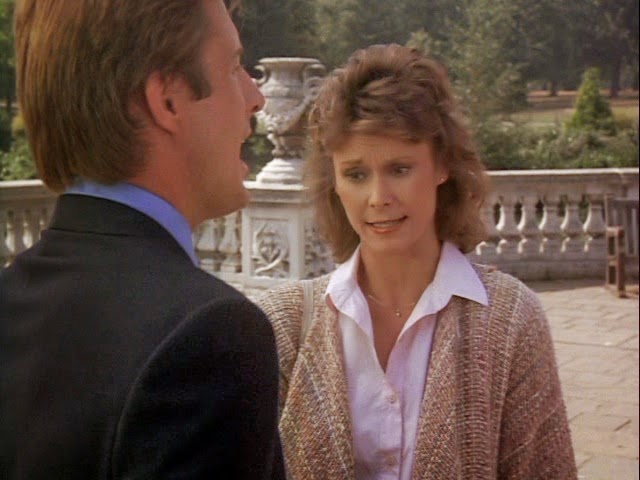
In both The Rookies and Charlie’s Angels, Kate Jackson played clever, capable professionals. She had a famous falling out with the latter series, mainly attributed to the quality of the writing. Jackson once said a Charlie’s Angels script was so light, if you dropped it from the ceiling it would take a week to get to the floor. And yet her next series, Scarecrow and Mrs. King, was just as formulaic, and this time she wasn’t even the smart one. As Amanda King, Jackson frequently had to play scenes that made her character seem as dense as Chrissy Snow on Three’s Company. It was an awkward fit for an actress that radiates intelligence. 


Lyle Waggoner – Wonder Woman
You would think playing a valiant military man would be easy for someone who held his own with the comedic geniuses of The Carol Burnett Show. But Lyle Waggoner could do nothing with Col. Steve Trevor. Admittedly it was a thankless role, but this is where it is incumbent on the actor to find something in the character or situation to elevate Trevor beyond his status as a dashing hostage. Even a little romantic chemistry with Lynda Carter would have helped the audience understand what Wonder Woman sees in this guy. 


Lesley Ann Warren – Mission Impossible
Mission: Impossible was a pretty right-wing series. That’s not a criticism, just an observation. How else can we assess a show about federal government operatives who covertly invade foreign countries and overthrow corrupt dictators? What they did could be considered justified and perhaps even noble, but it certainly wouldn’t be supported by the counterculture at the height of the Vietnam War era. So how does one explain adding Lesley Ann Warren to the IM Force, since she looked and acted like a hippie chick just back from an anti-war sit-in at Berkeley? It’s not surprising she lasted only one season. 


Ted Knight – Too Close for Comfort
Was it just that the shadow of Ted Baxter was too long to escape? Or did the role of a family man frustrated by modern life not fit with an outsized personality like Ted Knight’s? Either way, Too Close for Comfort never gelled. Knight is not the only reason it hasn’t aged well, but with hindsight it may have been better to cast someone with less classic TV baggage. 


Doris Roberts – Remington Steele
Some actors have a look or persona that pigeonholes them into certain types of roles. For Doris Roberts, it’s the interfering relative, usually a mother or mother-in-law. It’s been her meal ticket for more than 25 years, from Angie to Everybody Loves Raymond. But it’s not the type of character you expect to turn up in Remington Steele, a self-effacing but still slick and stylish detective series. Roberts’ Mildred Krebs was a constant distraction from the urbane romance between Pierce Brosnan as Steele and Stephanie Zimbalist as his partner in crime-solving. The mistake was introducing the character in the first place, but it was compounded by casting an actress who once again did it her way, even if another approach might have worked better. 


Any more that I missed? Which TV actors did you think never settled comfortably into a particular role?

Sunday, September 8, 2013

The 7 Least Intimidating Comfort TV Villains

 
Being a villain back in the Comfort TV era was not an easy gig. It’s hard to create a genuine air of menace when television was less compliant about sadistic violence and provocative language. Plus, TV being TV, the hero was going to win eventually because if he (or she) didn’t, the show would be over.

Still, some evildoers managed to put a scare into us, at least for an episode or two. I’ll post my list of the most intimidating Comfort TV villains sometime closer to Halloween, when we’re all in the mood for a good fright. But here, let’s look at seven vanilla villains who never forced anyone to sleep with the lights on.

Louis the Lilac
Batman
It was not surprising that Batman’s third season was it’s last, after two episodes in which the Dynamic Duo pitted their crime fighting skills against Milton Berle as Louis the Lilac. Louie wanted to control the minds of Gotham City hippies – not much of a plan as most of the hippies’ minds were already in an altered state. Sure, he once captured Batgirl, but then everybody captured Batgirl. She got tied up more than Nell Fenwick on Dudley Do-Right


Rogan
The Adventures of Superman
It’s hard to scare viewers at home if their first reaction is to bust out laughing. But that’s what happened in “The Perils of Superman,” one of the more memorable episodes of the classic 1950s Superman series. What other reaction is possible when you see master criminal Rogan and his two henchmen, garbed in identical business suits and giant bullet-shaped lead headpieces? The show also contained some hilariously ridiculous dialogue; when the gang captures Clark Kent and tells him he will be lowered into a vat of acid, Kent protests, “But…that’s illegal!” 


The Kandyman
Doctor Who
This venerable sci-fi series was clearly on the last gasp of its original run when it introduced a sugarcoated robot in a story called “The Happiness Patrol.” The Kandyman was one of far too many low points from the snakebitten Sylvester McCoy era.


The Jennifer Darling Fembot
The Bionic Woman
Jennifer Darling was a petite, winsome actress who specialized in playing plucky secretaries – first to Oscar Goldman on The Six Million Dollar Man and The Bionic Woman, later to Tom Bradford on Eight is Enough. Even her name should be listed in Roget’s as a synonym for adorable. So when she tries to suggest lethal menace as a super-strong killer robot, it’s like watching someone be attacked by Kristin Chenoweth. 


Colonel Wilhelm Klink
Hogan’s Heroes
Mel Brooks proved that Nazis could be funny as long as they are utterly toothless and incompetent. That description certainly applies to the Kommandant of Stalag 13. Klink was an embarrassment to his allies and a joke to his adversaries, and probably did more than General Eisenhower to help the Germans lose World War II. Werner Klemperer’s inspired portrayal of Klink earned him two Emmy Awards for Best Supporting Actor.

Mariposa
Wonder Woman
Diminutive, mild-mannered Henry Gibson, garbed in a shiny purple jumpsuit, plays the ruler of a tiny island nation, who kidnaps the world’s top athletes and blackmails them into competing under his flag at the Olympics. This frankly insane episode was called “Screaming Javelins” and also featured Melanie Chartoff as a Russian gymnast and Rick Springfield as her boyfriend. Gibson’s take on Mariposa must be seen to be believed – he’s like some twisted offspring of Liberace and Julian Assange. 


Glitter Rock
ElectraWoman and DynaGirl
I have a confession – if I were forced to spend my remaining days on a desert island and could only take a handful of television shows with me, one of them would be this typically eccentric Sid & Marty Krofft creation – an episode pitting ElectraWoman and DynaGirl against a green-afroed rock musician who hypnotized people with his guitar. Check out the photo - even Freddie Mercury thinks this guy needs to tone it down. As a villain Glitter Rock wasn’t much. As a symbol of everything that was wonderful and terrible about the 1970s, he was unforgettable. 


Tuesday, November 13, 2012

Still a Wonder – Lynda Carter


For comic book fans, this is a golden age – not related to the comics themselves, which face the same awkward transition to digital media that have cost newspapers and magazines countless subscribers – but in the ascension of their most iconic characters into motion pictures that have dominated the global box office for the past ten years.

I was a Marvel fan in the 1970s, and was still picking up about 20 books a month into the 1990s. And I remember the dark days of Marvel’s live-action adaptations, when Captain America was played by a chowderhead named Reb Brown, and Nicholas Hammond, fresh from jilting Marcia Brady, played Peter Parker in a short-lived Spider-Man series.

What about The Incredible Hulk? Yes, it was a good show, guided by the sure hand of producer Kenneth Johnson. The music still haunts, and Bill Bixby makes almost anything worth watching. But it wasn’t really the Hulk – It was The Fugitive with cameos from a green bodybuilder. There were no super-villains, no army battalions giving chase, no Betty Ross, no Rick Jones. They even got Banner’s first name wrong. And while the comic book Hulk could juggle Buicks, Lou Ferrigno seemed to get a hernia lifting one of those Styrofoam boulders that was always handy for throwing at someone and narrowly missing them.

Two factors triggered the renaissance in the comic book movie genre; the source material was taken more seriously, and CGI finally caught up to the types of superhero exploits fans expect to see from larger-than-life characters.

What does this have to do with classic TV? Here’s the transition – the success of Marvel’s The Avengers has DC Comics and parent company Warner Bros. looking to fast-track their own superhero team movie, The Justice League of America. To do it right, they’ll need a Wonder Woman. And that could be a problem.

Joss Whedon, who co-wrote and directed the Avengers film that thrilled both critics and fans, tried and failed to crack the Wonder Woman conundrum. David E. Kelley wrote and produced a WW pilot starring Adrianne Palicki that also didn’t get picked up (and by the looks of the scenes that escaped to YouTube, it was just as well). 


When you consider how problematic Wonder Woman’s movie/television transition has been from the comic book page, you have to marvel at Lynda Carter’s ability to make that transition seem effortless. Maybe the reason there hasn’t been a successful new version is that Carter still owns the role.

In my first book, Hollywood and the Comics (don’t bother looking for it – it’s not worth the effort), I wrote that Carter’s “resemblance to the Amazon princess is flawless enough to fool the guards at the gates of Olympus.” But the success of her portrayal goes far beyond her obvious statuesque beauty and physical assets. 


Wonder Woman is an outsider from paradise forced to not only cope with a more hostile modern world, but to serve as its protector. Carter tapped into the character’s compassion, her puzzlement at the dishonesty and casual cruelty that surrounds her, and her sometimes childlike optimism in a better future for a deeply flawed world.

Sadly, the show itself never reached the heights of Carter’s portrayal. As in The Incredible Hulk, Wonder Woman rarely faced any of her comic book adversaries (only Baroness Paula Von Gunther made it into the series), and her super heroics were largely limited to running fast, jumping over fences and bending the barrels of guns.


The series’ supporting cast provided no actual support. As co-worker/love interest/perennial kidnap victim Steve Trevor, Lyle Waggoner looked dashing in his military uniform, but that was about it. No one else stuck around long enough to make an impression.

However, Comfort TV doesn’t have to be brilliant to be satisfying, and Wonder Woman squeaks into the pleasant diversion category for its parade of classic ‘70s guest stars. Who can forget Oscar-winning actress Debra Winger’s early career appearance as Wonder Girl, or Ted Shackelford and Joan Van Ark playing silver-suit-clad alien invaders, before they were cast as Gary and Valene Ewing?   


Then there was Leif Garrett, in a rare moment of sobriety, playing identical twin pop singers.  If you watch this episode, check out the scene where WW is climbing the side of a high-rise building. From the rear, Lynda Carter’s stunt double looks like someone stuffed Brian Dennehy into a bustier and hot pants.

The series’ first season, set during World War II, is slightly better than the final two years, but whether Wonder Woman was battling killer gorillas, mad scientists, kid psychics or evil geniuses that hypnotize government agents with disco music (yes, that’s an actual episode), Lynda Carter always maintained her grace and dignity. As super heroic achievements go, that’s the real wonder.