Showing posts with label Eight is Enough. Show all posts

Wednesday, February 2, 2022

One Night, Two Dates: The Classic TV Teen Dilemma


When I was in high school, having two dates scheduled for the same night was the kind of dilemma with which I never had to contend. Just trying to get one date was challenge enough. But the kids on Comfort TV shows were better looking and more popular, so it’s not surprising that this situation occurs in more than one classic show. 


How do they get themselves into these messes, and how did they handle it? Let’s find out. For each show, our double-date protagonist has been given a rating of 1-10 on the two-timer scale: a one means they’re relatively blameless; a 10 means they definitely need a stern talking-to from mom and dad.


“The Rivals”

Father Knows Best

Poor Betty Anderson has fallen into a rut in her relationship with reliable old Ralph. Her flirty friend Marge (played by Barbara Eden!) is always flitting between a half dozen steady boyfriends and telling Betty how lucky she is that no other boys are interested in her. 


She probably meant that as a compliment.


But when they’re doubling at a diner one Saturday night Betty runs into Doyle Hobbs, who she met last summer while briefly working as an engineer on a survey crew (in an episode aired the previous season - a rare bit on continuity for this series). 


So to prove to Marge she can land another guy she accepts a date to a concert in the park – even though she already agreed to go with Ralph.


What makes “The Rivals” such a fun episode is how Betty’s parents react to her dilemma. Jim is disappointed that his daughter would be so devious, while Margaret thinks every girl should occasionally get to enjoy that kind of adoring attention. But while Betty decides how to resolve the situation, Doyle stops for gas where Ralph works and they get to talking about Saturday. The final scene is as unexpected as it is delightful.


Lots of star power in this episode: In addition to Barbara Eden, Doyle is played by Roger Smith, later of 77 Sunset Strip.


Two-Timer Ranking: 8


The impulse to impress Marge is understandable, but not resolving the situation, even on the day of the date, cannot be excused.


“Mary’s Double Date”

The Donna Reed Show

The day before the Junior Prom, Mary Stone has a decision to make: “Whether to let Phil take me or Ernie.” She plays them off each other like a symphony conductor, while simultaneously avoiding a third suitor, Charlie, whom she affectionately describes as her “door mat.”


She gets asked by both her choices, as expected, and doesn’t plan to let the loser know until 5pm on the day of the dance. But her comeuppance arrives before then, swift and severe and well deserved. “You played a dangerous game, and you lost,” Donna tells her, gently, “so no tears.” 


Two-Timer Ranking: 9


This episode is pure magic. Wonderfully written and endlessly quotable: “It’s wonderful to be attractive and popular, but you have to learn to use that power gently, and with kindness.” Its been nearly 40 years since I was in high school, and I still recall the names and faces of a couple of queen bees who failed to heed that advice. And some of those moments still sting.


“The Subject Was Noses”

The Brady Bunch

Marcia gets starry-eyed when big man on campus Doug Simpson asks for a date on Saturday night – then remembers she already has a date for Saturday with “plain, sweet, ordinary” Charlie. 


Predictably, like Molly Ringwald in Pretty in Pink she decides to stick with the handsome popular boy over his undersized rival. But unlike Betty Anderson and Mary Stone she at least has the good sense to not let the situation linger until the weekend. Greg offers sage advice – break the date with Charlie by using the lame but surprisingly effective excuse of “Something suddenly came up.” And it works, until karma arrives in the shape of a football that hits her in the face.


“The Subject Was Noses” certainly ranks as one of the most memorable series episodes, especially in how the tables are turned against Marcia when her same date-breaking excuse is used against her.


Two-Timer Ranking: 4


Marcia not only lets Charlie down easy, she apologizes for her deception and learns her lesson.


“Double Trouble”

The Partridge Family

Keith tries to get a date with gorgeous Joanna Hauser, aka “Miss Everything,” but she’s already going to the big beach party with her steady, who goes by the name “Spider.” Laurie offers to set him up with bookish Sally Winkler from the Shakespeare club. Keith reluctantly agrees, and then Spider’s plans change so Joanna is available again. Now he has two dates, but only wants one of them. “So what’s the problem?” Reuben asks. “Dump the nice one and go with the knockout!” No wonder he’s still single.


Instead, Keith fakes a cold to let Sally down easy – but fate has other plans.


Two-Timer Ranking: 2


Technically, Joanna became available before Laurie told Sally about the party, so he never should have been stuck with two dates in the first place. And while pretending to be sick is a pretty gutless solution, Joanna Hauser is played by Cheryl Ladd, so desperate measures in this case are more admissible. 


“Who’s Crazy Here?”

Eight is Enough


Tommy likes both Gretchen and Sherry, so he dates them both at the same time. “Don’t say I didn’t warn you,” cautions older brother David.


This is the B-story of the episode, so it doesn’t get as much screen time as Tom’s bout with insomnia and the misunderstandings it triggers.


Two-Timer Ranking: 6


Tommy avoids direct conflict by scheduling one date for 8pm and the other for 10pm, so here we have a case of breaking the spirit of the law more than the letter. But to expect two girls that attend the same high school to never figure out what’s happening explains why Tommy was never considered Honor Society material.


“Double Date”

Family Ties


Like Keith Partridge, Alex Keaton is turned down when he asks his dream girl to the senior prom, and then asks another girl instead. But then the first girl becomes available, and he decides to keep both dates. He devises a plan with the help of his friend Skippy:


Alex: “Okay, let's go over the plan once more. Now, the north end of the gym is now called...”


Skippy:  “Area "A".”


Alex: “Okay. At no point is Rachel to enter area "A" - prior to 8:57. Now - areas "B" and "D" are free zones which means... Either girl may enter provided the band is not on a break at the time. Now remember, when I'm with Rachel, I'm gonna be wearing the blue boutonniere. When I'm with Jocelyn - the red one. There are emergency exits at either end of the gymnasium. The master switch box is behind the blue wrestling mat. This will allow you to switch off the lights, lower the backboards, and in case of an emergency, open the floor over the swimming pool. Let's hope it doesn't come to that. 


Two-Timer Ranking: 10


“We’re going to make history,” Alex tells Skippy, but of course his arrogance proves his undoing. The dates in question were played by Jami Gertz and Daphne Zuniga, making this episode about as classic 1980s as you can get.


Wednesday, April 15, 2020

Comfort TV Goes Grocery Shopping


A few years ago I scribbled a note to myself to write a piece about grocery stores in classic TV episodes. It never seemed the right time, and it felt like a pretty strange idea anyway.


But if there was ever a moment to delve into this topic, it’s when we now realize how long we’ve taken these establishments for granted. Unless you are well into your senior years, this is likely the first time you went into the neighborhood supermarket wondering if they’ll have everything you need.

Me, I’ve always liked grocery stores, and I’m always amazed by all the options they provide us. So when one of my favorite shows visits a supermarket, my attention naturally perks up.

There are two kinds of supermarket TV episodes; those that shoot on location in an actual store, and those that build a scaled-down version on a soundstage, and fill it with fake products.

Real Stores
These moments are more fun, because I love freeze-framing on the shelves to see which brands from 30-50 years ago are still available, and which have disappeared.

Some are easy to spot right away, because the packaging has barely changed from then to now – the brown and yellow Bayer Aspirin box; green 7-Up bottles (do they still make it in glass bottles?); Heinz Ketchup.

There’s a supermarket scene in the Partridge Family episode “Why Did the Music Stop?” that I love, because on the shelf behind Shirley are displayed large tin cans of Hi-C fruit juice. I used to get those all the time, especially the Citrus Cooler.


Those are long gone, along with a lot of other products that used to be packaged in heavy glass and metal containers. In an episode of The Donna Reed Show called “Just a Housewife,” Donna is surrounded by shelf after shelf of large metal cans – imagine having to lug paper sacks full of those from the car to the kitchen.

And if you know something of the history of that series, it won’t surprise you that the two most prominent brands in that supermarket scene are Campbell’s Soup and Franco American Spaghetti – both sponsors of The Donna Reed Show. Product placement works, even back in 1960.


Overall, however, it’s surprising how little these places have changed over the decades. The debut episode of Police Story, “Slow Boy,” aired in 1973, and features a stakeout and shoot-out between cops and crooks inside a supermarket. Almost 50 years later that store wouldn’t look out of place now, except for the much lower prices and a few products lost to the ages, like Dixie Riddle Cups.  


An episode of Honey West called “Pop Goes the Easel” opens with an overhead shot of a massive supermarket, shelves stacked to the point of near overflowing. I’d have enjoyed a longer look around, but after thieves steal a can of chicken gumbo soup purchased by Honey’s aunt, the plot heads elsewhere. Turns out that can had a hand-painted label by a pop artist patterned after Andy Warhol.

And in the Eight is Enough episode “Quarantine” I referenced a few weeks ago, David Bradford walks the aisles of a large store where the directory signs are identified by a very ‘70s font of lower-case letters.

Fake Stores
The most familiar fake store from the Comfort TV era is the one owned by Herbert T. Gillis on The Many Loves of Dobie Gillis. But that’s more of a small neighborhood market. 


The store set built for “Supermarket Sweep” on Laverne & Shirley has shorter aisles, to accommodate the frenzied action as contest-winners Laverne and Shirley have three minutes to grab as much stuff as they can for free.  They load up a cart and stuff more goodies down their clothes, yet somehow only wind up with a box of fish sticks and scooter pies.

Next time you catch this one notice how the items on the shelves were not as vintage as they should have been. There are boxes of Frosted Flakes and Corn Flakes that reflect when the episode was shot, and not the era in which it was set.


Over on Bewitched, in “Samantha’s Lost Weekend” Esmerelda accidentally casts a spell on Sam that puts her in a permanent state of hunger, so it’s off to the market where she starts eating everything right of the shelves, and stealing apples from little old ladies. There’s a mix of real and fake items on display, and because they wanted to condense an entire market into a smaller space you’ll see product arrangements you’d never see in a real store. In one scene there are two shelves of alcoholic beverages stocked directly over the bottles of ketchup. 


It's rare when nearly an entire episode is set in a supermarket, but that’s what happens on Here’s Lucy in “Lucy, the Shopping Expert.” Lucy’s son Craig gets a job at a grocery store, where he is told to help keep the store looking neat and organized…and then Lucy shows up. You can guess the rest. 


This is one of those topics for which there are dozens, if not hundreds more examples. But I think a second grocery store piece might be pushing it. Let’s just hope that the era of grocery shopping that requires masks, social distancing and Soviet-style waiting lists for cleaning supplies and paper products will soon be the kind of memory we’d all rather forget.

Monday, July 25, 2016

Pilot Casualties: The Casting Coulda-Beens of Comfort TV


Casting was a critical component in every Comfort TV show. Today we can’t imagine other actors in many iconic roles, yet it’s fascinating to contemplate how close we were to watching Gene Hackman as Mike Brady, Lyle Waggoner as Batman, or Stephen Stills as one of The Monkees.

Once a pilot is shot there is usually no turning back. But post-pilot cuts happen for any number of reasons, as we’ll see in this look at some of the more intriguing examples from the Comfort TV era. We all know how these shows turned out – the more intriguing question is whether they would still been successful without the last-minute change. Let's take a brief glimpse into an alternate classic TV universe. 

Mark Hamill as David Bradford
Eight is Enough
Shortly before filming began on the show’s second episode, Mark Hamill had a rollover car accident on a highway off-ramp, fracturing his nose and cheek. As he was too injured to come back he had to be replaced by Grant Goodeve. And he was never heard from again. 


Would it have worked?
Probably, based on the pilot, though it would have been a different series. Grant Goodeve is a year younger than Hamill but on the show he appears older and more mature. David has several verbal altercations with his father in the first season, and with Goodeve those scenes play like quarrels between two adults. Hamill plays David more like Willie Aames would play middle son Tommy – a hotheaded teenager with an antiestablishment attitude.

And consider this: if Hamill had been a better driver, we wouldn’t have this version of the theme song.


Sharon Tate as Billie Jo Bradley
Petticoat Junction
No pilot was requested for this series, which CBS purchased sight unseen based on creator Paul Henning’s success with The Beverly Hillbillies. Sharon Tate was given the role of flirtatious Billie Jo Bradley, and appears in early publicity photos with the rest of the cast. 


But when the network discovered Tate had also posed for some much racier photos, she was dropped and the role recast with Jeannine Riley.

Would it have worked?
Without any footage it’s hard to tell. The series featured three Billie Jos in seven seasons, so it was certainly durable enough to survive no matter who was cast (Riley was replaced after two seasons by Gunilla Hutton, who one year later was replaced by Meredith MacRae). However, based on Tate’s somewhat stiff and unmemorable Beverly Hillbillies appearances as secretary Janet Trego, she wasn’t yet ready for a series lead.

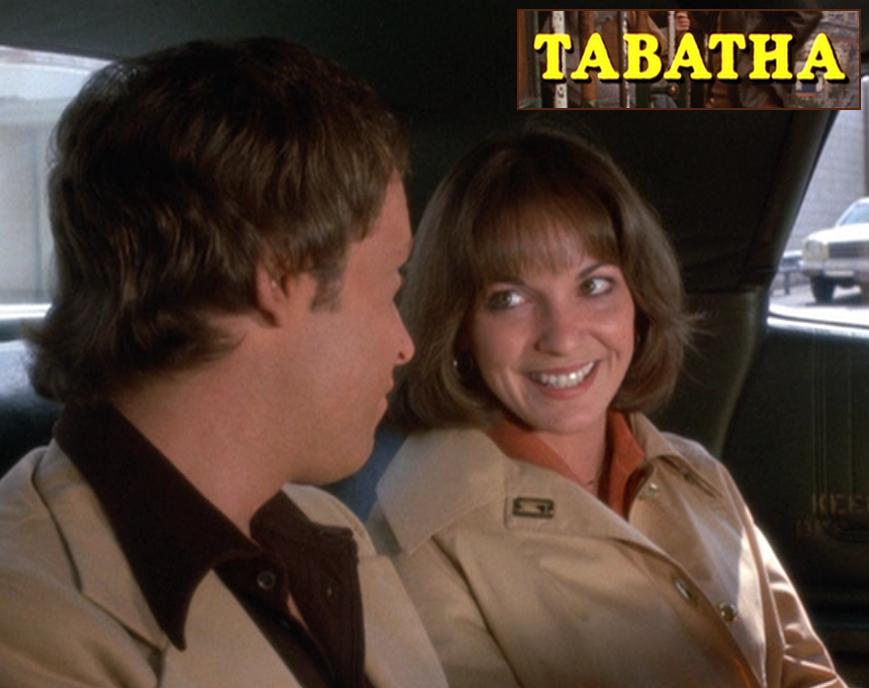
Liberty Williams as Tabitha Stevens
Tabitha
Bewitched fans might enjoy the original Tabitha pilot more than the version with Lisa Hartman, as the story offers parallels to the first Bewitched episode. Here, it’s Tabitha “coming out” as a witch to a significant other, who retreats to a bar to ponder his new normal.  But when it didn’t work ABC scrapped the entire concept and started over – new supporting characters, new workplace, and even a spelling change – in this pilot she’s “Tabatha.” 


Would it have worked?
Considering the series didn’t last with Lisa Hartman, it was likely beyond saving. But Liberty Williams was hardly the weakest link in a show with multiple issues. You may not be familiar with her but if you’ve seen Joyce Dewitt on Three’s Company you know the type – similar look, similar plucky charm. And yes, a brunette, which is a superficial objection to her playing a grown-up Erin Murphy, but still one of those details that bothers me, like changing Bruce Banner to David Banner on The Incredible Hulk.

As for Liberty, billed for most of her credits as Louise Williams, she later tested for and almost got the role of Shirley in Laverne & Shirley, then went on to voice Wonder Twin Jayna in Superfriends.  

Tim Dunigan as Templeton Peck
The A-Team
Dwight Schultz (Murdock) has often told the story about how he was certain he was going to be fired from The A-Team. It was Tim Dunigan who kept reassuring him throughout filming the pilot that his job was safe and he was going to be fine. Ironically, it was Dunigan who was replaced by Dirk Benedict, when producers decided he looked too young for the role of a Vietnam vet. 


Would it have worked?
Not this time. In the pilot Dunigan assumes a number of roles as the team’s resident con man, from a priest to a millionaire cowboy. And it just doesn’t resonate. This was material that had to be played with a wink, but his scenes with the rest of the team lacked the camaraderie that sustained The A-Team through years of repetitive scripts. According to IMDB he quit acting and now works as a mortgage broker.

Elizabeth Ward as Carol Seaver
Growing Pains
Elizabeth Ward had appeared in a couple of lesser-known ABC Afterschool Specials prior to being cast as Carol Seaver in the original Growing Pains pilot, shot in 1985. She didn’t click with test audiences, and was replaced by Tracey Gold, who hesitated to come back after being rejected once already. She changed her mind and rejoined a series that aired for seven seasons. Elizabeth Ward guest-starred in a Simon & Simon episode the following year, and never got another job. It’s a rough business. 


Would it have worked?
I think so. In the original pilot Ward was even more bookish than Gold in the show’s early seasons, but there’s no reason to assume she couldn’t have guided Carol through adolescence much like her replacement.

Susan Lanier as Chrissy Snow
Three’s Company
Three’s Company needed three pilots before finding the right combination of roommates. John Ritter was there from the start, and was originally joined by Valerie Curtin and Susanne Zenor (playing Samantha, not Chrissy). Pilot #2 brought in Joyce Dewitt, and Susan Lanier as Chrissy Snow. Neither pilot ever aired, though both are available on various Three’s Company DVD releases. 


Would it have worked?
I may be in the minority here, but I think so. To be fair, we may not be seeing Lanier’s best effort, as she was called in as a last minute substitute for another actress invited to audition. And if you’ve seen her in other shows playing similar characters, it’s clear she has some comedy chops. But at the time Suzanne Somers had more experience and professional credits, and one can’t deny the chemistry she developed with Ritter and Dewitt.

Louie Anderson as Larry Appleton
Perfect Strangers
There was never any doubt about the casting of Bronson Pinchot, as Perfect Strangers was developed (after several false starts) around his offbeat immigrant character. Finding the right foil would be critical, and the network’s first choice was comedian Louie Anderson. 


“They hated me,” is all Anderson said in a TV interview about the filmed and then buried pilot. Mark Linn-Baker, invited to test after a guest spot on Moonlighting, proved a more popular choice.  

Would it have worked?
Having not seen the Anderson pilot it’s difficult to speculate, but I would guess that ABC made the right call. Perhaps the objective was to develop a modern-day Laurel & Hardy with this duo, but Anderson’s persona of a self-deprecating gentle giant was already in place from his standup – if he played Larry that passively it would not have worked opposite Pinchot’s more manic Balki. Certainly he could have been asked to try something different, but on a TV series it’s always the actor that shapes the character more than the character dictates an actor’s choices. Sooner or later writers would have started playing to Anderson's traits, which are different from those that Mark Linn-Baker brought to the role.


Monday, March 9, 2015

Classic TV Two-Part Episodes: Hits and Misses

 
Theoretically the two-part episode is an option that should be utilized only in conjunction with a major milestone in a series (births, deaths, new character introductions, weddings, big name guest star) or when a writer comes up with an idea that is so good, it deserves a little extra breathing room to be fully explored.

But think back over the hundreds of two-parters presented in the Comfort TV era – how many of them really needed more time to tell their stories?

Having conducted my own informal study, I would say the results are about 50/50. Too often, these shows were a marketing ploy to leverage the built-in ‘event’ status afforded to super-sized episodes. That’s why they were used so often to open or close a season.

When there is legitimate reason for a “continued next week” freeze-frame, the result is often one of the most memorable moments in a series – think “The Menagerie” on Star Trek, “Fearless Fonzarelli” on Happy Days or “Carnival of Thrills” on The Dukes of Hazzard.

And when there is not enough content to justify a second episode, we’re left with a story that might have worked as a single show, padded and stretched to fill out a longer running time.

This is a big topic and one that may be revisited in a future blog, but for now here are five examples of when TV got it right – and five underwhelming misses.

Good: Family Ties: “The Real Thing”
Alex Keaton had no shortage of girlfriends in the first three seasons of Family Ties, but when he meets Ellen Reed early in season four, the show wanted to make sure we knew this was going to be different. Their opposites-attract romance, bolstered by the strains of Billy Vera’s “At This Moment,” was a major turning point for Alex and for Michael J. Fox, who is still married to the girl that played Ellen, Tracy Pollan. 


Bad: Charlie’s Angels: “Terror on Skis”
A typical Angels plot – protect a government agent from foreign radicals – is hampered by scene after scene of monotonous stock footage of people skiing during the day, at night, and in freestyle competitions. I had a little inside information on this one, having interviewed the episode’s writer, Ed Lakso, for my Charlie’s Angels book. He readily confessed to padding out the story to justify a location shoot in Vail, Colorado, because his wife wanted to go skiing. 


Good: The Dick Van Dyke Show: “I Am My Brother’s Keeper/The Sleeping Brother”
These episodes introduced Dick Van Dyke’s brother Jerry, playing Rob Petrie’s brother, Stacy. The bizarre plot has Stacy trying to break into show business but only being able to perform while he’s asleep (due to a rare, advanced form of sleepwalking). Despite that contrivance the shows are smart and funny, particularly during the cast performances at those Bonnie Meadow Rd. house parties that always made the suburbs looks so cool and sophisticated. 

Bad: Eight is Enough: “And Baby Makes Nine”
Flashbacks are a convenient way to stretch a story, but no two episodes abused that privilege more than the Season 5 opener of Eight is Enough. The saga of Susan’s difficult delivery of her baby not only offers numerous looks back at her romance with and marriage to Merle, it also reprises scenes that aired just ten minutes earlier in the same episode. Why not just play the theme song again while you’re at it?

Good: Get Smart: “A Man Called Smart”
The only thing tougher to pull off than a great two-part episode? A great three-part episode. But the laughs never fizzle in “A Man Called Smart,” an adventure originally conceived for theatrical release but re-cut for the series. One physical comedy sequence with a stretcher and a revolving door is as funny as anything that’s ever been on television. 


Bad: Mission: Impossible: “The Contender”
For all its many outstanding qualities, M:I never got a two-part episode right. I chose “The Contender” because the plot was particularly weak – capturing a guy who fixes prize fights seems beneath the IMF – but I also could have gone with “The Slave” or “The Council” or “The Controllers.” Viewers were accustomed to seeing the team solve any problem in an hour, and writers could never dream up any good reason for some missions to take longer.

Good: The Bionic Woman: “Doomsday is Tomorrow”
Where Mission: Impossible struggled with the two-part format, The Bionic Woman flourished. From the irresistible “Fembots in Las Vegas” to “Deadly Ringer,” the shows that earned Lindsay Wagner an Emmy, the series was always at its best with multi-episode storylines. My favorite is “Doomsday is Tomorrow,” in which Jaime must figure out how to shut off a computerized weapon (with a HAL 9000 voice) capable of destroying all life on earth. 


Bad: The Facts of Life: “Teenage Marriage”
So many shows have built two-part episodes around potential crises that cannot possibly come to pass, lest it mean the end of the series. Here, Mrs. Garrett and the Eastland girls try to prevent Jo from marrying her boyfriend. Had Nancy McKeon announced she was leaving the show, we might have bought into the conflict; but this was her first season, and we all knew she wasn’t going anywhere, extra episode or not.

Good: Little House on the Prairie: “I’ll Be Waving as You Drive Away”
The Ingalls family face their darkest hour when Mary loses her sight after a bout with scarlet fever. The scene where Charles must tell his daughter the diagnosis, while barely able to control his own heartbreak, is devastating. Mary attends a school for the blind, where she gradually comes to terms with her fate in a hopeful finale.  


Bad: Laverne & Shirley: “The Festival”
When a two-part episode is inspired by a road trip, it helps if we actually see the characters go somewhere. Here, Laverne, Shirley, Lenny, Squiggy, Frank and Edna all “travel” from Milwaukee to New York, but all they really do is visit a different part of the studio backlot. Not much fun to be had, unless you enjoy watching Penny Marshall climb a greased metal pole.

Friday, November 30, 2012

Sibling Envy: Eight is Enough

 As an only child, I’ve always found myself drawn to shows about large families. Watching them was a way to vicariously experience what it may have been like to have a childhood surrounded by loving, but sometimes frustrating siblings, while actually growing up without ever having to wait in line for a bathroom or a telephone.

While I can only infer which show about a house full of kids offered the most accurate look at a crowded family unit, the one that resonates most with me is Eight is Enough. It seemed like a more authentic portrayal of both the advantages and drawbacks to that kind of upbringing.

I’ve been getting reacquainted with the Bradfords now that the series’ first two seasons are out on DVD. And once again I’ve been impressed with the genuine family “feel” that pervades, even if some of the situations are heightened for dramatic effect beyond what most of us will experience in our non-scripted lives.

I cannot recall any other series from that era that moved as easily from sitcom style humor, complete with laugh track, to serious moments, and then back again. That tonal switch is fraught with peril, and only the best television shows can pull it off without undermining the drama or overplaying the comedy. Eight is Enough gets it just right.


The Bradford home looks lived in. This is not a showplace with the little touches of perfect organization that betray set design. The house itself is one step up from ramshackle, and the interior is in desperate need of a makeover. A flat and awful green carpet looks how you’d expect an old floor covering to look after ten people have been running up and down the stairs on it for years.

Tom Bradford, as played by the genial Dick Van Patten, was not the cool dad, or the all-knowing dad, or the befuddled dad that is regrettably now so commonplace on television. He was just a father who did the best he could. As a writer I liked that he was a writer – and even more that he could support a large family by writing a newspaper column.

Voices were raised in nearly every episode, but when Dad got mad it was usually at eldest son David, and here again we saw characters honestly conceived and portrayed, so it was possible as a viewer to see both sides of the dispute. Rarely in real life is it as simple as the parent being a blustering dictator, or the son being an irresponsible delinquent. Tom and David were both intelligent, compassionate people who simply saw things differently across generations.

This was also a family that experienced a profound loss, as a result of a real world tragedy that forced a change in the series. Diana Hyland, who played Tom’s wife, Joan, in the first season, died before the series returned for its sophomore year. The change was noted respectfully, in scenes that were admirably underplayed. In the first episode of the second season, Tom recalls a fight with Joan over whether the spare room should be converted into his work place or her dark room. As his sentences drift into quiet reflection, the kids listen in silence but their expressions say it all.

Sometimes with a large cast it can take several episodes to get to know each character, but that wasn’t the case with liberal crusader Mary, theatrical Joanie, tomboy Susan, sexy Nancy, rebellious Elizabeth, sensitive Tommy and precocious Nicholas. The Bradford bunch was a beguiling collective that gave every viewer a character to emulate, identify with, or crush on. 


Contrast that with The Waltons, where it could take a full season to figure out who was Jason and who was Ben.

In its later seasons, as the family grew and writers began playing too much to cute Nicholas hijinks, Eight is Enough gradually began to lose its footing. But even in its least compelling moments, this was a far more rewarding glimpse into life with eight kids than that provided by Jon and Kate Gosselin. And I for one just can’t picture the Octomom brood spending their days like bright and shiny new dimes.