Showing posts with label Halloween TV. Show all posts

Tuesday, October 14, 2025

Classic Halloween TV Movie: Are You in the House Alone?


Once again, as I’ve done almost every October, I’m pleased to feature one of the memorable made-for-TV movies from the 1970s that make perfect Halloween viewing.

From an abundant field of choices, I’ve selected one that is largely free from the traditional horror trappings – monsters (at least not the supernatural kind), gore, jump scares – but make no mistake, this is a story where the horror is all too real.

From 1978, “Are You in the House Alone?” opens in traditional scary movie fashion: It’s nighttime on a quiet street, as the camera slowly tilts toward the front door of a pleasant looking home. 

Inside, a teenage girl, Gail Osborne (Kathleen Beller), lies on the floor, her face bloodied, having just been sexually assaulted. She’s taken to the hospital but at first refuses to name her attacker.


We then flash back a few months to a carefree summer at a lake house, where Gail and her best friend Alison (Robin Mattson) prepare for a double date: Alison with long-time boyfriend Phil (Dennis Quaid), and Gail being paired for the first time with Steve (Scott Colomby). For Gail and Steve it’s high school love at first sight, much to the chagrin of Gail’s overprotective mother (Blythe Danner)

Soon after, Gail starts receiving creepy phone calls, and finding threatening notes stuffed into her school locker. 


Who is stalking her? Is it new boyfriend Steve? Her ex-boyfriend? Her vaguely creepy photography teacher? Or could it be someone else?

Of course I’m not going to tell you. But I will say that the reveal is not the end of the story.

As I wrote in previous pieces like this, what makes these movies interesting is how they manage to frighten an audience without the graphic blood and guts mayhem employed by most contemporary horror movies. Through creative filmmaking technique and effective performances, they managed to comply with broadcast standards that placed strict limits on violence and became triumphs of artistry over explicit content. Here the long, slow POV shots of the unknown stalker effectively ratchet up the tension, as Gail grows ever more terrified and suspicious of everyone around her.


Doe-eyed Kathleen Beller is well-cast here as someone’s sick obsession – so much so that for a time she became the go-to girl for young girls in danger. You could fill an entire weekend watching Beller be terrorized in TV movies like this one, “No Place to Hide” and “Deadly Messages.” And if you watched Dynasty, you know her luck didn’t improve when she was cast as Kirby, daughter of the Carrington majordomo.

I’m sure most classic TV fans recognized the other names already cited: Scott Colomby played high school students for more than ten years; Robin Mattson would soon become a soap icon as Heather Webber on General Hospital. Dennis Quaid was a year away from movie stardom in Breaking Away and The Long Riders.


 Looking back it’s amazing how many original movies debuted on television almost every night in the 1970s. They were not all great, but the ratio of hits to misses is far more favorable than what winds up in theaters these days.

One source claimed this movie was the inspiration for the “Scream” series of slasher films. I’m not sure that’s true but there are obvious narrative similarities. The difference is that Scream was a slasher film with a tongue-in-cheek self-awareness that offset its gory violence. "Are You in The House Alone" doesn’t have a body count, and viewers will realize that perhaps the more horrific part of its story happens after Gail is attacked.


"Are You in The House Alone" is available now on the MGM+ streaming service. If the phone rings while you’re watching it, don’t panic.

Tuesday, October 22, 2024

Classic Halloween TV Movie: Moon of the Wolf


Every October I like to look back on at least one of the classic TV horror movies, just in time for Halloween. And every year I realize, given the number of memorable films presented by the networks, especially in the 1970s and ‘80s, that I should probably explore this territory more often. 


This year the choice was particularly tough. Salem’s Lot, a worthy adaptation of the Stephen King novel? Scream queen Linda Blair in Summer of Fear? Should we travel across the pond for the classy but creepy The Woman in Black, which debuted on British television? Or watch Kim Darby and Jim Hutton contend with the demons in their fireplace in Don’t Be Afraid of the Dark


As I wrote in previous pieces like this, what makes these movies interesting is how they manage to frighten an audience without the graphic blood and guts mayhem employed by most contemporary horror movies. Through creative filmmaking technique and effective performances, they managed to comply with broadcast standards that placed strict limits on violence, and became triumphs of artistry over gore.


And if you don’t think a film that debuted in prime time a half-century ago could actually be scary, watch Don’t Be Afraid of the Dark from 1973 – and don’t blame me if you then jump at every noise in your house, and don’t get much sleep that night. 


But this year, I’m going with Moon of the Wolf, because you can’t go wrong with a good werewolf story, and because this 1972 classic stars one of my favorite Comfort TV actors, David Janssen. 


It’s arguably the least frightening of the titles I’ve already mentioned, but it’s also the most evocative. The first half plays more like a Southern Gothic murder mystery, after the body of a young woman is discovered in Louisiana marshland, with part of her torn to shreds.  Janssen plays Sheriff Aaron Whitaker, who is called to investigate. 


His search takes him to office of the local doctor (John Beradino), who had an affair with the girl, and to the ancestral home of the Rodanthe family, who established the community a hundred years earlier. The current heir, Andrew Rodanthe (Bradford Dillman) also had a hidden connection to the victim. The sheriff is pleased to see Andrew’s sister Louise (Barbara Rush) has come home, as their relationship dates back to high school.


Sheriff Whitaker focuses on three suspects and throws one of them in jail, but his investigation is upended after that suspect is mauled to death by someone – or something – strong enough to tear iron bars from concrete walls. 


Meanwhile the father of the murdered girl, already on his deathbed, keeps exclaiming the same mysterious word in French – “Lougaroug.” 


What does it all mean? It doesn’t take long to find out. Another benefit of these TV movies is that many of them unfold at a crisp 75-80 minute running time, long enough to deliver a layered story but short enough not to monopolize your entire evening. 


David Janssen was such a grounded actor that it was fun to watch his character contend with something supernatural. He had wonderful chemistry with Barbara Rush, which isn’t surprising as they had worked together before, most notably in the classic two-part Fugitive story “Landscape With Running Figures.”


I also enjoyed seeing John Beradino here, playing a doctor but one that was very different from the esteemed physician he played on General Hospital from 1963 to 1996. 


How does it end? That would be telling. But if you prefer Halloween stories with more subtlety than shock value, give Moon of the Wolf a try on YouTube. And take a moment to look back fondly on the time when three networks could turn out dozens of quality original films every television season, challenging us to choose between the ones that looked most interesting and our favorite regular series. How wonderful that so many we missed the first time around can now be enjoyed online.

Thursday, October 12, 2023

The Haunted Houses of Classic TV


Before We Begin…


Today’s blog is about Halloween scares from the classic TV era. But after the atrocities committed last weekend in Israel, all of us received a sobering reminder about what genuine fear feels like, and that pure evil does exist in our real world.


There have been other tragic news stories since Comfort TV was launched in 2011 – too many, really. This was a place to escape for a few moments from frightening headlines, and the feelings of rage and sadness they engender. But when a country and a people are attacked by savages in a way that conjures memories of the 9/11 attacks on New York and Pennsylvania, it must be acknowledged – even here – if for no other reason than to pray for those killed, those captured, and those left behind.


“Pray now for the peace of Jerusalem: and let there be prosperity to them that love thee.” – Psalm 122:6.


Now, back to Comfort TV.


Colorful boxes of Halloween candy have been stacked up at the grocery store since the middle of August, but the season doesn’t really kick in until October, when the pumpkins arrive as well, along with pumpkin spice candles and lattes and boxes of Cheerios.


And nothing says Halloween like a haunted house. From the serious scares of the Amityville Horror to comical frights from Abbott and Costello,  there is always something intriguing about a spooky old building and what might be lurking inside. No wonder these mysterious dwellings have appeared in so many classic TV shows. I know I’ve missed a few but here’s a look at some of the best, some that are just good enough to sample on a dark and stormy night, and a couple you can skip until next year.


HIGHLY RECOMMENDED


“The Haunted House”

The Andy Griffith Show

An errant baseball lands inside the old Rimshaw place, and ghostly moans scare Opie away before he can retrieve it. Andy sends Barney and Gomer out to investigate, but they too run away before crossing the threshold. Andy returns with them and they finally get inside and find the baseball – along with a mysterious staring painting, a floating axe and other strange phenomena. 


Don Knotts makes this one of the best haunted house sitcom stories. His trembling, bug-eyed performance led to his being cast in the film The Ghost and Mr. Chicken, which features a slew of Comfort TV stars, as well as a great theme from Addams Family composer Vic Mizzy.


“The Night of the Man Eating House”

The Wild, Wild West

Agents West and Gordon are assigned to accompany an elderly prisoner accused of treason. They stop for the night at a house that appears to be abandoned, only to discover that it was their prisoner’s home – and it won’t let them leave. As they try to escape, the prisoner regains his youthful appearance, while evidence is uncovered that he may have been innocent all along. 


Even for a series that routinely dealt in fantastic happenings, this is one of the most “out there” episodes of The Wild, Wild West, as it stacks one bizarre occurrence on top of another, leaving viewers thoroughly confused as to how any of what’s going on could be real. All is revealed in the final act – whether it’s a cop-out or not is up to you.


“The Ghost of A. Chantz”

The Dick Van Dyke Show

If haunted houses are too cliché, how about a haunted cabin at a remote Catskills fishing lodge? That’s where Rob, Laura, Buddy and Sally find themselves, where doors open and fireplaces ignite and rocking chairs rock and menacing faces stare back from the mirrors. This is a top-tier episode from one of television’s greatest sitcoms. 


“Haunted House”

Window on Main Street

“Every self-respecting town should have a haunted house,” says Cameron Brooks (Robert Young) as this episode opens. If you’re not familiar with this series, Brooks is an author who has returned to his hometown to write a book about its people and places. He convinces his friend Lloyd to join him in spending a night inside an abandoned house that has become a magnet for local legends and scary stories. What’s so delightful about this episode is watching the two grown men being caught up in a little kid’s adventure. They don’t believe in ghosts but still jump at every strange noise. During their stay they discover why so many passers-by were convinced they saw a spirit beckoning to them from an upstairs window. Lloyd, a newspaper man, can’t wait to publish the story, but Cameron asks him to keep the house’s secret: “Our prosaic lives could stand a little mystery.”


"Monkee See, Monkee Die"

Thle Monkees

No other series crossed “haunted house episode” off their standard plot list faster than The Monkees.


The foursome are invited to the reading of a millionaire’s will insides his spooky mansion. There, they meet an eccentric band of guests, including a writer who keeps asking everyone if they’ve ever read any of his books (sample title: “South Dakota: Fact or Fiction”), a woman who claims to have psychic powers (hilariously played by Lea Marmer) and a comely young lass who becomes Davy’s latest love. This was the second episode aired, and the first to feature the band’s first #1 hit, “Last Train to Clarksville.” The séance scene is a scream –but in a good way.


MODERATELY RECOMMENDED


“To Move Or Not To Move”

The Brady Bunch

I had a choice here between “Fright Night” and “To Move Or Not To Move,” both episodes in which the Brady kids choose to haunt their own house. Full disclosure: I chose the latter mostly because I haven’t watched it in a while. It’s a first season show when the blended family is still adjusting to their new circumstances, among them six kids with two bedrooms and just one bathroom. “We need to move!” the kids shout. But as soon as a new home is found they regret their rash demand, and hatch a plan to scare away any potential buyers. In the early shows the Brady boys and girls were often at war – we get some of that here, but it’s also nice to see them join forces in a common cause.


“The Haunted House”

Leave It To Beaver

Is Mrs. Cooper a witch who lives in a haunted house? That’s what Beaver thinks, so imagine his reaction when June gets him a job walking Mrs. Cooper’s dog. If the Cooper residence looks familiar it’s because it also served as home to the Munsters. 


“The Ghost Next Door”

My Three Sons

Surprisingly, this is the only haunted house show on this list with a Halloween theme. In it, we learn that the house next to the Douglas residence has been vacant for years (hard to believe in such a nice neighborhood!). So when Chip sees a strange light in the window, he is sure the place now has its own ghost.


WAIT UNTIL NEXT YEAR


“The Mystery of the Haunted House”

The Hardy Boys/Nancy Drew Mysteries

This was the very first Hardy Boys adventure, and probably not the best choice to introduce viewers to the series. A story that’s too convoluted unfolds amidst what is basically one long chase scene through foggy graveyards and a “Haunted House” that is actually a tourist attraction that serves cheesebrugers. Frank and Joe Hardy are too cool to be scared by any of this, as they try to rescue their father who gets in over his head with a case that involves traitors and Navy intelligence. Lisa Eilbacher at her cutest almost pushes this up one notch. 


“Haunted House”

Laverne and Shirley

A search for a cheap second-hand couch ends at “the old Ramsdale Manor,” where “no one who goes there ever returns.” But the show’s best moments happen before that visit, when Laverne & Shirley both sink into their old couch and can’t get out. Maybe the whole story should have been about a man-eating sofa. 


“Haunted House”

Dennis the Menace

Mssrs Wilson and Mitchell think they’re getting a steal on an old rundown house, until they find out that place is…well, you know. Turns out the ‘ghost’ is a squatter living in the basement. All pretty standard stuff as these stories go, helped along a bit by the usually dapper Harold Gould playing the trespassing tramp, and Harvey Korman as the real estate agent who sells the house.


“My Master, the Ghostbreaker”

I Dream of Jeannie

Major Nelson inherits a British castle from a distant relative (sure, why not) and Roger and Jeannie accompany him across the pond to check the place out. This is quite possibly the worst episode of I Dream of Jeannie, and is not helped at all by comic Jack Carter attempting an English accent that is worse than Dick Van Dyke’s in Mary Poppins


Wednesday, October 26, 2022

Dracula, Isis, and The Strangeness of Memory


Every year around Halloween I like to dig out some long forgotten seasonal relic from the Comfort TV crypt for a fresh look.


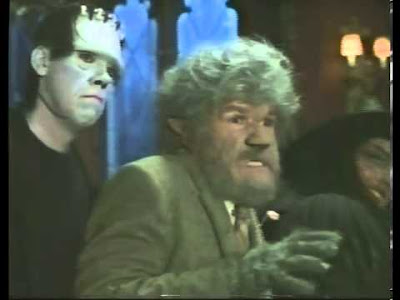
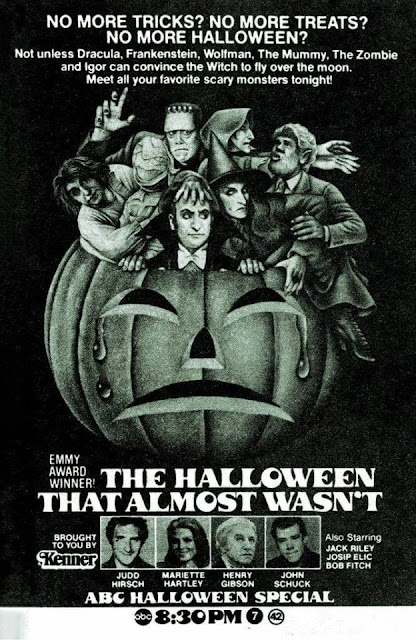
A few days ago I saw a mention in a classic TV Facebook group of a 1979 special that aired on ABC entitled “The Halloween That Almost Wasn’t.” Never heard of it – but from the YouTube comments it was obvious that this was a cherished holiday memory for a lot of people. Sounds like exactly what I wanted. So I checked it out. 


My review? This is one of the worst, god-awful half hours of television I have ever endured.


I know by saying that I am stomping on the nostalgic joy of others. And I know how that feels, because I’ve introduced friends to some shows that still bring me that same joy, and watched as they looked at me like I was nuts.


But that’s what makes childhood memories that endure into adulthood so fascinating. Logic and critical judgment are easily overcome by warm reflections and sentiment.


 “The Halloween That Almost Wasn’t” aired once on network TV and then repeated annually on the Disney Channel for more than ten years. 


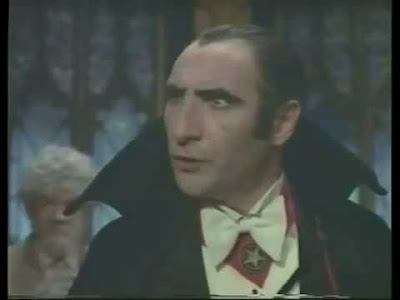
If you never saw it either, here’s a recap: Dracula (played by Taxi’s Judd Hirsch!) is concerned that Halloween may soon be canceled forever. He calls a meeting in Transylvania attended by the Wolfman (Jack Riley), Frankenstein’s monster (John Schuck), and the Witch (Mariette Hartley). Dracula’s assistant Igor is played by Henry Gibson. 


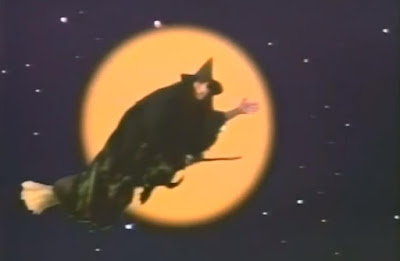
It’s the Witch who is threatening to cancel Halloween – apparently the holiday cannot properly begin unless she flies her broom across the moon’s shadow. The other monsters try to convince her to change her mind, but she’s tired of the whole bit, and will only relent if her long list of demands are met – one of which is that Drac takes her disco dancing every night. 


Meanwhile, a family of four prepare for Halloween, worried that this might be the last time the kids will get to dress up and trick or treat. These two stories intersect in the climax, where the Witch has an epiphany and Halloween is saved. 


The script was by Coleman Jacoby, a veteran gag writer who peaked in the 1950s feeding jokes to Bob Hope and Fred Allen. Nearly 30 years later he still had the same comedy instincts but not one joke landed for me. As with The Christmas Toy, I found the commercials (for Kenner) more interesting than the show they sponsored. 


I was fifteen when this special first aired, so even then I probably would have dismissed it as dumb and corny. But if I was seven? Maybe I would have thought it was awesome. And maybe it would have stuck in my memory to the point where seeing it again as a teenager or adult would have been a delightful experience.


I know this because every time I return to Isis (or The Secrets of Isis), that’s how I feel. 


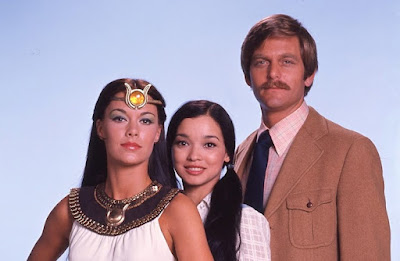
The 22 episodes that comprise this 1975-1976 CBS series, originally aired on Saturday mornings, can be as silly as anything in “The Halloween That Almost Wasn’t” but my joy is undiminished by such assessments. Here’s the premise: science teacher goes to Egypt (we don’t know why), digs up a magic necklace (buried about eight inches deep in a country that’s been digging up relics for 4,000 years), and acquires the awesome powers of an Egyptian goddess. She can stop time; she has full command over all the earth’s natural elements; but she uses her powers to help the students at her high school learn lessons about friendship, honesty and being happy just being yourself.


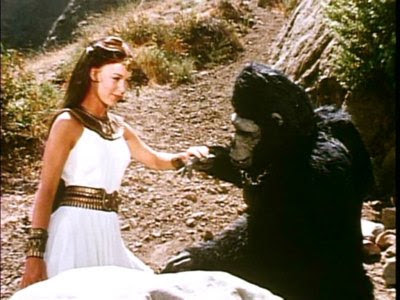
It makes no sense. But I love it. I think JoAnna Cameron as Isis is still as poised and cool as any superhero from the MCU movie universe. I think the life lessons taught in the stories are as applicable today as they were in the 1970s. But I’ve shared this show with friends who never saw it, and they can’t get past the clunky special effects and the saccharine dialogue.


So if you love “The Halloween That Almost Wasn’t,” hold on to that love. No one here will judge you, even if we can’t see it through your eyes. I’ll be over here watching Isis make friends with a guy in a bad gorilla suit. 


Friday, October 8, 2021

Classic Halloween TV Movies: Creepy Kids Edition


The pandemic made last year scary enough without all the standard ghosts and witches of Halloween, so we pretty much skipped the holiday here. But this year I feel more celebratory, especially as this is a perfect opportunity to delve into the treasure trove of vintage made-for-TV movies accessible via YouTube.


What makes these movies interesting is how they manage to frighten an audience without the graphic blood and guts mayhem employed by most contemporary horror movies. As I wrote in my review of “Crowhaven Farm,’ they had to comply with broadcast standards that placed strict limits on violence, yet they continue to linger in the nightmares of viewers 50 years later. They are triumphs of artistry over gore, and subtlety and suspense over shock value.’


To get you started, here are three films with a common theme: creepy kids. 


Daughter of the Mind (1969)


“Daughter of the Mind” stars Ray Milland as distinguished professor Samuel Constable, whose daughter Mary (Pamelyn Ferdin) was killed in an auto accident months earlier. One evening, as he is driving back from visiting her grave, he hears her voice calling to him, and then he sees her standing in the middle of the road. “Oh daddy, I hate being dead,” she says before vanishing. 


He reports the unsettling experience to Dr. Alex Lauder (Don Murray), a professor of parapsychology, who moves into the family residence. Before long Mary appears again, and this time they both see her. They also notice that objects in her bedroom are being moved around. Lauder becomes suspicious, however, after Mary warns her father about the “war work” he’s doing for the government, and claims she won’t be able to come back unless he quits.


Are those dastardly Commies behind this? But if they are, how can Lauder explain the perfect wax replica of Mary’s hand – including matching fingerprints - that appears in her bedroom? And before you suggest grave-robbing- the family had Mary cremated, so there was no way to obtain those prints post-mortem.


The cast really helps make this one work – Oscar-winner Milland, ‘70s icon Ferdin, Gene Tierney as Mary’s mother, Ed Asner as an intelligence agent surveilling Constable, and John Carradine, who seems to pop up in 7 out every 10 scary TV movies. 


The People (1972)


Melodye (Kim Darby) wants to be a schoolteacher, but she tends to run away from stressful situations involving family and boyfriends. So she accepts a job teaching farm kids in a remote rural area that can’t seem to keep teachers very long. 


When she arrives for her first day of school, she is met with stern-faced children who rarely speak, never get sick, are not allowed to play music, and who walk by sliding their feet instead of lifting them.


“Don’t you find these people a little…unnerving?” Melodye asks the local doctor (William Shatner). He agrees, but doesn’t believe they pose any danger. 


“The People” was adapted from a series of popular books by Zenna Henderson that explores what it’s like to be different. Maybe that’s why Melodye, something of an outsider herself, doesn’t run away after seeing things that would make other teachers board the nearest bus out of town. Will that prove to be the right decision?

And will Shatner finally return Kim Darby’s affections now that she’s grown up, six years after the Star Trek episode “Miri”? Sorry, no spoilers here.


There has been a trend toward nihilism in modern-day horror – evil wins! No one can help you! Everybody dies! I think that’s why I appreciated how the story in “The People” develops, and how it ends. Hopeful last acts are hard to come by these days.


When Michael Calls (1972)


Helen (Elizabeth Ashley) starts receiving phone calls from her nephew Michael, pleading for her to come get him. But Michael died 15 years ago. 


So who is making the calls? It is her estranged husband (Ben Gazzara), one of the patients at a nearby home for disturbed children where her brother Craig (Michael Douglas) works? Or could it really be Michael, who survived after running away and getting lost in a blizzard? After all, he uses a nickname for Helen that only a family member would know.


This is the scariest of the three films reviewed here, especially after Michael warns about people close to Helen dying. Not everyone in the cast survives to the end credits, and one of the murders at a Halloween festival is particularly shocking.


“When Michael Calls" predates both When a Stranger Calls and Scream, so it might be the first movie to make viewers jump every time a phone rings. Elizabeth Ashley is best remembered for more flamboyant performances but she’s surprisingly (and refreshingly) low-key here, and Michael Douglas is excellent in a movie that debuted  the same year he began his run on The Streets of San Francisco.  


As with most TV movies, these three all get their stories told in less than 90 minutes, so they won’t waste your time. And there are plenty more on YouTube where these came from.

Wednesday, October 28, 2020

Pumpkins, Presidents and “That Girl”


Halloween is a couple of days away, and there’s a presidential election just three days later (you might have read something about that over the past two years).


If you’re looking for appropriate Comfort TV viewing, you’ll have plenty of choices for Halloween-themed shows, and a few shows about elections such as “The Not Making of a President,” from season two of Happy Days. But if you’d like both events in one episode, I am happy to recommend “Secret Ballot” (1968), from the third season of That Girl.


As the story begins, Ann Marie is at the library taking out a stack of books about politics (including the Congressional Record) so she can study the issues before voting in her first presidential election. 


Watch for an unbilled Penny Marshall in a tiny role as one of the librarians.


Since Ann Marie overdoes everything her enthusiasm about doing her patriotic duty is not surprising. It’s also refreshing in these cynical times. I remember being excited the first time I cast a vote for president. Hopefully, younger people still feel that way.


This plot point also suggests a question – how old is Ann Marie? If this is her first presidential election, and the voting age was 21 in 1968, it means she must be somewhere between 21 and 24 years old, which is interesting since Marlo Thomas was almost 30 at the time.


When Donald arrives (in a Halloween get-up Ann barely notices), he discusses the election with her as a seasoned voter, and viewers likely already assumed he was older then Ann based on his profession and general maturity level. Ted Bessell was 33 when “Secret Ballot” was shot.


The couple drives up to Brewster to spend the weekend with Ann’s parents. That’s when her father asks, “How did you register? Democrat or Republican?” Ann is hesitant to tell him, as she believes a secret ballot should remain secret. He tells her he’s always voted a straight-party ticket, and if it’s good enough for him it should be good enough for her.


Interesting to note that he doesn’t say which party he supports – this was the era when situation comedies were more about telling good stories than preaching to potential voters.


Their debate continues into Halloween night, as trick-or-treaters begin to arrive. The family is so engaged in election conversation that, despite greeting the costumed tykes, they never get around to giving them any candy. And that’s why, the next morning, they are cleaning up their front yard from the kids’ retribution.


Does anyone still take the “trick” part seriously for homes that stiff on treats? It was probably more common back when the series was shot. I also liked how the family takes their penance as justified – they did the crime, now they suffer the consequences without any whining.


But amidst all this the argument continues over Ann’s refusal to reveal her party alliance, and her belief that a straight-party vote is lazy and doesn’t carefully consider candidates and issues. She and Don leave early that day, only to have to drive right back up because Ann forgot her purse (patience of a saint, that Donald).


But between highway rides, there’s a thoughtful and well-written conversation on the stairway in Ann’s building, when Don gently tells Ann that her father was not the only one being unreasonable. “Millions of people vote a straight party ticket, and there is nothing wrong with that.”


It is nightfall by the time they get back to Brewster; Ann’s parents are out for a walk and the house is locked. Ann decides to climb a tree and enter through her bedroom window on the second floor – and then she gets stuck up the tree. She tells Donald to trek over to the fire station to get a ladder. He begins to leave, stops, and then looks up at Ann and asks, “If I were to turn and walk away from here, never to return, would you understand?”


Ann’s response is perfect – and just right as we reach the climax of a warm and funny episode that could have aired this year and be relevant to our current life and times.


Happy Halloween – and let’s hope next week doesn’t result in all of us wanting to climb a tree and stay up there for the next four years.


Friday, October 9, 2020

Halloween Comfort TV: Crowhaven Farm


The calendar says its October and usually that means I’d start delving into my go-to Halloween-themed classic TV episodes…but I’m just not feeling it this year. Maybe 2020 has been scary enough already.


But for those still eager to embrace the holiday, I have one recommendation you might enjoy. I missed it the first time when I was a cowardly kid in the 1970s, but redsicovered it recently as part of a piece I started for this blog and later abandoned, though I’ll probably strip it for parts over the next few months.


Crowhaven Farm was a movie-of-the-week that aired on ABC in 1970. It was one of several memorable TV horror movies from that era, including The Night Stalker (1972), Satan’s School for Girls (1973), Trilogy of Terror (1975) and Dark Night of the Scarecrow (1981). 


What is interesting to me about all of these films is how they had to comply with broadcast standards that placed strict limits on violence, yet they continue to linger in the nightmares of ‘70s kids nearly 50 years later. They are triumphs of artistry over gore, and subtlety over shock value.


As Crowhaven Farm opens, Maggie Porter (Hope Lange) is at the reading of a relative’s will, where she discovers that the title property would be bequeathed to her only if a different beneficiary does not move there. Said beneficiary heads out to the farm the next night, only to die after driving his car off a bridge. 


That is sign number one that this may not be a great place to relocate.


Undaunted, Maggie and her husband Ben (Paul Burke) drive out soon after to take possession. There, Maggie meets a creepy handyman played by John Carradine.


That is sign number two that this may not be a great place to relocate.


As she walks through the old, rambling farmhouse, she feels unsettled, and later reaches instinctively for a lever that opens a secret room, despite the fact that she’s never been there before.


Sign number three.


So Maggie is ready to head back to New York – but Ben has gone all Oliver Wendell Douglas, and is convinced that farm living is the life for him. Against her better instincts, she agrees to stay.


A few weeks later, at a party held so the Porters can meet their rural neighbors, a local historian tells Maggie that Crowhaven was once the site where a coven of witches performed satanic rituals.


This is where the rest of us would have finally got the message and left before the party was over. But the Porters stay, and they suffer the consequences.


I’m reluctant to reveal any further plot details, because the story’s surprises should be discovered without spoilers. 


Viewers were familiar with seeing Hope Lange in supernatural situations after her three seasons on The Ghost and Mrs. Muir. She won two Emmys for that role, over such formidable competition as Elizabeth Montgomery (Bewitched), Barbara Feldon (Get Smart) and Marlo Thomas (That Girl). But there’s no romance with a ghostly sea captain this time around. There’s not even much romance with her husband, or with an on-the-make neighbor played by the always skeezy Lloyd Bochner.


Instead she’s a woman mostly alone in a place she does not want to be. There’s a scene early on when Maggie is awakened by voices in the middle of the night. She wanders outside through a forested area, still in her nightgown, wind rustling through the trees, trying to find out where those voices are coming from and what they are saying. The scene reminded me of one in the film Cat People, where a woman feels as if she’s being stalked while swimming in an indoor pool. The atmosphere and the amplified sounds and the way the sequences are shot create an eerie sense of foreboding, though little of consequence actually happens.


But if you prefer your scares more visceral, the last fifteen minutes of Crowhaven Farm do not disappoint.


As good as Lange is, the performance that lingers longest in the memory belongs to young Cindy Eilbacher, whom you should know if you aced our Know Your Eilbachers quiz. She plays an angelic young waif who the Porters adopt on impulse, proving once again that no good deed goes unpunished. It’s definitely one of the great creepy kid performances of all time.


So if this year hasn’t satiated your desire for horror stories, take a drive out to Crowhaven Farm. Preferably on John Carradine’s day off.