Showing posts with label The Magician. Show all posts

Wednesday, May 9, 2018

The Magician: Purchase or Pass?


The Magician is one of those shows with a notoriety that endured well beyond its brief run.

Just 22 episodes aired from 1973-1974, but 40 years later the series could be found on many classic TV fans’ “most wanted” lists for a DVD release. Those wishes were finally granted last year.


I recently completed my journey through the set. Here are a few random thoughts.

New Missions
If you’re a credits-watcher as most classic TV fans are, you’ll notice a lot of producers, writers and directors associated with The Magician that used to work for Mission: Impossible, including Paul Playdon, Bruce Lansbury, Reza Badiyi, Stephen Kandel, Laurence Heath, Barry Crane, and Sutton Roley. Perhaps it’s not all that surprising, since for a time M:I also featured a magician character (Leonard Nimoy as The Great Paris). Seeing those names raised my expectations for the series, as they are the television equivalent of The Good Housekeeping Seal of Approval.

The Pilot – Not So Magical
As is typical of a TV movie that doubles as a pilot, “The Magician” delivers a more ambitious story and bigger-budget action sequences to help secure a series order. It’s an adequate introduction to Anthony Dorian (prudently changed to Anthony Blake for the series), a successful, wealthy magician compelled to help people in need, even at the risk of his own life. His friend, journalist Max Pomeroy (Keene Curtis) provides the backstory; Tony was once arrested on a false charge and sentenced to prison in South America. That ordeal transformed him into a crusader for truth and justice.

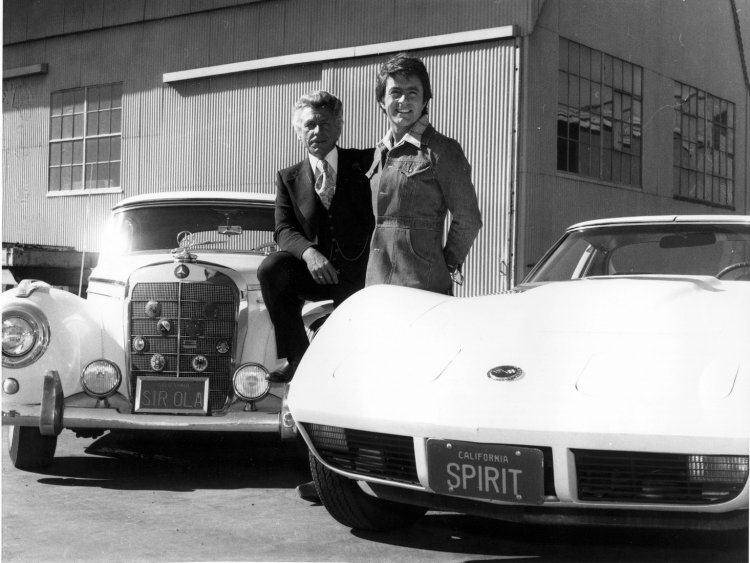
Chase scenes with helicopters and speedboats and Tony’s (very sweet) Corvette Stingray provided sequences that would play during the opening credits for the entire season. But the meandering, bloated story is not emblematic of the much better series that would follow. 


Bill Bixby
The series works because of Bill Bixby. He was so intrinsic to my enjoyment of every episode that I can’t imagine anyone else as Blake.

Bixby was already a familiar and well-liked TV presence after The Courtship of Eddie’s Father, and I wonder if it seemed a stretch at the time to cast the sensitive, sentimental father figure into a role that required more than a dash of James Bond cool. But he pulls it off. No other actor could intone such a wide range of responses into a simple “Yes” as an answer to a question. Sometimes he’s imparting empathy, sometimes resolution, and other times, said with a wry smile, it clearly means, “I’m not buying any of your crap.” 


Real Magic (Maybe)
One of the show’s selling points was that every illusion, from simple card tricks to elaborate feats of prestidigitation, was achieved without film editing or special effects. Bill Bixby was a magic fan and a talented amateur magician, who likely received additional pointers from frequent series guest Mark Wilson. But there were some potentially dangerous sequences, including an underwater stunt in “The Illusion of The Evil Spikes,” that I can’t imagine would be trusted to a series star to perform solo.

The First Season is Better Than the Second
While there are standout episodes from both seasons, I liked the first year’s shows better because of its supporting cast – the aforementioned Keene Curtis as Max Pomeroy, Todd Crespi as Max’s son Dennis, and Jim Watkins as Tony’s pilot Jerry Anderson. Why did Tony need a pilot? Because in season one he lived on his own plane, which was a great set in the episodes where the interior is seen. But in season two Curtis and Crespi are gone along with the plane, and Tony takes up residence in L.A.’s Magic Castle. Jerry is still around but rarely gets anything to do, and I didn’t care much for new regular Joe Sirola as club owner Dominick. 


Familiar Faces
As with many series from this era, The Magician earns bonus points from me for its guest casts, including Comfort TV favorites Carl Betz, Brooke Bundy, Lynda Day George, William Shatner, Anthony Zerbe, Susan Oliver, Yvonne Craig and Joseph Campanella.  

Best Stories
From the first season I particularly enjoyed “The Vanishing Lady,” filmed on location in Las Vegas, the twists and turns in “Lady In a Trap,” and the elaborate heist Tony foils in “Nightmare in Steel.” Season two highlights include “The Illusion of Black Gold,” with Eric Braeden as a particularly charismatic villain (who doesn’t find Tony’s tricks at all amusing), and “The Illusion of the Cat’s Eye,” which opens with a stunning museum theft, with a clever solution that would have not been out of place on Mission: Impossible.

The Verdict
Purchase or pass? This was an easy purchase decision for me. The Magician has the re-watchability I require for any series that takes up permanent residence in my DVD collection. 
 If you have checked it out or plan to, let me know your thoughts. 


Friday, June 28, 2013

One and Done: Seven Short-Lived Series Worth Remembering

 
Longevity isn’t always a measure of quality when it comes to television (see: Step by Step). That’s especially true over the past 5-10 years when shows like Wonderfalls and Freaks and Geeks and Firefly were pulled before their time. I thought Pan Am had its moments, too.

That was not the case in the classic TV era. Back then if a series was canceled after one season it was usually for good reason. Networks were slower to go to the hook, allowing shows like The Dick Van Dyke Show and Cheers to find their audience despite low-rated first seasons.

Unfortunately, not every show was so lucky. Here are seven Comfort TV series that disappeared too quickly, but still have their fans.

My World and Welcome To It (1969)
Maybe its blend of live-action and animation was ahead of its time. Maybe its basis in the writing of James Thurber made it sound too highbrow – or maybe it was just scheduled against Gunsmoke and never had a chance. Whatever prompted its early cancellation, My World and Welcome To It is one of television’s buried treasures. Sample the clips on YouTube and see if you don’t fall under its whimsical spell. 

Ellery Queen (1975)
After creating one of TV’s greatest detectives in Columbo, Richard Levinson and William Link introduced Ellery Queen to television, in the genial presence of star Jim Hutton. Set in the 1940s, the series revolved around Queen assisting his police detective father (David Wayne) on baffling murder mysteries. The high point of each episode had Hutton turning to the camera and addressing the audience at home, just before he cracked the case. “Have you figured it out?” he’d ask, before reminding us of the suspects and the most important clues. Rarely has it been more fun to match wits with the characters on screen. 


Gidget (1965)
Gidget made Sally Field famous but didn’t find an audience until it was rerun over the summer, not surprising for a show about surfing under the California sun. By then the show had already been canceled, and ABC scrambled to find another vehicle for its breakout star. The best they could do was The Flying Nun, which lasted three seasons but doesn’t hold up nearly as well. For all its carefree sand and surf fun, what really made Gidget memorable was the heartfelt connection between Field and costar Don Porter, who created one of TV’s most appealing father-daughter relationships. 


The Green Hornet (1966)
This Batman spin-off was played with similar visual style but less camp, and is best remembered now for Bruce Lee, who appeared opposite Van Williams as the Green Hornet’s high-kicking chauffeur, Kato. It was the first time many Americans had seen martial arts performed by a master, and the charismatic Lee insisted on authenticity in the fight choreography. Given the shortness of his subsequent film career, it would be wonderful to have more Green Hornet episodes to enjoy. 


The Magician (1973)
Two magic-themed films recently opened to mixed reviews (The Incredible Burt Wonderstone and Now You See Me), and neither was one-tenth as entertaining as The Magician, starring Bill Bixby as a magic man who helps those in trouble with his powers of prestidigitation. Bixby is one of TV’s most appealing leading men, as well as a talented amateur magician. Every illusion in the series was performed with no camera tricks or special effects.  

Jennifer Slept Here (1983)
Ann Jillian deserved a more substantive TV career. She got close with It’s a Living, but with all its title changes and timeslot changes and personnel changes the series never really found its footing. Jennifer Slept Here was her second shot. The high-concept premise has a family moving into a Beverly Hills mansion once owned by glamorous movie star Jennifer Farrell, now deceased.  As a ghost, she appears to the family’s 14 year-old son, and helps him adjust to high school, meeting girls and life in California. Jillian elevated her material as she always did, but the show could not compete against Webster and The Dukes of Hazzard.

Tenspeed and Brown Shoe (1980)
Can too much promotion kill a TV show? I think so. I never watched Malcolm in the Middle because of the obnoxious nonstop promos that FOX aired leading up to its debut. ABC tried that same desperate strategy for Tenspeed and Brown Shoe, which teamed Ben Vereen and Jeff Goldbum as unlikely detectives. Result? Big numbers for the first episode followed by rapidly diminishing returns. Perhaps if the network had merely promised a good show rather than the landmark television event of the season, viewers would have been more patient.