Showing posts with label The Mary Tyler Moore Show. Show all posts

Tuesday, July 25, 2023

When Ted Baxter Outsmarted Lou Grant - Or, Nobody Loses All the Time


One of the reasons I’ve never embraced Gilligan’s Island like so many fellow classic TV fans is that the end of every story is clear before the episode begins.

That’s fine if you just enjoy spending time with its seven castaways, but for me it became too repetitious.


1.They want to get off the island.

2. Something happens that makes them think they’re going to get off the island.

3. Something goes wrong and they’re still on the island.


If losing is baked into the DNA of any television character, that character risks becoming less interesting. Lucy Ricardo would never win rave reviews for appearing in Ricky’s show. Bus driver Ralph Kramden’s latest get-rich-quick scheme was always doomed to fail. *


These are classic shows despite the inevitable futility of outlandish schemes, but for those of us who wish that Charlie Brown had finally been able to kick that football, we can’t help occasionally rooting for a different outcome.


That’s why some of my favorite TV episodes are those in which the perpetual loser becomes, for once, a winner. It can never last, of course, but even a fleeting moment of triumph is enough to upturn a routine story and explore new territory.


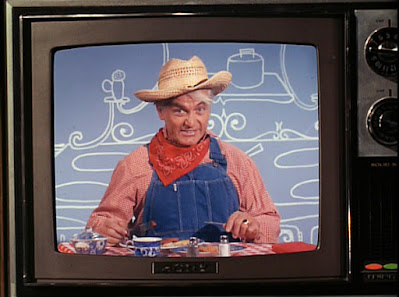
Which brings us to “Farmer Ted and the News,” a season three episode of The Mary Tyler Moore Show


By then the character of Ted Baxter had been well established and defined – pompous, egotistical, often incompetent at his job as anchorman for WJM News. In the show’s workplace scenes, if someone was going to be the butt of a joke, it was always Ted. Murray and Lou demeaned him at every opportunity, and usually not without good reason. It was not in Mary’s nature to be as aggressively harsh, but she shared their disdain.


In this episode Ted’s contract is up for renewal, and Murray is seething at the thought that Ted might get a raise when he is already the highest-paid but least-qualified member of the news team. Lou is adamant – no raise – but he agrees to meet with Ted’s agent, and is surprised when into his office walks Bella, a sweet older lady who immediately puts him at ease. She reassures Lou that Ted doesn’t want more money – all he asks is that the exclusivity clause from his contract be stricken, so Ted would be free to pursue other opportunities, such as movie roles or Broadway engagements.


Lou happily deletes that clause, and later shares a laugh with Mary and Murray over the thought of anyone casting Ted in a film or Broadway show. 


He’s not even worried when Ted tells him, “You fell right into our trap.”


He should have worried. Just days later Mary is shocked to see Ted doing a Ron Popeil-like commercial for a tomato slicer. 
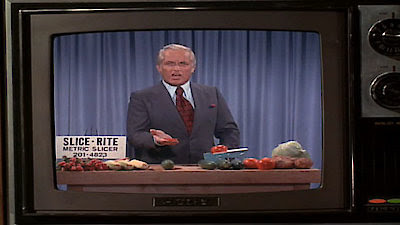


Rhoda thinks it’s hilarious; Mary (and Lou) realize that what little credibility their news show has is now quickly dissolving. More commercials follow – Ted gladly barks like a dog to sell dog food and cashes another check.


Lou has no choice but to admit defeat. “I think Baxter's finally got me. I've gone over his contract, a dozen times. There's nothing I can do to stop him. First it was that tomato slicer. Then it was that commercial for that woman's product. I didn't even know what it was.”


Sure, the idea was probably Bella’s, or money-hungry Ted would have thought of it sooner. But he recognized its potential and gave up on another token raise for something with greater profit possibilities, while leveraging the newsroom’s derision of his limited outside opportunities into something they couldn’t see past their own condescension. That's a win - and an impressive one at that.


How does it end? I won’t reveal it here, but the last straw comes after one of Ted’s commercials (for Ma and Pa’s Country Pork Sausage) airs between segments during his newscast. After the spot the camera cuts back to a smiling Ted as he admires his pitchman skills, before solemnly dropping back into his anchorman voice – “And now, the news.” Ted Knight was so brilliant in this part – makes me laugh out loud every time.


After the broadcast he reluctantly reports to Lou’s office where the situation is resolved in a way that would not pass muster with any HR department. But it works.


In these challenging times of unequal justice, indifferent customer service, unmerited outrage over movies and songs and anything else that can place another wedge between people who just want to be left alone, it’s enough to make many of us feel like we too are surrounded by hostility on all sides. Maybe that’s another reason why it is sometimes satisfying to watch a loser come out on top – at least until next week’s episode.


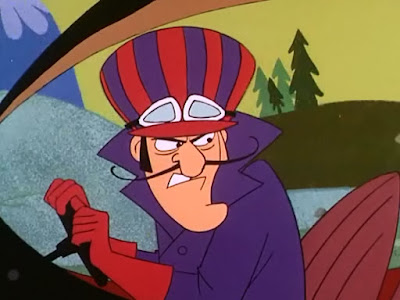
* I wouldn’t have even minded if, just once, Dick Dastardly won a Wacky Race. 


Tuesday, July 19, 2022

Comfort TV Class Reunion Episodes


Last week my high school class celebrated its 40-year reunion. I did not attend, as I now live about 1,700 miles from my high school.


Even had I lived closer, however, I probably would have felt out of place. As much as I delight in looking back at television’s past, I do not feel the same nostalgic reassurance dwelling on my own previous life and times. Plus, all of my friends now view the world and its issues differently than I do, which often results in awkward conversations and protracted silences.


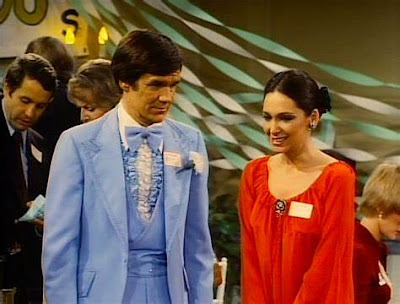
I did go to my ten-year reunion, which was enjoyable. Most of the guys still had hair (including me) and the girl I crushed on from fourth grade through high school was still beautiful – and still indifferent to me. But ten is the easy one to attend; you don’t have to look down at the badges because the faces are now unfamiliar, and no one expects you to have your life figured out yet.


And because these events are so rife with the potential for happiness, sadness, humiliation, rekindled romance, and setting old scores aside, it’s not surprising they have found their way into so many Comfort TV shows. 


The most common recurrent theme is a male character arriving with a beautiful woman to show up the girl he once loved, and all of the classmates that viewed him as a loser. It’s amazing how long old slights dwell in our memory banks, leaping out to grab us again when triggered.


“I just want to appear successful to these people, that’s all,” says Kip (Tom Hanks) in “The Reunion” (Bosom Buddies). “This is the class that voted me most likely to be on the methadone program.” Kip can’t wait to flaunt stunning girlfriend Sunny (Donna Dixon) – “Can you believe who I’m with?” Meanwhile, Henry (Peter Scolari) is dealing with another emotional trauma generated by reunions – the painful memory of being cruel to a sweet girl who liked him. 


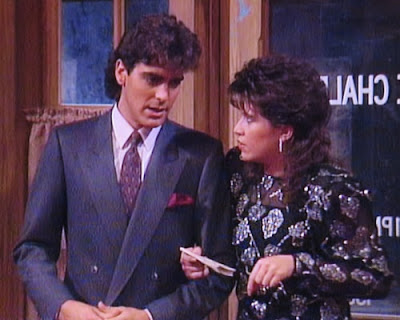
On The Bob Newhart Show, Mr. Carlin (Jack Riley) couldn’t find an actual girlfriend to escort, so he talked Emily into posing as his wife. And on The Facts of Life, George (George Clooney) convinces Blair (later replaced by Jo) to be his date to impress the one girl who would never go out with him.  Both guys overdo it, as guys tend to do; Carlin tells everyone Emily was a Playboy centerfold; George introduces his date as a duchess and a Nobel Prize winner.


Wings offered a gender-switched variant on this storyline, in “Remembrance of Flings Past.” Helen, once the fat kid picked on by the cheerleaders, can’t wait to show off her new and improved self – only to find that the clique that once shunned her are still as nasty as ever. 


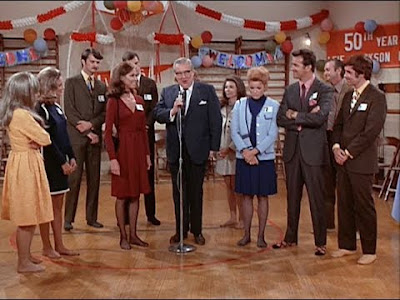
Mary Richards had no such problems, of course, having been one of the most popular girls in her teenage years. But in an episode of The Mary Tyler Moore Show entitled “Didn’t You Used to Be…Wait Don’t Tell Me,” even the former Viking Queen of Leif Ericson High has a lousy time at her reunion, when only ten other classmates show up (one of whom is played by the always annoying Richard Schaal). 


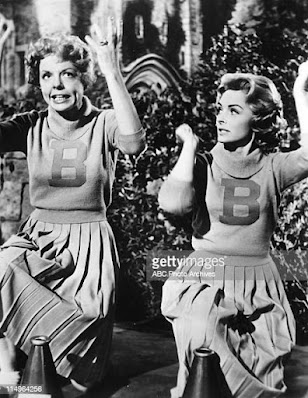
Donna Stone, as practically perfect in every way as Mary Richards, also had her share of calamities at her college reunion, including a black eye and her husband’s persistent grilling over an old boyfriend named Duke. But this Donna Reed Show episode (“Donna Goes To a Reunion”) features by far the most elegant soiree on this list, though I’d expect nothing less from Donna’s alma mater.


Didn’t anyone in TV land enjoy themselves at these affairs? John Walton did, though at first he dreaded the thought of his high school class returning for their reunion. As the only graduate who stayed on Walton’s Mountain, he was sure he’d be looked down on as the class disappointment.  But he discovers instead that his classmates hold him in the highest esteem, and that few achievements in this life are as great as raising a happy, loving family. “The Prophecy” delivers a message that used to be more prevalent, and one that we need to hear more often now.


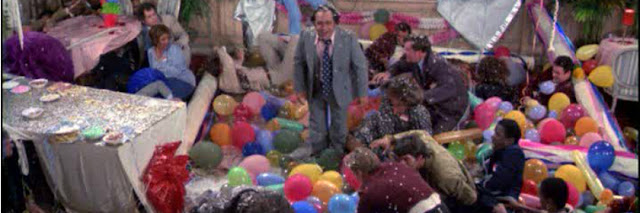
I’m sure I missed a few other examples of this trope, but surely none could be more bizarre than the one that aired early in Taxi’s first season. In “High School Reunion,” Louis (Danny DeVito) dreads the prospect of his 20-year reunion. Bobby (Jeff Conaway) attends in his place, pulling off a surprisingly accurate Louis impersonation – until Louis himself shows up and the event ends in a pile of rubble and broken bodies. 


Thankfully, from the photos I’ve seen, my 40th reunion wrapped up with no property damage and everyone still upright. And on second thought, I’m kind of sorry I missed it now.

Thursday, July 2, 2020

Classic TV Statues: Leave Them Alone


We are either in the midst of a cultural revolution or a crime wave, depending on your perspective. And while the damage to real people and property embodies the most regrettable aspect of these uprisings, there have been other victims as well.

Statues. Lots of statues.

I know – this isn’t the place for politics. “Save it for your book!” Okay – I will. And that book will be out next year. Details to follow in another month or two.

But as this is Comfort TV let’s talk about the statues that have been erected to honor performers and characters from many of television’s most memorable series. Thus far they have escaped the carnage. But who knows what tomorrow might bring? This could be a good time to plan a road trip to visit some of these monuments before they meet their fate.

Jackie Gleason as Ralph Kramden
New York City
Erected: 2000

This was the first statue commissioned by TV Land – hard to believe it’s already 20 years old. And what better place to honor Ralph Kramden than at New York’s bustling Port Authority Bus Terminal? It’s a wonderful likeness of Ralph, with lunch box in hand, chest out proudly, ready to start another shift. Or as Alice would say, “That’s not his chest, that’s his stomach, and it’s always out!”


Could it Come Down?
No statue in New York appears to be off limits at the moment. Fortunately, Its Port Authority location means it will be seen primarily by those traveling to or from work – and most rioters have an aversion to honest employment.

Mary Tyler Moore as Mary Richards
Minneapolis
Erected: 2001

Few classic TV freeze frames are as famous as the one at the end of the opening credits to The Mary Tyler Moore Show. A jubilant Mary flings her cap into the air, while a sourpuss woman in the background scowls in contempt. 


That was the moment the sculptor attempted to recreate, with a statue located near the place where that scene was shot – the corner of 7th and Nicollet in Minneapolis. On the base is written, “Who can turn the world on with her smile?” 


Sadly, the artist who created the bronze statue, Gwendolyn Gillen, died just two days after Mary Tyler Moore passed away in January of 2017.

Could it Come Down?
Minneapolis was the epicenter for the ongoing national protests, so anything is possible.

Andy Griffith and Ronny Howard as Andy and Opie Taylor
Raleigh
Erected: 2003

There are two statues depicting the same famous moment of Andy and Opie going fishing, as shown in the opening credits of The Andy Griffith Show. After TV Land erected the original in Raleigh’s Pullen Park, residents of Mount Airy protested the location. They had a point – Mount Airy was Griffith’s hometown and the city that inspired Mayberry. So a second version went up there, in front of the Andy Griffith Playhouse. I think they did a wonderful job with this one. 


Could it Come Down?
Let’s see – which side did North Carolina support in the Civil War? Uh-oh. Maybe this should be the first stop on your tour.

Bob Newhart as Bob Hartley
Chicago
Erected: 2004

This subject always struck me as an odd choice, though I have always loved The Bob Newhart Show. Certainly the interactive quality is fun – how many thousands of people have taken a seat on the couch next to Dr. Hartley and shared their problems? After it first appeared on Michigan Ave. it was moved to Navy Pier, one of Chicago’s most popular spots for tourists and locals.  


Could it Come Down?
I doubt it will get torn down. But it might get shot.

Elizabeth Montgomery as Samantha Stevens
Salem
Erected: 2005

From a distance, this nine-foot, 3,000-pound bronze of Samantha astride her broom looks pretty amazing. 


But it loses a little something up close. Still, we should be happy it’s still there in Lappin Park, as some local residents thought it was a disrespectful reminder of those who were persecuted at the actual Salem witch trials. See? People who don’t know the difference between fantasy and reality are nothing new. 


Could it Come Down?
Salem survives on tourism, and even the grumblers have noticed how many visitors enjoy taking selfies with Sam. She should be safe.

James Garner as Bret Maverick
Norman
Erected: 2006

This may be the biggest statue on the list, standing more than 10 feet tall. Norman, Oklahoma was James Garner’s hometown, and this was an appealing tribute to both a favorite son and a classic TV character. 


Could it Come Down?
The Old West? Do we really need to honor another intolerant historic era? Thankfully, very few professional agitators live in Oklahoma.

Henry Winkler as Arthur Fonzarelli
Milwaukee
Erected: 2008

The Fonz in bronze! TV Land was going to move forward on this but changed its mind, probably around the same time they stopped airing any TV shows worth watching. So the city’s tourism board stepped in, raised $85,000, found a local artist that knew cool when he saw it, and the rest is history. I’m still not sure if the coloring on the leather jacket and jeans was a nice touch or an overreach. 


Thankfully, despite the Riverwalk location, he’s not wearing water skis.

Could it Come Down?
Does he represent the oppressive 1950s? Those weren’t happy days for everyone, you know.

Noel Neill as Lois Lane
Metropolis
Erected: 2010

Yes, Metropolis, as in Metropolis, Illinois. The statue immortalizes The Daily Planet’s ace reporter, as played by Noel Neill on The Adventures of Superman. Neill was pushing 90 when it was unveiled, but she was there to see it. That’s awesome. 


Could it Come Down?
Try it and you’ll have to answer to you-know-who.

Lucille Ball as Lucy Ricardo
Jamestown
Erected: It’s Complicated

At last, a statue that disappeared and no one, regardless of race, creed or political affiliation, ever missed it. The original Lucille Ball statue by Dave Poulin was so hideous it was dubbed “Scary Lucy,” and even the rioters and the pigeons wouldn’t go near it. 


Poulin died at the too-young age of 58, and it’s sad that this became his best-known work, as he really was quite talented.

Still, that version had to go, and a much more flattering bronze sculpted by Carolyn Palmer was unveiled on August 6, 2016, Lucy’s 105th birthday. 


Could it Come Down?
I Love Lucy may be the most iconic situation comedy ever created, but one of its running gags was having Lucy mock Ricky’s Cuban accent. People now lose their jobs for doing that.


Who needs a statue next? My nominees:

Maxwell Smart
How many times does a man have to save the world from the forces of KAOS to get a little respect? Besides, Washington D.C. is going to need something to fill all those empty pedestals.

Emma Peel
London loves its statues. They’re everywhere – from Sir Thomas More to Sherlock Holmes, Prince Albert to Paddington Bear. So why not honor the English rose that has been described as the ultimate ‘60s style icon? Diana Rigg would look great in bronze, because she looked great in everything. 


Captain James T. Kirk
Max saved America – Kirk saved the whole galaxy, and slept with half of it too. There’s probably a statue of him already on Rigel II, aka the “pleasure planet,” but we need one on earth as well.

Wednesday, January 25, 2017

Mary


In television there is only one Mary, like there will always be only one Lucy. And when these icons leave us, our sadness is lightened somewhat by the remarkable legacies they leave behind. 


With Mary Tyler Moore, that legacy is primarily comprised of 158 episodes of The Dick Van Dyke Show and 168 episodes of The Mary Tyler Moore Show. Together these shows feature some of the finest situation comedy ensemble work the medium has ever seen or ever will see.

On The Dick Van Dyke Show she was the last one cast and the least experienced participant in a show that was both a classic family sitcom and a classic workplace sitcom. 


It’s a series that is now more than 50 years old but hasn’t aged at all. Replace Sally’s typewriter with a computer and the scenes in the Alan Brady Show writer’s room could take place today. Smart and sophisticated, but never too sophisticated for a master class in baggy-pants slapstick, the series remains one of the standards by which excellence in situation comedy should be measured.

It didn’t take long for Mary to find her place among such brilliant comedy veterans as Rose Marie, Morey Amsterdam and series creator Carl Reiner. Seemingly overnight she emerged as a gifted comedic actress in episodes such as “My Blonde-Haired Brunette,” “The Curious Thing About Women,” “The Life and Love of Joe Coogan” and “Pink Pills and Purple Parents” among many others.


I think of her most from this series in the Petries’ New Rochelle home, garbed in capri pants that generated controversy back in the day, both for the break in tradition of women wearing dresses on television, and for their form-fitting quality that gave male viewers one more reason to watch. 


Rob and Laura at home gave us a glimpse into an idealized suburban lifestyle to which many of us still aspire. Who wouldn’t love to attend one of those delightful parties at 148 Bonnie Meadow Rd., where witty conversation is exchanged, and guests and hosts perform polished song-and-dance numbers in the living room? 


It was a tough act to follow, but when Mary returned to television, this time as a headliner, the series would equal its predecessor in quality and genre impact. Mary Richards was not the same as Laura Petrie – though memories of Laura prevented the new series from creating the character as a divorcee.

She was a single woman out on her own, entering the workforce at a time when that was still evolving from a novelty into a familiar lifestyle. Mary Richards became a feminist icon and that’s great – but it wouldn’t have mattered if the show weren’t funny as well. And it was. 


Mary Tyler Moore carried two valuable lessons from her first classic series into her second – building memorable home and workplace settings that could each inspire good stories, and the importance of being surrounded by a cast of characters that brought their own métier to the mix.

If you go back to the series now, as I’m sure so many of you will, you’ll see that while Mary gets top billing, most of the laughs are generated by those around her: Rhoda’s sass and Ted’s bumbling news broadcasts; Murray’s insults and Phyllis’s self-centeredness; Lou Grant’s bulldog bark and Sue Ann’s lascivious come-ons. 


Mary was the center around which these iconic characters circled, reacting with bemusement or disbelief or appreciation at their antics. But when she was called on to deliver a big comic moment, as in the series of mishaps leading up to her Teddy Award in “Put on a Happy Face” or the unforgettable funeral scene in “Chuckles Bites the Dust,” she always delivered. 


With any television show we can look back on famous moments and classic episodes. But with The Dick Van Dyke Show and The Mary Tyler Moore Show, what is more appropriately recalled is their remarkable consistency. Out of more than 300 combined episodes, you can count the ones that didn’t work on one hand.

There is so much more to remember with Mary – the other shows she headlined, her Oscar-nominated performance in Ordinary People, her early uncredited work on Richard Diamond, Private Eye and in memorable guest spots on Bachelor Father and Wanted: Dead or Alive, her Emmy Awards and the many other classic shows that carried the MTM Enterprises logo.

But for now we’ll celebrate her through her best work, and head back to our DVDs for one more “Oh, Rob,” and one more visit to the WJM newsroom. If you’re like me, one won’t be enough. How lucky we are to have so many shows to experience and enjoy whenever we wish.  


Monday, December 19, 2016

The Ten Funniest Situation Comedy Episodes By Decade: the 1970s


The 1970s are still my favorite Comfort TV comfort zone, not because the shows were inherently better but because they were the ones that I watched through my formative years.

It was an era that introduced some of television’s best situation comedies, including several that pushed the envelope on what could be said, shown or implied in prime time. Here are my picks for the decade’s ten funniest episodes.

The Mary Tyler Moore Show
“Chuckles Bites the Dust” (1975)
“A little song, a little dance, a little seltzer down your pants”
I’ve never read the script David Lloyd wrote for this episode, but for the funeral scene I can’t imagine it gave Mary Tyler Moore any more to work with than “Mary tries to suppress her laughter.” And look at the magic she created from such a simple directive. That scene is justifiably famous but the whole episode is brilliant, from Lou and Murray swapping tasteless jokes about Chuckles’ demise to Ted’s on-air obituary: “I'd like to think that somewhere, up there tonight, in his honor, a choir of angels is sitting on whoopee cushions.”


All in the Family
“Sammy’s Visit” (1972)
When high profile stars visit a situation comedy, they tend to pull so much focus that the episode becomes more about them than the show’s regular characters. One of the great achievements of “Sammy’s Visit” is how it brings Sammy Davis. Jr. and the working class Bunkers together in a believable way, and then finds the right balance to distribute the content and the laughs equally. Kirk and Uhura may have shared TV’s first interracial kiss, but the one in this episode is much more memorable.  


The Bob Newhart Show
“Over the River and Through the Woods” (1975)
“More goo to go!”
It’s regrettable that drunk scenes have become yet another casualty of our enlightened age. Once they were to great comic actors what a hanging curve ball was to a .300 batter – a golden opportunity to hit one out of the park. That’s what happened when Bob Newhart, Bill Daily, Jack Riley and Peter Bonerz were handed a scene in which their characters get sloshed over Thanksgiving. They hit their rhythm early and for ten minutes set-ups and punch lines are served and volleyed with perfect timing and precision. When it all comes together like this, there’s nothing better. 


Fawlty Towers
“Gourmet Night” (1975)
I’m not sure if a British show should be eligible, but how can Fawlty Towers be left off any list of the funniest situation comedies? The question then becomes which of its 12 amazing episodes to select. “The Germans” might be the most obvious choice, with Basil’s constant references to the war he’s not supposed to mention, and that unforgettable long-limbed goosestep, but I’ve always been partial to “Gourmet Night.” It’s a classic farce that builds to a feverish climax in which Basil yells at and then beats up his car. The final line is perfect. 


The Odd Couple
“Password” (1972)
“Aristophanes…”
Oscar is invited to be a celebrity guest on Password, and self-proclaimed expert Felix, who owns two copies of the Password home game (one for his car) pleads to be picked as his partner. The results are predictably disastrous (and hilarious), and are made even more memorable by the range of reactions from guest stars Allen Ludden and Betty White. 


 Taxi
“Reverend Jim: A Space Odyssey” (1979)
“What…does…a…yellow…light…mean?”
When an episode is so funny that even the cast can’t contain their laughter, it deserves to be here. During the famous driving test scene, Christopher Lloyd and Jeff Conaway keep repeating the "What does a yellow light mean?" joke and it kills every time. By the third run-through, Marilu Henner and Tony Danza can clearly be seen laughing when their characters are supposed to be frustrated.


Laverne & Shirley
“Guinea Pigs” (1977)
The girls are invited to a fancy cocktail party but can’t afford the $20 admission. To earn the money they volunteer at the Institute for Behavioral Sciences – Shirley is only allowed to eat dirt as part of a nutrition study, while Laverne is deprived of sleep. They make it to the bash, and what follows is more than five minutes of non-stop laughs. Timeless episodes like this and “The Diner” are why, out of all the Garry Marshall ‘70s sitcoms, Laverne & Shirley has aged the most gracefully. 


Rhoda
“Rhoda’s Wedding” (1974)
This two-part episode would be memorable just for the milestone referenced in the title and the Mary Tyler Moore Show crossover cast appearances. But this is also the rare “event” show that is also among the best written of the entire series run. 


Green Acres
“The Case of the Hooterville Refund Fraud” (1970)
Green Acres just kept getting nuttier with each passing season, and yes, that’s a compliment. I could try to summarize the plot of “The Case of the Hooterville Refund Fraud” but it won’t do the episode justice: the town folk receive an unexpected (and undeserved) windfall and Mr. Haney convinces them to invest in monkey racing, in which little monkeys race around a track chasing after a wooden banana. Some things are better experienced than described.

The Mary Tyler Moore Show
“Ted Baxter’s Famous Broadcasters School” (1975)
We started with this series so we’ll end here as well. The idea of Ted lending his name to a school of broadcasting is already funny; the fact it was a scheme floated by a con artist is even funnier, but the best part is when the WJM news team show up for the first class and find only one student in the room. On the short list of things that always make me laugh, there is Ted singing the school’s theme song, and Lou Grant’s Ralph Kramden-like reaction. 


Next: The 1980s

Wednesday, July 10, 2013

Checking Into Comfort TV Hospital

 
Here’s another under-appreciated pleasure of classic television from the Comfort TV age: it makes places you’d never want to visit seem less terrible.

I was in the hospital recently and found nothing pleasurable about it. You’re away from your home and your bed, in a big building full of monotonous hallways and colorless rooms. You try to rest but are disturbed by the buzzes and beeps of strange machinery. And the food is worse than what they serve on Delta’s red-eye from Minneapolis to New Jersey.

But watch any popular situation comedy from the 1950s to the 1970s, and there was probably an episode featuring one of the main characters logging some hospital time. And for them, it didn’t seem so bad.

What’s the difference? Classic TV hospital stays typically begin with the patient safely ensconced in their room, skipping past the multiple blood tests, book-length insurance forms, questionnaires that ask male patients if they’ve ever been pregnant, and being asked one’s height and weight by every doctor, nurse and administrator, all of whom write down the responses but none of whom apparently share this paperwork with anyone else in the building.

Of course, the best of part of visiting a classic TV hospital is that everyone gets to leave. Healthy.

Do you have a favorite hospital episode from a classic series? Here are some of mine.

“Lucy Plays Florence Nightingale”
The Lucy Show

Lucy is a volunteer nurse at the hospital where Mr. Mooney is recovering from a broken leg. From the moment you see Mooney in his hospital bed, his injured leg suspended above him, you know he’s about to be subjected to every form of comedic torture the writers can devise. There’s also an inventively choreographed wheelchair chase that plays like something out of a classic silent movie. 

 “Hi!”
The Mary Tyler Moore Show
Mary has her tonsils out and gets saddled with the roommate from hell, played by the wonderful Pat Carroll. The episode is probably best remembered, at least among the show’s male viewers, for the sexy nightgown Rhoda slips into Mary’s overnight bag before she leaves for the hospital. 


“That’s My Boy?”
The Dick Van Dyke Show
A flashback episode in which Rob recalls how, after Ritchie was born, he became certain that the hospital gave them the wrong baby. The final scene received the longest laugh in the history of The Dick Van Dyke Show.

“The Candy Striper”
Family Affair
Cissy gets a candy striper job and the head nurse provides only one warning – never give a patient food or drink without consulting with a doctor. And just like Gremlins, you start counting the minutes until she forgets the rule. On the verge of quitting, she returns to the hospital after a pep talk from Uncle Bill and finds a way to balance her compassion with responsibility. 


“Bob Has to Have His Tonsils Out, So He Spends Christmas Eve in the Hospital”
The Bob Newhart Show
The title says it all. Bob is subjected to the indignities of peekaboo hospital gowns, Howard’s hospital horror stories, and an ancient nurse played by the veteran character actress Merie Earle, who gets a laugh with every line she utters. 

“Operation: Tonsils”
The Patty Duke Show
Classic sitcom misunderstanding- Patty overhears her handsome doctor praising the trim lines and beauty of his new boat, and thinks the compliments are all for her.  The doctor is played by one-time matinee idol Troy Donahue. 


“And Then There Were Three”
Bewitched
Tabitha is born in this milestone second season episode, that also features the first appearance of Serena, the ever-acerbic Eve Arden as a confused nurse, and a rare moment in which Darrin and Endora are actually kind to each other.