Showing posts with label Petticoat Junction. Show all posts

Monday, November 19, 2018

Classic TV’s Most Unconvincing Indians


November means Thanksgiving, a time to remember that celebrated moment when Pilgrims and Indians shared a festive dinner table. Many of us first learned about the history and culture of Native Americans while studying Thanksgiving in elementary school. Hopefully those lessons were more accurate that what we learned from television during the Comfort TV era. 


I’m not going to condemn or defend the broad portrayals of Native-Americans in situation comedies. But I will say that when they were funny, I laughed. I don’t think that makes me a horrible person, but then we are rarely the best judges of our own characters.

There were a few (comparatively) earnest portrayals in this era as well, beginning with Jay Silverheels as Tonto on the classic Lone Ranger series. 


It helped that Silverheels was indeed Native-American – a Mohawk from Six Nations of the Grand River in Ohsweken, Canada. While he spoke in the broken English common to most Indians in film and TV westerns (“Him dead, kemo sabe”), there was also dignity in the character, and frequent acknowledgment that this “faithful Indian companion” was not a sidekick but a full partner in the Lone Ranger’s crime fighting exploits.

And then there was this guy:


Nearly 50 years later it is still a remarkably effective public service announcement, even if the crying Indian, billed as Iron Eyes Cody, was actually an Italian actor named Espera DeCorti. His work here belies the now common assertion that performers should always be the same ethnicity as the characters they play. Could anyone else have made that final image more heartrending?

I think I’d also have to put Ed Ames in the positive category, for his long-running portrayal of Mingo on Daniel Boone (and perhaps also for the most famous tomahawk throw in the history of television).


But enough praise – let’s get to those offensive but amusing stereotypes. Here are the nominees for classic TV’s most unconvincing Indians.

Bernie Kopell as Black Salmon
Petticoat Junction (1964)
In “The Umquaw Strip,” series villain Homer Bedloe discovers that the Cannonball passes through a stretch of land that was never legally acquired from the Indians. His scheme to shut down the railroad fails, but it does offer a chance to see Bernie Kopell, one of TV’s most prolific sitcom character actors, play a member of the Umquaw tribe (one who attended Harvard Business School).

Don Rickles as Bald Eagle
F Troop (1965)
If any series specialized in the type of Native American ethnic humor that typified this gleefully unenlightened era, it’s F Troop.


As if Frank DeKova’s recurring role as Chief Wild Eagle was not enough, the show featured a succession of guest stars who joined the tribe for some equally inappropriate banter, none more memorable than Don Rickles in “The Return of Bald Eagle.”  Rickles is totally unhinged as Wild Eagle’s soldier-hating son. 


Don Adams as Running Creek
Get Smart (1965)
A rogue band of Indians called the Red Feathers demand the return of their stolen land, or they’ll unleash a powerful new weapon. Max infiltrates the tribe and winds up engaged to the chief’s daughter. Of course Agent 86 in buckskins is funny, but “Washington 4, Redskins 3” also unveils one of the funniest sight gags in the history of television. The first time I saw it, I thought I’d never stop laughing. 


Edward Everett Horton as Chief Screaming Chicken
Batman (1966)
The plot of “An Egg Grows in Gotham” is strikingly similar to the Petticoat Junction episode with Bernie Kopell: Arch-criminal Egghead (Vincent Price) finds a technicality that would revert ownership of Gotham City to the Mohicans, now led by Chief Screaming Chicken. Edward Everett Horton steals every scene he’s in with the sort of lines you couldn’t say now without getting in trouble: “Indian poor businessman, my cousin, he sell Manhattan for 24 dollars, could have got 35!”


Burt Reynolds at John Hawk
Hawk (1966)
We’re told that John Hawk, detective with the New York District Attorney’s office, is a full-blooded Iroquois, but that just seems like something this short-lived series came up with to make a standard character more exotic. It’s also a role entirely unsuited to the charismatic Burt Reynolds. The stoic Hawk rarely cracks a smile and speaks in a slightly clipped monotone – like an urban Tonto. It’s a well-shot series that still has its supporters, judging from the high IMDB episode ratings, but Reynolds wasn’t one of them. It was a frequent target of his self-deprecating Tonight Show appearances. If you’re curious, check out the first episode, which features Gene Hackman as a Bible-quoting psychotic killer. 


Raymond Bailey as “Chief” Drysdale
Beverly Hillbillies (1967)
As in Petticoat Junction, another Paul Henning series, we have a white man impersonating an Indian to make a few bucks. Co-written by Henning, “The Indians are Coming” opens with the Clampetts learning about a minor border issue between their oil-rich land and the adjoining Crowfeet Indian reservation. At the bank, Mr. Drysdale is roused by the news: 

“They hit a gusher there! Send a message to my red brothers – Milburn Drysdale speak with straight tongue…send all black wampum my bank, we put in solid steel teepee.”

Miss Jane: “No…there’s been a boundary dispute and the Indians are claiming part of the Clampett oil land.”

Drysdale: “Why those dirty, thieving savages!”

The tribal representatives, Chief Running Wolf and his son, are cultured 20th century men who arrive at the bank to find Drysdale in full buckskins, spouting every Indian cliché from every western movie. The Chief and his son play along, letting him embarrass himself further. 

Willliam Shatner as Kir-ok
Star Trek (1968)
“The Paradise Syndrome” is not quite as bad as “Spock’s Brain” and “The Way to Eden,” but it dwells in the same rundown neighborhood of questionable third-season episodes. The Enterprise visits a planet populated by a tribe that resembles the Native-Americans from earth’s history. Kirk joins the tribe after his memory is wiped, and is soon being worshipped as the great healer, the only brave worthy of marrying the lovely Indian priestess Miramanee. It’s all a bit silly but William Shatner gives it everything he’s got and then some, as he always did to help sell a substandard script. 


Monday, July 25, 2016

Pilot Casualties: The Casting Coulda-Beens of Comfort TV


Casting was a critical component in every Comfort TV show. Today we can’t imagine other actors in many iconic roles, yet it’s fascinating to contemplate how close we were to watching Gene Hackman as Mike Brady, Lyle Waggoner as Batman, or Stephen Stills as one of The Monkees.

Once a pilot is shot there is usually no turning back. But post-pilot cuts happen for any number of reasons, as we’ll see in this look at some of the more intriguing examples from the Comfort TV era. We all know how these shows turned out – the more intriguing question is whether they would still been successful without the last-minute change. Let's take a brief glimpse into an alternate classic TV universe. 

Mark Hamill as David Bradford
Eight is Enough
Shortly before filming began on the show’s second episode, Mark Hamill had a rollover car accident on a highway off-ramp, fracturing his nose and cheek. As he was too injured to come back he had to be replaced by Grant Goodeve. And he was never heard from again. 


Would it have worked?
Probably, based on the pilot, though it would have been a different series. Grant Goodeve is a year younger than Hamill but on the show he appears older and more mature. David has several verbal altercations with his father in the first season, and with Goodeve those scenes play like quarrels between two adults. Hamill plays David more like Willie Aames would play middle son Tommy – a hotheaded teenager with an antiestablishment attitude.

And consider this: if Hamill had been a better driver, we wouldn’t have this version of the theme song.


Sharon Tate as Billie Jo Bradley
Petticoat Junction
No pilot was requested for this series, which CBS purchased sight unseen based on creator Paul Henning’s success with The Beverly Hillbillies. Sharon Tate was given the role of flirtatious Billie Jo Bradley, and appears in early publicity photos with the rest of the cast. 


But when the network discovered Tate had also posed for some much racier photos, she was dropped and the role recast with Jeannine Riley.

Would it have worked?
Without any footage it’s hard to tell. The series featured three Billie Jos in seven seasons, so it was certainly durable enough to survive no matter who was cast (Riley was replaced after two seasons by Gunilla Hutton, who one year later was replaced by Meredith MacRae). However, based on Tate’s somewhat stiff and unmemorable Beverly Hillbillies appearances as secretary Janet Trego, she wasn’t yet ready for a series lead.

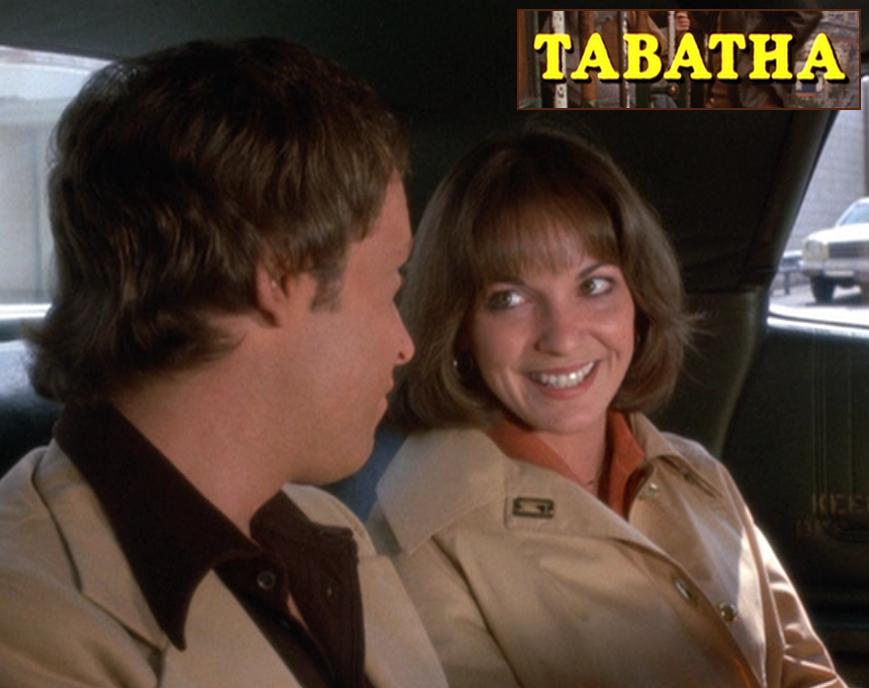
Liberty Williams as Tabitha Stevens
Tabitha
Bewitched fans might enjoy the original Tabitha pilot more than the version with Lisa Hartman, as the story offers parallels to the first Bewitched episode. Here, it’s Tabitha “coming out” as a witch to a significant other, who retreats to a bar to ponder his new normal.  But when it didn’t work ABC scrapped the entire concept and started over – new supporting characters, new workplace, and even a spelling change – in this pilot she’s “Tabatha.” 


Would it have worked?
Considering the series didn’t last with Lisa Hartman, it was likely beyond saving. But Liberty Williams was hardly the weakest link in a show with multiple issues. You may not be familiar with her but if you’ve seen Joyce Dewitt on Three’s Company you know the type – similar look, similar plucky charm. And yes, a brunette, which is a superficial objection to her playing a grown-up Erin Murphy, but still one of those details that bothers me, like changing Bruce Banner to David Banner on The Incredible Hulk.

As for Liberty, billed for most of her credits as Louise Williams, she later tested for and almost got the role of Shirley in Laverne & Shirley, then went on to voice Wonder Twin Jayna in Superfriends.  

Tim Dunigan as Templeton Peck
The A-Team
Dwight Schultz (Murdock) has often told the story about how he was certain he was going to be fired from The A-Team. It was Tim Dunigan who kept reassuring him throughout filming the pilot that his job was safe and he was going to be fine. Ironically, it was Dunigan who was replaced by Dirk Benedict, when producers decided he looked too young for the role of a Vietnam vet. 


Would it have worked?
Not this time. In the pilot Dunigan assumes a number of roles as the team’s resident con man, from a priest to a millionaire cowboy. And it just doesn’t resonate. This was material that had to be played with a wink, but his scenes with the rest of the team lacked the camaraderie that sustained The A-Team through years of repetitive scripts. According to IMDB he quit acting and now works as a mortgage broker.

Elizabeth Ward as Carol Seaver
Growing Pains
Elizabeth Ward had appeared in a couple of lesser-known ABC Afterschool Specials prior to being cast as Carol Seaver in the original Growing Pains pilot, shot in 1985. She didn’t click with test audiences, and was replaced by Tracey Gold, who hesitated to come back after being rejected once already. She changed her mind and rejoined a series that aired for seven seasons. Elizabeth Ward guest-starred in a Simon & Simon episode the following year, and never got another job. It’s a rough business. 


Would it have worked?
I think so. In the original pilot Ward was even more bookish than Gold in the show’s early seasons, but there’s no reason to assume she couldn’t have guided Carol through adolescence much like her replacement.

Susan Lanier as Chrissy Snow
Three’s Company
Three’s Company needed three pilots before finding the right combination of roommates. John Ritter was there from the start, and was originally joined by Valerie Curtin and Susanne Zenor (playing Samantha, not Chrissy). Pilot #2 brought in Joyce Dewitt, and Susan Lanier as Chrissy Snow. Neither pilot ever aired, though both are available on various Three’s Company DVD releases. 


Would it have worked?
I may be in the minority here, but I think so. To be fair, we may not be seeing Lanier’s best effort, as she was called in as a last minute substitute for another actress invited to audition. And if you’ve seen her in other shows playing similar characters, it’s clear she has some comedy chops. But at the time Suzanne Somers had more experience and professional credits, and one can’t deny the chemistry she developed with Ritter and Dewitt.

Louie Anderson as Larry Appleton
Perfect Strangers
There was never any doubt about the casting of Bronson Pinchot, as Perfect Strangers was developed (after several false starts) around his offbeat immigrant character. Finding the right foil would be critical, and the network’s first choice was comedian Louie Anderson. 


“They hated me,” is all Anderson said in a TV interview about the filmed and then buried pilot. Mark Linn-Baker, invited to test after a guest spot on Moonlighting, proved a more popular choice.  

Would it have worked?
Having not seen the Anderson pilot it’s difficult to speculate, but I would guess that ABC made the right call. Perhaps the objective was to develop a modern-day Laurel & Hardy with this duo, but Anderson’s persona of a self-deprecating gentle giant was already in place from his standup – if he played Larry that passively it would not have worked opposite Pinchot’s more manic Balki. Certainly he could have been asked to try something different, but on a TV series it’s always the actor that shapes the character more than the character dictates an actor’s choices. Sooner or later writers would have started playing to Anderson's traits, which are different from those that Mark Linn-Baker brought to the role.


Monday, June 29, 2015

From Hooterville: A Classic TV Dog Story

 
Sometimes you hear a story that makes you smile, and it continues to do so every time you think about it. This story does that for me. My guess is that many of my fellow classic TV lovers have heard it, but since it’s always nice to share happy remembrances, I hope they will indulge my telling it again.

In the second season of Petticoat Junction (a series long overdue for praise in this blog) a new character was introduced – a stray dog adopted into the Shady Rest Hotel by the youngest of Kate Bradley’s three daughters, Betty Jo. He was never given a name on the show but trainer Frank Inn, who discovered the dog at the Burbank Animal Shelter, called him Higgins. 


The dog was loved by everyone in the family except for gruff old Uncle Joe, played so memorably by gruff old Edgar Buchanan: “One thing we don’t need around this hotel is some flea-bitten hound eating us out of house and home.” Between takes, Buchanan was as fond of Higgins as the rest of the cast. 


Higgins remained a prominent presence for the remainder of the show’s seven seasons, and he astonished audiences with the remarkable and complex tasks he was trained to do. Whether running and jumping on cue, picking up objects and carrying them to a specific place, turning off lights or picking up phones, Higgins became known as “the one-take dog,” because he always got the scene right the first time.

When Petticoat Junction ended its run in 1970, Frank Inn had planned to let Higgins, then 10 years old, enjoy his retirement. But in 1974, the dog was cast as the star of a hugely successful family film that (according to IMDB) was made for $500,000 and grossed more than $39 million. From then on Higgins had a new name – Benji.


As coincidence would have it, Benji also featured Edgar Buchanan in a supporting role. Buchanan had not seen Higgins since Petticoat Junction was canceled three years earlier. On his first day of filming, as he stood on a porch that was part of a set, he wondered whether the dog would remember him. But as soon as Higgins spotted his friend, he ran toward him and took a flying leap into his arms. And even gruff old Edgar Buchanan couldn’t hold back the tears. 

As I said, just a nice story to make you smile. And perhaps to wonder what we ever did to deserve the pure and unconditional love we receive from dogs. 


Monday, March 10, 2014

From the Batcave to the Brady House: The California Comfort TV Tour

 
Most of the places you see on TV shows are located on studio lots. But there are many others scattered throughout southern California that you could see any time, though you might get in trouble knocking on the door. This has become a hobby of mine (visiting, not trespassing), and during my several yearly trips to Los Angeles I’ll usually schedule at least an hour for one drive-by of a landmark that is part of our television heritage.

Here are some of my favorites, as well as one that I finally plan to cross off my to-do list later this year.

The Brady Bunch House
This was the first classic TV site I tracked down. Though more than two decades have passed since my first visit, I can still recall what a strange sensation it was to actually stand before a home that I only knew as part of a fictional world. I’ve been back several times since, and every time, for the briefest of moments, it still feels like stepping into TV land. The house doesn’t look the same as it did on the series – there’s a wrought-iron fence surrounding the front to keep weirdos like me at a safe distance, and the upstairs window you see on the show was never actually there. But the shape of the Studio City dwelling, especially when framed by the mountains in the background as it often was on The Brady Bunch, remains unmistakable.

If you’d like to check it out, head west on Ventura Blvd. to Tujunga Ave., turn left and then make a right on Dilling St. You’ll know it when you see it. 


Townsend Investigations
I wonder how many people who drive by 189 N. Robertson in Beverly Hills even realize they’ve just passed the office where Charlie Townsend summoned his Angels. The two-story red brick edifice was shown in almost every episode of Charlie’s Angels, though you’ll never seen any of the Angels (or even Bosley) entering or exiting the building. Whenever I’m doing research at the nearby Margaret Herrick Library, I always take Robertson back to Wilshire, hoping to see Jill Munroe’s Cobra parked out front.  


Walton’s Mountain
Last year I was enjoying a deep-dish pizza at actor Joe Mantegna’s Taste of Chicago restaurant. I was seated at the window facing south, when my friend asked, “See anything interesting?” I took another look at the CVS across the street and told him I didn’t. Then he started whistling the Waltons theme, and suddenly it dawned on me – the mountain behind the condos and shopping centers was Walton’s Mountain. Perhaps it took longer to register because one doesn’t expect a peak associated with Depression-era Virginia to be looming majestically over Burbank. 

Squad 51
I used to love watching Emergency on Saturday nights. Paramedics John Gage and Roy DeSoto reported for work at Squad 51, a real fire station (actually Station 127) located in Carson, California. The site has since honored its TV connection with a plaque dedicated to Emergency writer and producer Robert A Cinader, who also created the series. You’ll find the station at 2049 E. 223rd St., just off the San Diego Freeway. 


Fantasy Island
No need to charter a plane to a remote island to see where Mr. Roarke and Tattoo greeted their guests. The building where Tattoo rang the bell at the start of each episode is the Queen Anne Cottage at the Los Angeles County Arboretum and Botanic Garden. It’s in the city of Arcadia – take the 210 Freeway to the Baldwin St. exit and follow the signs. Even without the classic TV connection, it’s a beautiful place to spend a day. 


The Batcave
Near the beginning of almost every Batman episode, you’ll see the Batmobile speed through a hidden passageway before making the 14-mile drive to Gotham City. What you’re looking at is the Bronson Caves in LA’s Griffith Park.  This is one of those instances where the reality of the location falls far short of its fictional fame. Once you’ve made the quarter-mile hike from the parking lot on Canyon Drive, you’ll a rather undistinguished cave entrance, basically a mouse hole-shaped opening leading into a short tunnel. The surrounding scenery is nice, though. 


General Hospital
For more than 20 years, General Hospital opened with a shot of an ambulance speeding toward a stately white building. This one is really easy to find – it’s the old Los Angeles County General Hospital, now a wellness center of the Los Angeles County-University of Southern California Medical Center. Get on the 10 Freeway and look to your right, just before the 10 turns into the 101. The address is 1200 N. State St.

The Hooterville Cannonball and Water Tower
I haven’t visited these yet, as they are located in the Railtown 1897 State Historic Park in Jamestown, California. That’s a 6-hour drive from Los Angeles and almost 3 hours from San Francisco. But I love Petticoat Junction. It’s everything that Comfort TV is supposed to be – simpler times, kinder characters, and optimistic, uplifting messages. So this fall I plan to climb aboard that little train, and think about a time and place where life was like that, even if it never really existed.