Showing posts with label Classic TV vs. Current TV. Show all posts

Monday, May 20, 2024

How Much TV is Too Much?


Two weeks ago I signed up for one month of the Peacock streaming service, as I do every May, so I could watch the Eurovision Song Contest, even though the glory days of this annual event have long since passed. 


The scope and spectacle of the thing is still undeniably dazzling. But what began in the 1950s as a celebration of music and hands-across-the-border unity has devolved into a garish display of vulgarity and tribalism. Greece always votes for Cyprus and vice versa, the Scandinavian nations and Russian breakaway republics only support each other, and quality songwriting and performance have been replaced by too many freak show acts direct from Sodom and Gomorrah. 


Plus, I still miss Terry Wogan’s affectionate roasting on the BBC telecast: “Who knows what hellish future lies ahead? Actually I do because I’ve seen the rehearsals.”


None of which has anything to do with Comfort TV, but I needed to get that off my chest. 


As I had Peacock for a month I figured I’d look at what else it offered by way of television shows, in case there was anything worth checking out. 


At first glance it seemed like half the selections under “TV” were about serial killers, which was pretty disconcerting: “Dahmer on Dahmer,” “Family Massacre,” “John Wayne Gacy: Devil in Disguise” - apparently Peacock loves murderers as much as the National Geographic channel loves Nazis. 


There were also numerous reality series created around manufactured celebrities who have accomplished nothing to deserve their fame – Kylie Jenner, Kristin Cavalieri, etc.  Typical episode description: “Kristin and Jay make their way to Cabo San Lucas for some fun in the sun.” God, kill me now.


Thankfully, there were also plenty of classics – The Dick Van Dyke Show, The Andy Griffith Show, Leave It to Beaver, My Favorite Martian, Dennis the Menace - but they received no more fanfare than all of the other series that surrounded them in the alphabetical menu. 


One could opt for Father Knows Best, or back up one entry and enjoy Fatal Family Feuds (no relation to Richard Dawson). What sounds good for tonight – Hopalong Cassidy or Homicide For the Holidays? Leave It to Beaver or Las Vegas Jailhouse? Here’s Lucy or House of Kardashian


I was overwhelmed not just by the unseemly quality of most of the options, but also by the sheer number of series available from this one source. Are the choices as abundant on Netflix and Hulu and Prime and the rest? Probably. 


Obviously it is still difficult for me to wrap my head around the fact that this is what television is now: hundreds of short-run series, released year-round gradually or en masse, to any of a dozen or so streaming services. Some were given the most fleeting of promotion, and were then filed back into the menus of their carriers, quickly forgotten by almost everyone. 


As I scrolled through the Peacock listings it reminded me of flipping through a card catalog, if you’re old enough to remember those when you went to the library. You were there to find one card for a book you wanted to locate in the stacks, but there were so many others, card after card, drawer after drawer, and to even think about reading every book listed would be insane. 


The question of “How much TV is too much” is not new. It was first asked during the era when only three broadcast networks introduced new scripted shows every season. Teachers and psychologists and social scientists feared that Americans – especially children – were spending too much time staring at a screen, watching shows dismissed as foolish and superficial, instead of reading a respected novel or getting more exercise outdoors. 


Since then, the number of hours spent staring at screens has multiplied many times over – it’s just now the screens are smaller and interactive, and allow you to do everything from checking your bank balance to ordering dinner to turning up the air conditioning in the family room while you’re still driving home. 


Television is still an option but far from the most prevalent one. So it seems odd to me that, if TV shows are no longer as popular as other entertainment choices, why are there more of them now? 


And by the way, what are the economics of all this? The overwhelming majority of content on Peacock and – I’m guessing – other streaming services consists of programs from the last 10-15 years, that produced 8-10 episodes and called that a season, Who is paying to produce these shows, and what ascertains whether they are successful? It used to be that viewership determined ratings, and ratings determined advertising revenues. 


That’s why it is still so expensive to buy commercial time during the Super Bowl. Are these services getting enough subscribers at about ten bucks a month to finance so much original content? If so, that’s a bubble that is likely to burst sooner rather than later. 


I have no idea how anyone could possibly keep up with all of the programming options now available. There is enough stuff just on Peacock right now that, averaging three hours of TV a day, would likely occupy all of my evenings until I’m whisked to that great La-Z-Boy recliner in the sky. And if I were limited only to Peacock’s menus, I’d be hastily moving up my departure date. 


Meanwhile, those old warhorses that were our only programming source for much of the medium’s history, CBS, NBC and ABC, serve up still more choices. Some of them – Abbott Elementary, Young Sheldon – continue to be enjoyed by a lot of people, and that’s great. But will they still be as fondly remembered 30 years from now, and create pop culture references and expressions that will be recognized by most Americans? 


Probably not. Because there’s just too much TV now. 


And while all this is happening here I am, still enjoying and celebrating shows that first aired 50 or more years ago, shows that were embraced by generations of fans decades after their debut. But these too are not special anymore, except to those who remember when they were new – or from the first few runs of syndication when programming options were still limited. 


I guess there’s no reason to believe they should be. 


Since watching or even sampling everything is no longer possible, is it too much to hope that viewers who have a few hours in a week to devote to television, or during a month if TV is not really their thing, would be more discerning in how they choose to spend that time? Because there is a reason why great things last, and rubbish winds up where it does. 


I’ve already canceled Peacock, and have happily reverted to evenings spent with the 80-100 shows in my library, with occasional expansions into vintage TV movies and other older series I’ve yet to explore. It’s enough. If I do wander farther afield, it will not be to look forward to current and future TV fare, but likely to more British shows from the same era as my favorite classsics, and maybe a few more from Australia. Maybe this will be the year I finally delve deeper into Skippy the Bush Kangaroo. It’s bound to be more enjoyable than Family Massacre


Monday, June 20, 2022

Cutting the Pop Culture Cord


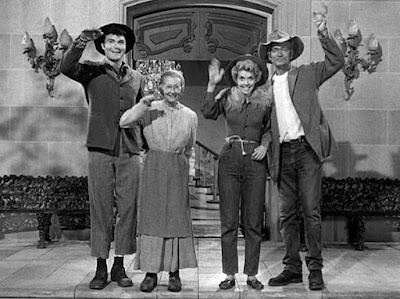
I’m not sure exactly when it happened, but I recently realized that I have given the big Clampettt goodbye wave to the present entertainment landscape. 


And I’m not just talking about television.


What’s climbing the music charts now? No clue.  Do they still even have music charts? I hear a recognizable name every so often, like Billie Eilish, but her only song that I’ve heard was that sleep-inducing theme to the last James Bond movie.


Theater? Decades ago during regular travels to London, New York and Los Angeles I saw as many plays and musicals as I could. But I have not seen one since then. Video games? Stopped playing them after I got rid of my Intellivision console back in the 1980s.


I watch one current scripted TV show – Superman and Lois. And since that show features characters that have been around since the 1930s, I hardly think this qualifies as embracing something new. Likewise (and for the same reason, being a old comic book nerd) the only films I look forward to watching are those from the MCU (and those based on DC characters when they occasionally get one right). Outside of that genre, the last film I saw that won Best Picture was The King’s Speech, which took home the Oscar back in 2010.


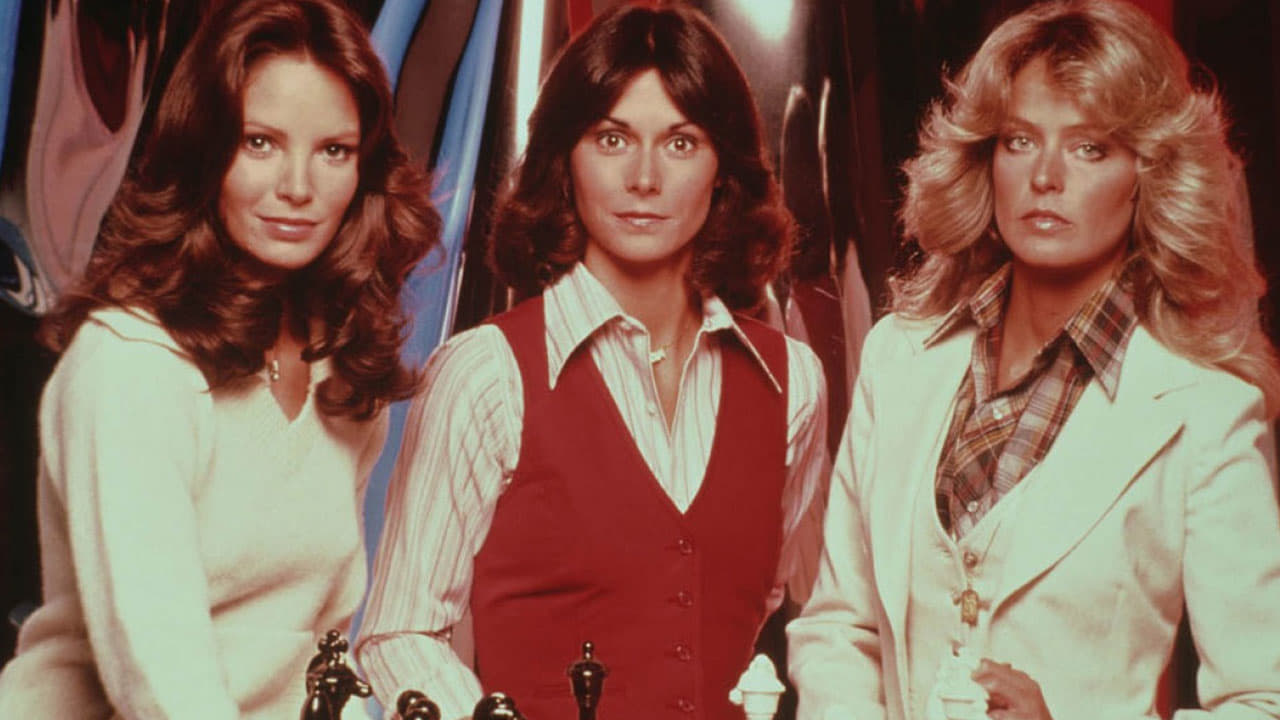
Television clearly still remembers the shows I like because they keep bringing them back - Charlie’s Angels, Dynasty, The Wonder Years, as well as series featuring Nancy Drew and the characters from Archie comics. But I learned long ago to avoid attempts to “update” and “modernize” popular brands from the past. Whatever made the originals resonate with an audience is always lost. 


I’m not saying that my choices are correct ones or better ones, or that it’s not possible I’m missing out on some wonderful diversions. But I’m good with that.


Like most people I have a job and other personal responsibilities, which leaves at best 3-4 hours in an average weekday to devote to doing what I enjoy. And as I get older I find that I’m less inclined to take any chances with that precious time. That means eliminating potential options that will result in anger, confusion, or a melancholy realization of how absurd so many aspects of our life and times have become.


That’s what today’s television serves up, which is not at all surprising because this has always been a medium that reflects contemporary culture. In that reflection I see how the virtues of beauty and truth, once celebrated,  are now undervalued or dismissed outright. And as universities continue to deny the existence of either, lessons now being communicated at the primary education level as well, there’s no reason to expect a change in direction. There’s always hope, of course, but we’ve been on this path for a long time. Listen to Paul Harvey’s If I Were the Devil monologue, recorded in 1965, and tell me we haven’t already achieved and surpassed every objective he describes.


And so, I am content to continue exploring the television shows from decades past. One of the reasons I started my journey through 1970s TV is to uncover more old shows that would be new to me. There are even more shows from the 1950s and ‘60s waiting to be discovered. TV Shows on DVD recently announced an upcoming series release of the 1954 legal drama Public Defender. Never watched it – can’t wait to do so. I’ve seen far too few episodes of such classics as Route 66, The Virginian, Hawaiian Eye, The Goldbergs, Z-Cars, Land of the Giants and many more. 


And I will continue to revisit old friends, basking in the comfort of their familiarity. While the escape they provide from 21st century foolishness is always welcome, this is certainly not an escape from real-world issues and challenges. If anything, many of the classic dramas are a reminder of how many of the problems we face now are not unique to this day and age.


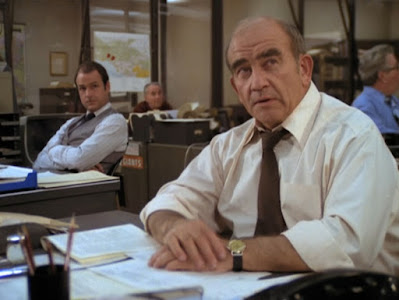
One of my favorite shows, Lou Grant, devoted episodes to such issues as illegal immigration and education deficiencies at inner city schools. We haven’t found better answers to either of those concerns since those shows aired in the late 1970s. What has changed since then is whom we blame for the problem, and how it should be solved. Apparently, according to some cable news commentators and social science authorities on Twitter, everything wrong with the country is now my fault. Wow – didn’t see that coming. 


Even vintage sitcoms, the most carefree of viewing options, still have something to say to an audience. In these little morality tales are reminders of my own shortcomings – impatience, short-temperedness, arrogance, falling short of the teachings of my faith. A lot of time when I watch these episodes the message I get is “Do better.” I’ll keep trying.


Am I the only one, or do you, who have found this classic TV blog, still balance the classic stuff with current shows? If you had to give up one or the other, which would you choose?


When discussing my abandonment of today’s television I’ve been asked, “But how many times can you watch the same episode of The Bob Newhart Show or The Partridge Family or The Adventures of Ozzie & Harriet before they are no longer entertaining?


When I reach that number, I’ll let you know. 


Wednesday, September 30, 2020

Ten Perfect Classic TV Punch Lines


I’ve mentioned Entertainment Weekly magazine before in this blog, usually in disparaging terms. But inexplicably I’m still a subscriber, and recently I received their 30th anniversary issue, which included a collection of the best punch lines from TV comedies over the past 30 years. Not a bad idea.


The choices cited provide another opportunity to contrast how current TV differs from the classic shows of the past, and to choose some of my favorite punch lines from the Comfort TV era.


Let’s start with the most obvious distinction: half of the magazine’s picks could never have been uttered in the pre-cable era, because of their subject matter or the language used. And many of those that clear that hurdle would still have been unthinkable, because the humor emerged from a sentiment that would never be expressed.


Example: EW chose a rant by Larry David on Curb Your Enthusiasm about how he’d rather have thieves in his house than his neighbors:  “The thieves don’t impose! The neighbors want your time. The thieves want your things. I’d rather give them things than time.”


Putting aside whether a diatribe that long actually qualifies as a punch line, at least we’re dealing with a situation common to TV characters in any era: annoying neighbors. Ed Norton frequently strained Ralph Kramden’s nerves on The Honeymooners; on Bewitched, Samantha was frustrated by Mrs. Kravitz peeping through her windows; on The Donna Reed Show, even Donna had her patience tested by Mrs. Wilgus, a neighborhood busybody played by Kathleen Freeman.


But can you imagine any of those characters echoing Larry David’s preference for thieves?


Still, it wasn’t all sweetness and light back in the innocent Comfort TV era. Then as now, great punch lines often emerged from a well-crafted insult. I promised ten perfect classic TV punch lines – here’s the first one, from an episode of The Honeymooners entitled “The $99,000 Answer”. Ralph is going on a game show and is determined to hit the jackpot:


Alice : “For the last time, Ralph, I'll be very happy if you win the 600 bucks.”

Ralph : “$600? Peanuts, peanuts! What am I gonna do with peanuts?”

Alice : “Eat 'em, like any other elephant.”


And if characters aren’t attacking each other, they’re putting themselves down.  The magazine turned to The Larry Sanders Show for its selection; I’ll go instead to The Bob Newhart Show. In the classic episode “Over the River and Through the Woods,” before the epic drunk scene that closes the show, Elliot Carlin explains his plan for avoiding depression on Thanksgiving.


Carlin: “Stay awake between now and Thanksgiving, and then I’ll be so exhausted I’ll sleep right through it.


Bob: “Good plan.”


Carlin: “I think I may do that for all the holidays. The only one that worries me is Lent.”


As I read the EW list again, I realized that the crafting of a great laugh line is a higher priority now than it used to be. On Comfort TV sitcoms, humor emerged more from putting characters into challenging or uncomfortable situations and observing how they react to them. Today the writer’s voice is more prominent, when the story pauses so a character can deliver a clever and funny line of dialogue.


That contrast can be illustrated by the fact that some great Comfort TV era laugh lines won’t make sense by themselves out of the context of the scene in which they are heard. Take this one from Get Smart:


Max: “That’s funny…it doesn’t look it.”


Not amusing at all by itself. But In “A Tale of Two Tails” Max learns that the infamous Cone of Silence was invented by Professor Cohn, which prompts Max to look up at it and then say that line.


Okay, so there’s three great classic TV punch lines so far – I owe you seven more. Not saying these are the best ever, but they were the first ones I recalled, which at least says something about their impact.


The Dick Van Dyke Show: “Three Letters From One Wife”


Alan Brady: Mel, I'm thirsty.

Mel Cooley: Oh, you want a drink, Alan?

Alan Brady: No, a glass of dust.


While Buddy’s insults of Mel were always funny, Alan’s putdowns always had a little extra bite.


The Mary Tyler Moore Show: “Chuckles Bites the Dust”


There were more than ten great punch lines in just this episode. Let’s go with one from Ted Baxter’s on-air remembrance of Chuckles’ passing:


Ted: “Chuckles liked to make people laugh. You know what I'd like to think, I'd like to think that somewhere, up there tonight, in his honor, a choir of angels is sitting on whoopee cushions.”


Do we need one of Hawkeye’s putdowns of Frank Burns on this list? I think we do.


MASH: “The Bus”


Frank: “I can plug an ace of hearts at fifty feet.”

Hawkeye: “I’ll remember that if we’re ever attacked by a bridge club.”


Earlier this year I did not give a very favorable review to the DVD release of Our Miss Brooks. But that doesn’t mean the show couldn’t deliver a great punch line:


Daisy Enright: “When I was in my teens, there weren’t many stars on television.”

Connie Brooks: “When you were in your teens, there weren’t many stars on the flag.”


You Bet Your Life, the quiz show hosted by Groucho Marx, delivered more laughs than most situation comedies, especially when Groucho interviewed a character as memorable as Pedro Gonazlez-Gonzalez:


Groucho: “If we got together as an act, what would it be called?”

Pedro: “It would be Gonzales-Gonzales and Marx.”

Groucho: “Do you believe that? Two men in the act, and I get third billing!”


But this one is too legendary not to include:


Groucho: “Why do you have so many children?”

Female Contestant: “Well, I love my husband very much.”

Groucho: “Hey, I enjoy a good cigar, but I take it out of my mouth once in a while.”


Another of my favorite go-to series for great comedy is The George Burns and Gracie Allen Show. I’ve quoted this exchange in the blog before but it’s good enough to deserve an encore:


Gracie, on her Uncle Harvey: “You don't want to hear about the job he had helping that plumber? Well, the only reason he lost the job is because he did what the plumber told him to.”

George: “That's why he lost it?”

Gracie: “Well, yes. You see, what happened was they were trying to hammer some pipe through a hole in the wall, so the plumber held it and he said to Uncle Harvey, ‘Now, when I nod my head, you hit it with that big hammer…’”


The more I write the more I realize how many more I want to include from shows like Taxi and Designing Women, and Rowan & Martin’s Laugh-In. Perhaps another time. I’ll close with a perfect punch line that needs no introduction, and that will likely be heard in many homes once again in another month or so:


“As God is my witness, I thought turkeys could fly.”

Monday, September 21, 2020

Reflections on The Twilight Zone's "A Nice Place to Visit"


During this seemingly endless pandemic I’ve taken to watching the sermons of Bishop Robert Barron on YouTube.


A few weeks ago, he spoke at length about a painting in Paris’s Musee d’Orsay by Thomas Couture called “The Romans of the Decadence.” It shows a large crowd of people engaged in all sorts of carousing and debauchery; but at the center of the canvas is a woman who looks directly out toward the viewer, and seems utterly bored with the revelry that surrounds her.


The message, according to Bishop Barron, is that all of the pleasures this world can offer, wonderful and wicked, legal and illegal, will eventually not be enough to satisfy us. We were made for something greater.


To me, that sermon was a reminder of a classic TV episode that communicated  a similar message. “A Nice Place To Visit” aired on April 15, 1960, near the end of the first season of The Twilight Zone


As the show opens we meet Rocky Valentine (Larry Blyden), a career criminal in the midst of robbing a safe in a pawnshop. He is shot and killed by the police while trying to escape. Seemingly moments later, he wakes up and meets Mr. Pip (Sebastian Cabot), a debonair man in a white suit, who introduces himself as Rocky’s “guide.”


A clearly confused and suspicious Rocky is given a luxurious apartment, a new fancy wardrobe, and piles of cash. Taking stock of “the joint, the clothes, the booze,” he figures he must be in heaven, and Pip is his guardian angel. “Anything I want,” he says, gleefully rubbing his hands together, and it’s off to the casino. As beautiful women cheer him on, he tries roulette and the slot machines and he can’t lose. 


Still, Rocky is curious as to why he was allowed into Heaven: "I must have done something good that made up for all the other stuff.” Pip takes him to the Hall of Records to review his file, which provides no answers: Rocky has been a rat since he killed a dog at the age of six. But if God is fine with the decision, he figures he’s happy to keep living the good life. 


But one month later, Rocky finds that everything he used to enjoy now brings no pleasure at all. Even the prospect of robbing a bank fails to interest him, as he already knows he’ll get away with it.


“I don’t think I belong here,” he finally tells Pip. “If I have to stay here another day I’m going to go nuts! I don’t belong in heaven. I want to go to the other place.”


“Heaven?” Pip replies. “Whatever gave you the idea you were in Heaven, Mr. Valentine? This *is* the other place!”


And that cues up Rod Serling’s close: “A scared and angry little man who never got a break. Now he has everything he’s ever wanted. And he’s going to have to live with it for eternity…in the Twilight Zone.”


Did you guess the outcome when you first saw this episode? Whether you did or not, it’s the message that I find most interesting. And while The Twilight Zone routinely delved into provocative questions related to ethics and philosophy, it was not the only series from the Comfort TV era to contemplate the same set of circumstances described by Bishop Barron and painted by Couture. I can think of two other series, both among the era’s most popular situation comedies, which also explored this scenario.


Guesses? If not, I will humbly recommend my forthcoming book, out next month, which I’ll talk about more in my next blog.


As I write this, the Emmy Awards are being presented on ABC. I’m not watching – I haven’t watched in more than a decade. See previous Emmy-related blog entries for those reasons. But I do know a little about some of the shows deemed worthy of Emmy recognition. And I wonder what messages those shows are sending, or if that’s even a relevant question.


One might think that some lessons would remain pertinent in any era of entertainment. But if we could count on that being the case 50 years ago, or even 20 years ago, I’m not sure we can still count on it now. To illustrate I give you The Good Place, a recent Emmy-winning series that closed out its first season with a twist similar to the one in “A Nice Place to Visit.” But on that series, the inversion of good and bad destinations was not the end but a starting point, from which the show asked questions that never would have occurred to previous generations, such as whether “the good place” was really good for everyone. What times we live in.


Here is a look at the Couture painting:


Friday, July 31, 2020

No Fall TV Season This Year? Rerun the 1970 Fall Season Instead


In the Comfort TV era, this was the time of year when television networks began to ramp up the promotion of their September fall schedules. 


For television lovers it was always a late summer full of hope and promise. TV Guide’s voluminous Fall Preview issue would be arriving soon, and CBS, NBC and ABC would roll out musical extravaganzas featuring the stars from our favorite shows urging us to not miss a minute of all the excitement on the way.


We’re a long way from that era now, and this year will be worse than most – just as it has been in many other aspects of our lives. Many new and returning programs this fall will at best be delayed months because COVID is determined to not allow any of us to enjoy ourselves ever again. 

What should the networks do until these programs are ready? I have an idea.

It wasn’t that long ago that CBS aired an episode of The Dick Van Dyke Show in prime time, as a way to honor Carl Reiner. The episode easily won its time slot. Previous revivals of shows like I Love Lucy also scored well in the ratings. So if these isolated exercises in nostalgia found an audience, why not go all the way?

Let’s replace the 2020 fall season with the 1970 fall season, just as originally broadcast 50 years ago. Why 1970? Why not? Fifty years is a nice round number, and then as now audiences were excited about what a new decade might bring, and hopeful that it would be more peaceful and calm than the turbulence of recent years.

What was television like then? If networks were to rebroadcast their 1970 programming slate, here are some of the shows you could look forward to this fall.

Monday
CBS had the best overall schedule, with the stalwart Gunsmoke leading off the night, followed by Here’s Lucy, the underrated Mayberry R.F.D., The Doris Day Show and The Carol Burnett Show


Not a loser in the bunch, though watching Carol Burnett on Monday might seem odd to those of us who recall watching her for years on Saturdays. Her variety series would not anchor that network lineup until 1973.

Great as that evening was it may have struggled back in 1970, as part of it was up against ABC’s Monday Night Football. Who knows if that will be back this year?

Tuesday
If you like your comedies country-fied, you’ll be sticking with CBS for a second night, and enjoying The Beverly Hillbillies, followed by Green Acres and Hee Haw. This was the last season for these shows, which the Tiffany Network canceled en masse after deciding they wanted to attract a more sophisticated urban audience.

One show they thought that audience would like is To Rome With Love, which followed Hee Haw and starred John Forsythe as a college professor who moves his family to Rome to take a teaching position. That show bombed while Hee Haw went into syndication and ran 25 years.

ABC offered up The Mod Squad and Marcus Welby, M.D. that night, with a movie of the week in between. NBC also featured a movie, along with its groundbreaking sitcom Julia, starring Diahann Carroll. When was the last time in recent years that the three networks gave you that many tempting program options?


Wednesday
I’d probably favor ABC this night, and enjoy The Courtship of Eddie’s Father, followed by Make Room for Granddaddy (Danny Thomas’s revival of his popular 1950s show), the outstanding Room 222, The Johnny Cash Show and Dan August, a police drama starring Burt Reynolds.


The getTV network is running Cash’s variety series now, and if the Man in Black isn’t enough of a draw it’s worth watching just for the stellar lineups of guest artists he featured over the years. 


Over on CBS, viewers could watch Medical Center, followed by Hawaii Five-O. And NBC gave viewers an even bigger quandary in the pre-VCR era by airing the Kraft Music Hall opposite Cash on ABC and Medical Center on NBC.

Thursday
This time you’re going to have to do some flipping around for a full evening of great TV. I’d start with Family Affair at 7:30 on CBS, then flip over to the second half of The Flip Wilson Show on NBC. At 8:30 you take your pick – Bewitched on ABC or Ironside on NBC. But when the clock strikes ten, it’s back to NBC for The Dean Martin Show


Friday
I love the ABC Friday night lineup – The Brady Bunch, Nanny and the Professor, The Partridge Family, That Girl and Love, American Style. If you’d rather opt for more serious fare, NBC offers a great western in The High Chaparral, followed by The Name of the Game, one of television’s more unique anthology series and a show that really should have been released on DVD by now. 

Saturday
While 1970 was a couple of years before CBS locked in one of the best programming lineups in TV history, they were already outclassing the competition here with Mission: Impossible, followed by My Three Sons, Arnie, The Mary Tyler Moore Show, and Mannix. Only one show in that group has not stood the test of time, and if you’d rather not check it out you could always switch over to ABC for a half-hour of champagne music with Lawrence Welk. 


Sunday
There are a number of great options here. With NBC you can start the night with Marlin Perkins on Wild Kingdom, followed by what would likely be an enjoyable family feature from The Wonderful World of Disney. Next, you could watch The Bill Cosby Show, though I’d understand if you chose otherwise. After that, NBC wraps up the night with Bonanza and The Bold Ones.

Or you’ve got CBS, which starts with Lassie, then Hogan’s Heroes and The Ed Sullivan Show. Over on ABC The Young Rebels never found an audience, but how many prime-time shows have been set during the Revolutionary War? I’d certainly watch it, especially as the cast included Lou Gossett and Hilaire Thompson. And then I’d stay tuned for Efrem Zimbalist Jr.’s iconic portrayal of federal agent Lewis Erskine on The F.B.I.


Of course I don’t expect any network to take this proposal seriously. But isn’t it amazing to look back and see how many of these shows from 50 years ago are still airing on television now, and are still remembered fondly by those who watched them over the decades. Will we be able to say the same 50 years from now? Television ain’t what it used to be.

Wednesday, April 29, 2020

Classic TV: No One Can Take It Away


One of the most appealing qualities about classic television is that it’s always there when I want to enjoy it. It’s reassuring to have some constants in a world where change is inevitable. Especially right now.

The ability to watch a great series from the past is not impacted by season, by weather, by labor disputes, by travel restrictions, or even by global pandemics. If I want to revisit an episode of Bewitched tonight, I can do it. Without wearing a mask. If I want to watch the third episode from the first season of Get Smart a week from Thursday at 1:30AM, nothing will stop me from doing so. 


Does that sound silly? Perhaps to those who haven’t experienced a lot of upheaval in their lives. Consider yourself fortunate if that’s the case. And if it is – well, it’s not like that anymore, is it?

We’ve all had a lot taken away from us over the past few weeks. What’s going to be interesting is how we all respond when these things start to come back. The way I feel now, I’m not sure I’m going to have the same enthusiasm for them.

For instance – I’ve been a fan of NCAA gymnastics for more than ten years, I watch about 80 meets every season, which runs from January to April. This year I was hoping Kyla Ross would lead UCLA past Oklahoma and win the title, by which time baseball season will have started, and lately that has been more exciting since my beloved Cubs have become perennial contenders.

This year? NCAA sports were canceled, seemingly overnight – no conference tournaments, no national championship; and for the seniors in gymnastics and other sports without a pro league, your careers are over.  Just like that. As for baseball, opening day should have happened more than a month ago. Will there be a season this year? Who knows?

So I can’t watch sports anymore. But I can watch the WKRP staff play baseball against their archrivals from WPIG. I can watch Donna Stone meet Don Drysdale (The Donna Reed Show) or Ann Marie meet Stan Musial (That Girl). I can watch Sandy Koufax encounter Mr. Ed, or Jody get outplayed by twin sister Buffy in a game of stickball (Family Affair). 


Are revisiting these shows as much fun as watching a baseball game where the outcome is undetermined? Perhaps. Perhaps not. But at least I know they won’t end prematurely. When baseball comes back this year or next year or in 2025, I may be reluctant to devote the same time and passion to a new season that might be abandoned as soon as some middle infielder coughs a little too loud in the dugout. 


Over the course of my life, from the age of four to present day, I’ve been to Disneyland more than 100 times. Even with the never-ending crowds and ever-escalating ticket prices, there are few activities that soothe my soul like sailing the rivers of America on the Mark Twain.

Disneyland is closed for the foreseeable future. But King’s Island in Cincinnati is still open, at least in the episodes of The Brady Bunch and The Partridge Family shot on location there. Both are series highlights for me. And now more than ever it’s a pleasure to watch them and see crowds of people gathered together and having fun.


Will those King’s Island visits be enough to not miss paying a king’s ransom for a day at Disneyland? We’ll see.

As spring turns into summer I look forward to heading out to the golf courses here in Las Vegas. Golf courses are open in most states, but not in my state. Nevada will apparently not be back in business until there’s a vaccine for COVID-19, the common cold and ring around the collar.


But I’ll always have Ed Norton teaching Ralph Kramden how to address the ball.


And maybe it’s time to pull out that I Love Lucy episode in which Ricky and Fred unsuccessfully trying to discourage Lucy and Ethel from joining them out on the course (“Well, it only took us one hour and a half to get to the first green.”).


Las Vegas is home to many wonderful restaurants, and a lot of them are located inside the hotel-casinos that line the Strip. After eating there I often stop and throw a few dollars (sometimes more than a few dollars) into a video poker machine. But
right now – you guessed it – all those resorts are closed.

The casinos better hope that I and a lot of people rediscover our joy in their games of chance, cause if we don’t they may be in trouble even after they open. In the meantime, I can watch Elyse Keaton catch blackjack fever on Family Ties, Charlie’s Angels hang with Dean Martin at the Dunes Resort (gone but not forgotten here in Vegas), and Balki hit a slot jackpot on Perfect Strangers


International travel will likely be one of the last activities to attain pre-pandemic levels. But classic TV lovers know that any time they wish they can go to England with Steed and Mrs. Peel, to Paris with The Monkees, to Australia with the girls from Facts of Life, and journey beyond the solar system on Star Trek


All of the episodes I’ve cited as examples are just a small sampling of those filmed over 60-some years about the same subjects. They’re all here now, just waiting to be rediscovered. They will be here tomorrow, while the country is still closed. And they’ll be here after it opens. When (if?) that ever happens, how you decide to spend that time is up to you. You know where you’ll find me.